High-Performance LED Sheets & Smart Flexible Strips
Engineered for commercial backlighting, architectural linear illumination, and smart interior integration.
The Paradigm Shift in B2B LED Light Strip Sourcing from China
The global solid-state lighting (SSL) industry is undergoing a structural transition. For decades, global importers, OEMs, and project contractors viewed China primarily as a low-cost contract manufacturing hub for standard Surface Mount Device (SMD) LED tapes. However, recent advances in packaging density, semiconductor die bonding, thermal management substrates, and automated silicone extrusion have shifted China's role into a center for high-value engineering innovation.
Today, selecting top China LED strip lights factories and exporters requires looking beyond surface-level unit prices (FOB per meter). Decision-makers must evaluate technical parameters, MacAdam Ellipse color binning, copper weight in flexible printed circuits (FPC), lumen maintenance ($L_{70}/B_{10}$ lifespans), and compliance readiness for international markets including North America and Western Europe.
Executive Insight: Modern architectural and commercial lighting projects demand dotless output, ultra-high color fidelity (CRI > 95, R9 > 80, TM-30-18 fidelity $R_f > 93$), and seamless integration into smart control networks. Sourcing success depends on identifying Tier-1 OEMs capable of maintaining batch-to-batch binning consistency across long project cycles.
To navigate China's dense supplier landscape—spanning major manufacturing hubs like Shenzhen, Zhongshan (Guzhen), and Ningbo—procurement managers need a structured evaluation framework. This whitepaper outlines the essential technological, quality, and supply-chain criteria needed to select high-reliability manufacturing partners.
Future Purchasing Trends in Flexible LED Architectural Lighting
Key technological shifts driving global procurement over the next five years.
1. Domination of Continuous Chip-on-Board (FCOB)
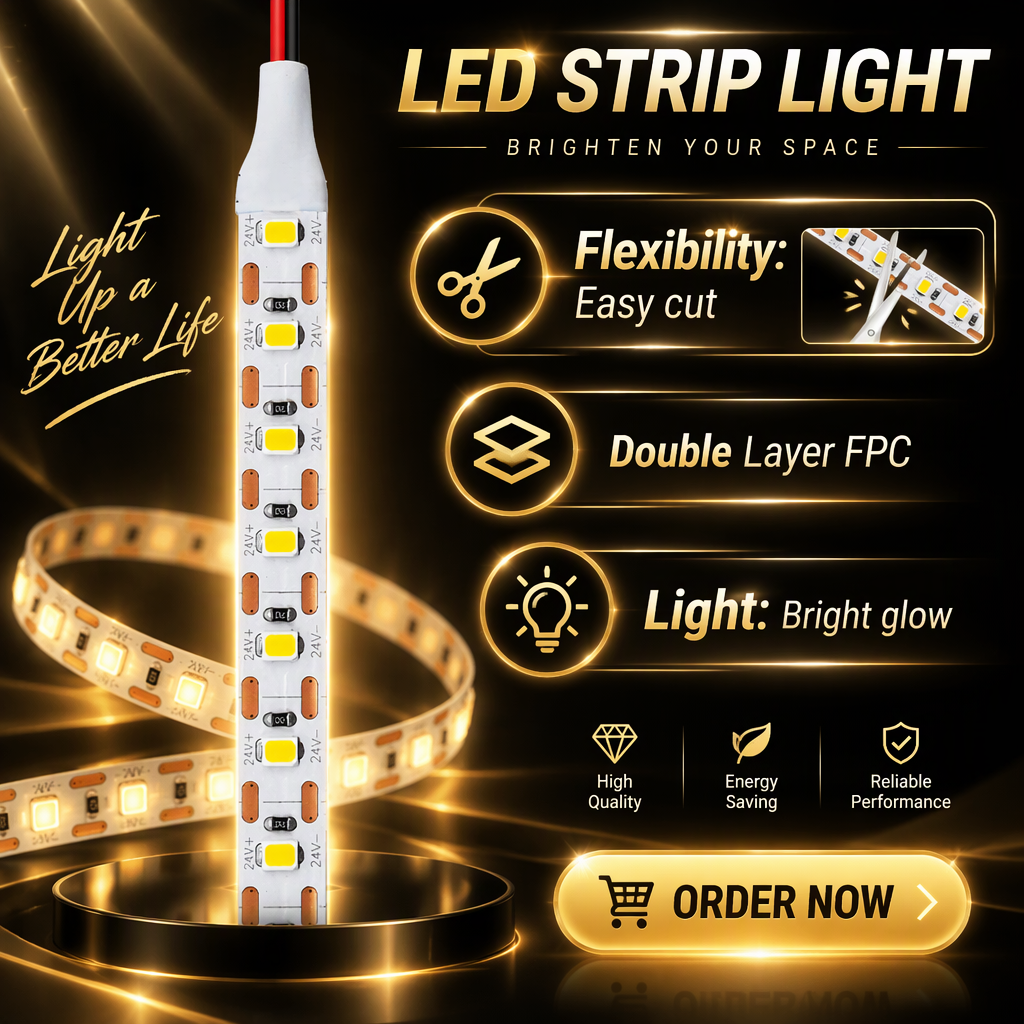
Traditional discrete SMD tapes (SMD2835, SMD5050) are increasingly replaced by Flip-Chip COB (FCOB) configurations in visible installations. By bonding micro-chips directly onto the FPC under a continuous linear phosphor matrix, FCOB technology eliminates pixelation, provides beam angles up to 180°, and reduces thermal resistance by omitting wire bonds.
2. Flexible Modular LED Sheets for Translucent Surfaces
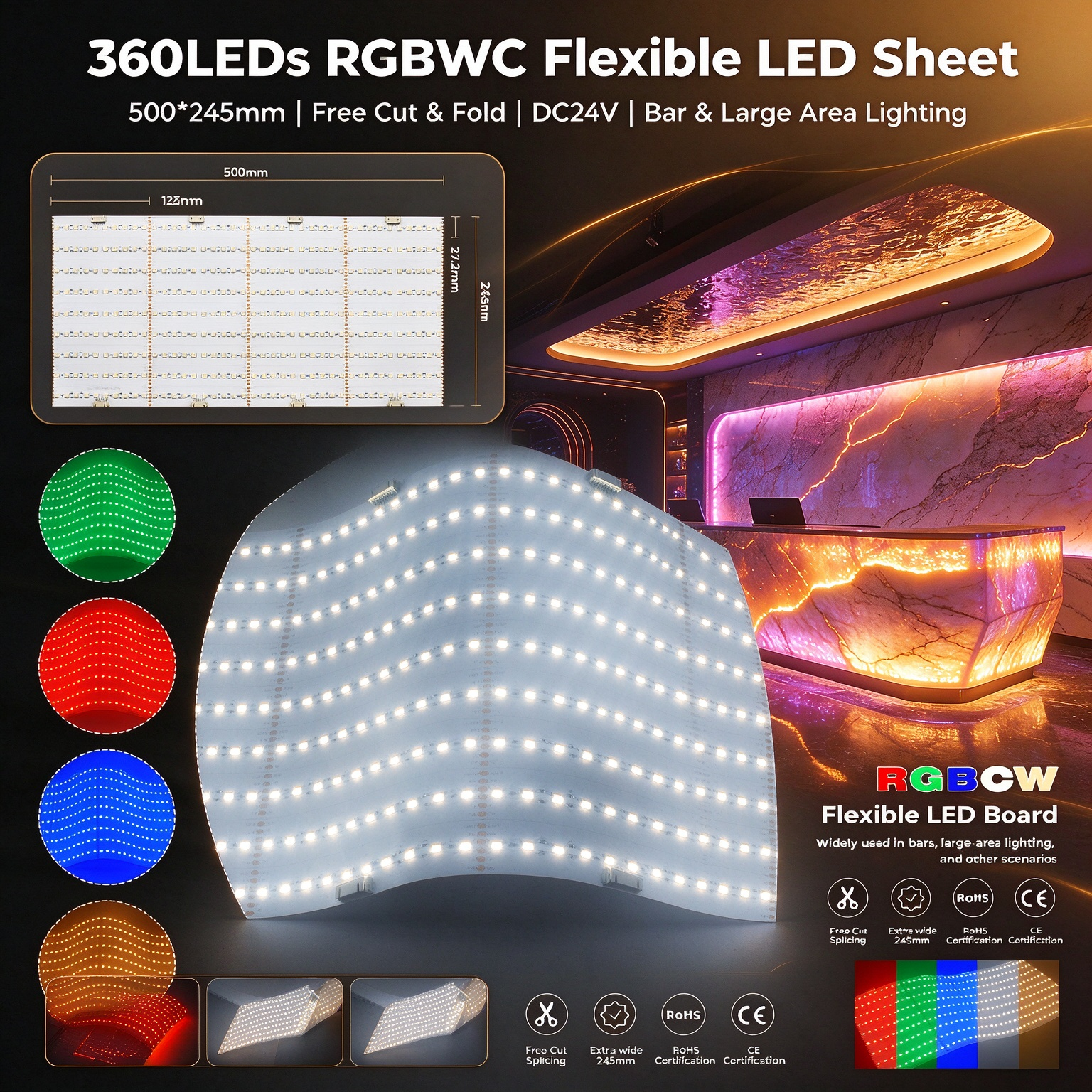
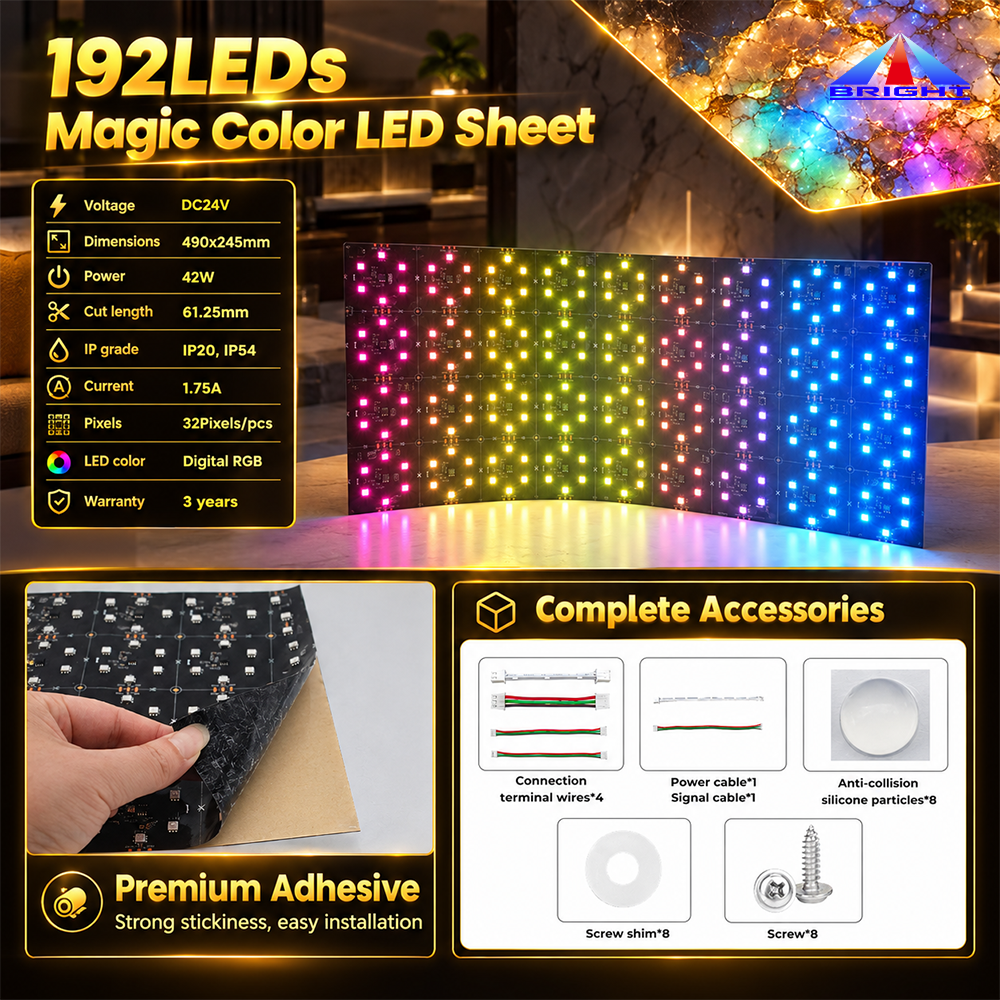
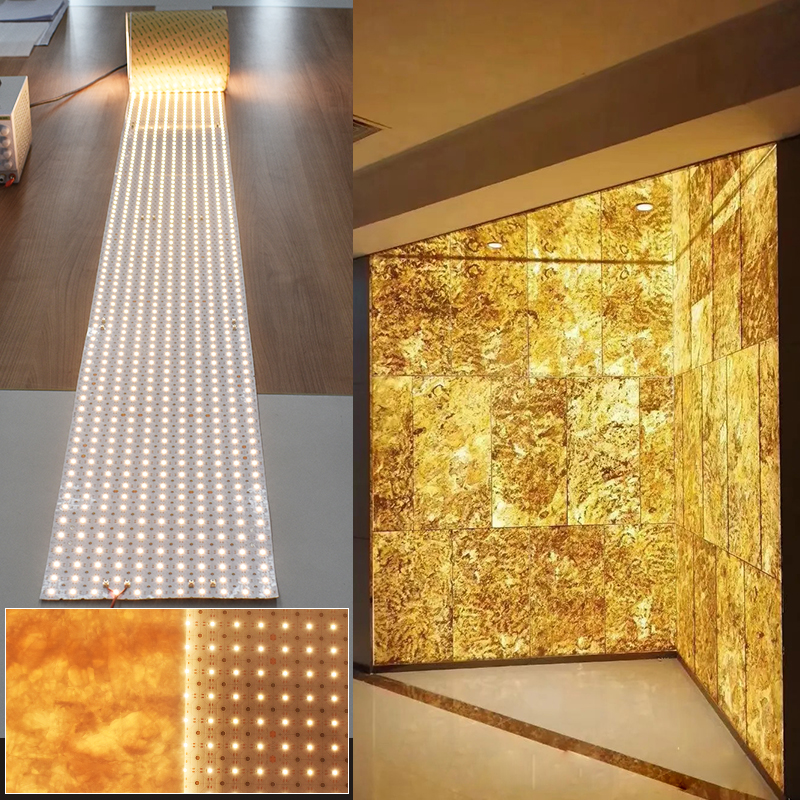
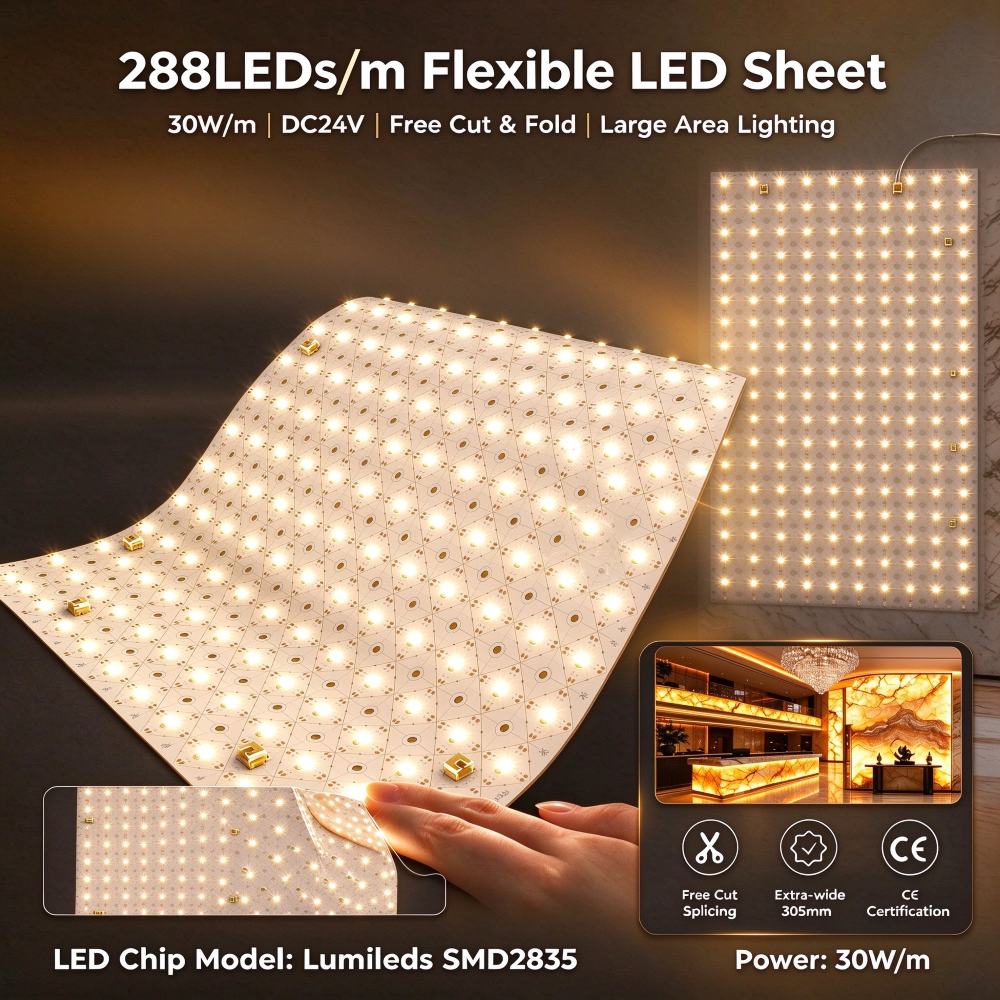
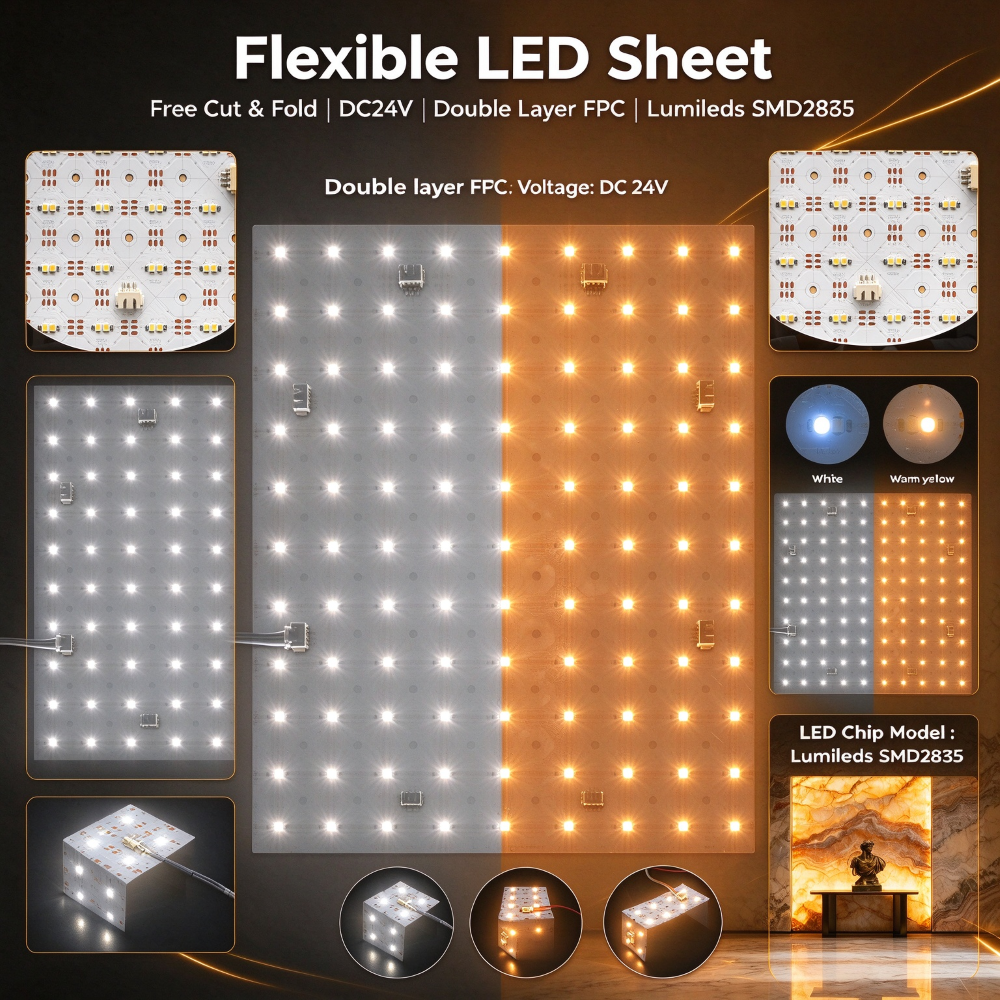
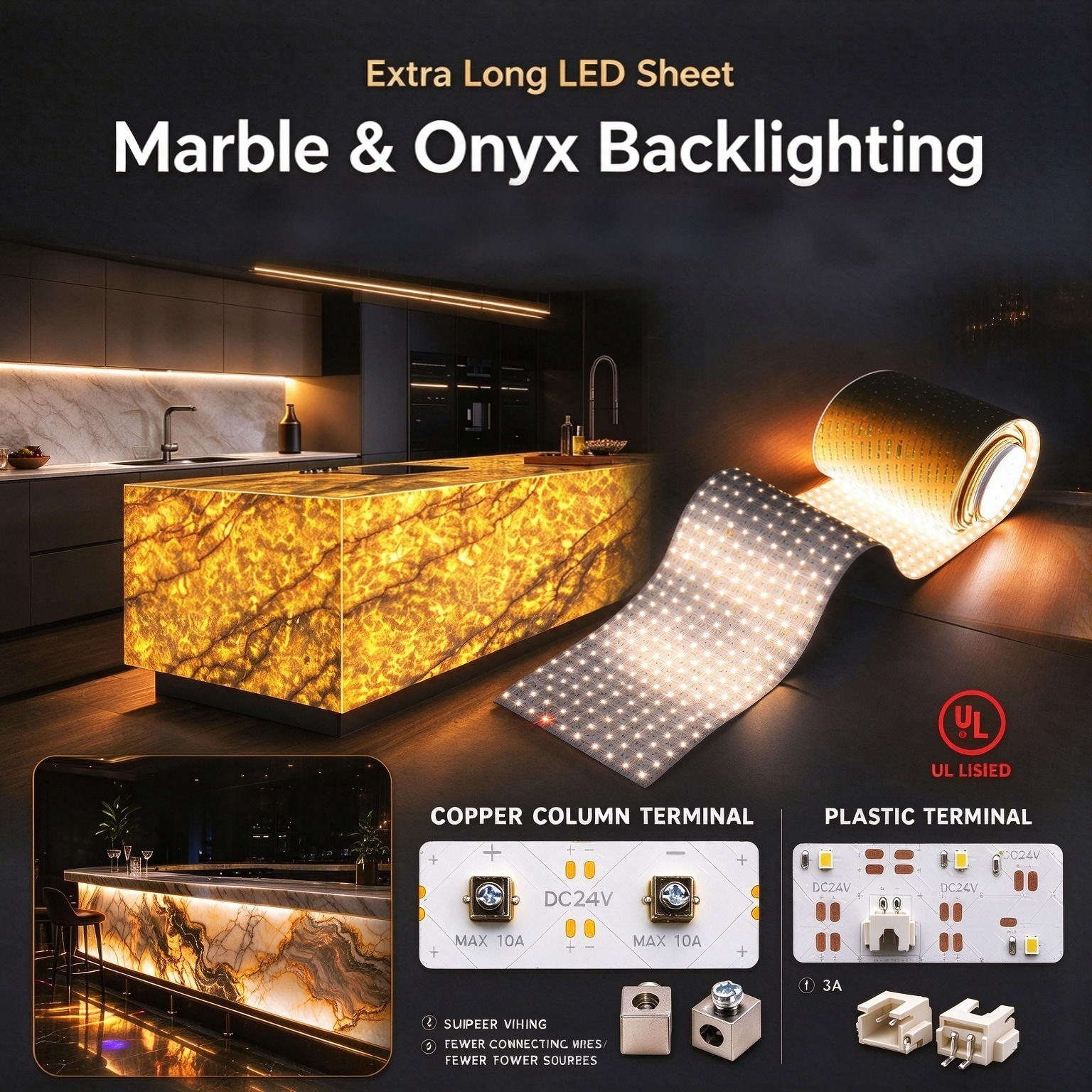
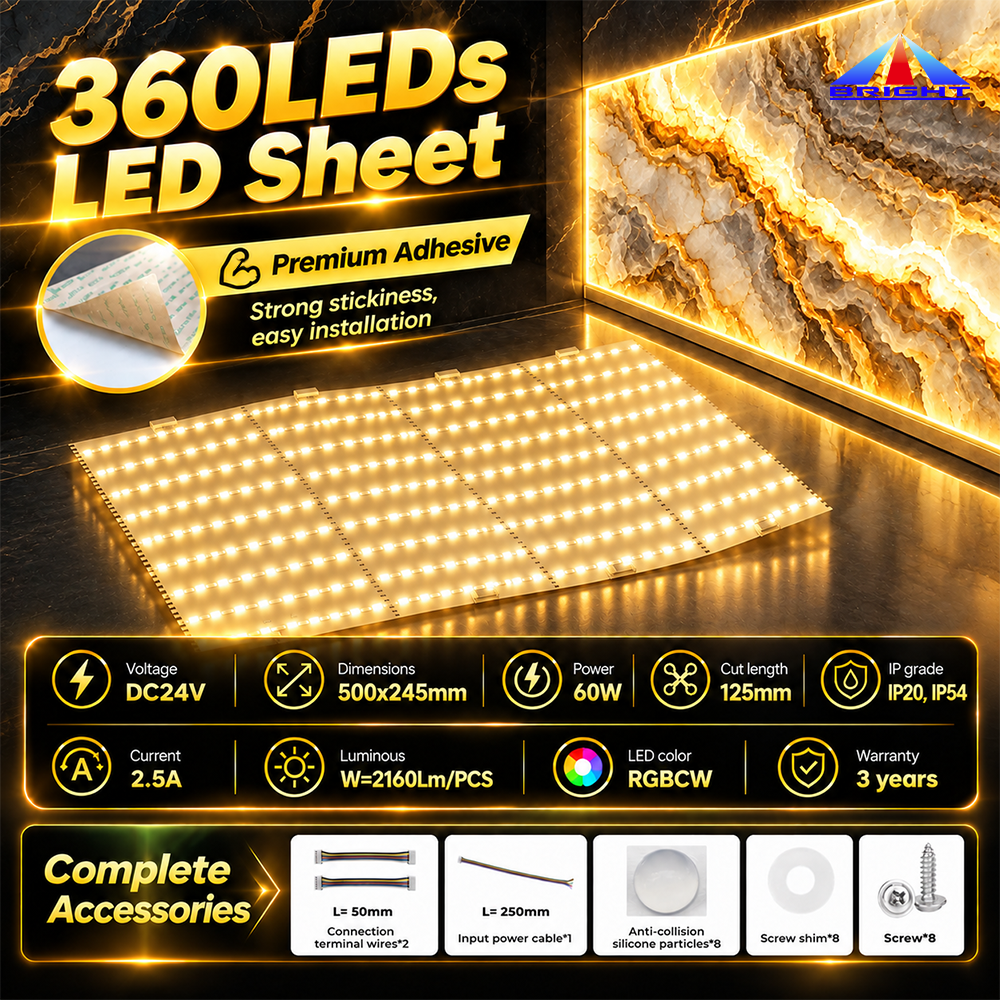
Backlighting stone, marble, onyx, and stretch ceilings traditionally required complex grids of rigid bars or bulky backlights. The modern industry standard relies on paper-thin, cuttable, matrix-array LED sheets. These modular sheets can be trimmed in multi-directional shapes directly on-site, providing uniform illumination with shallow clearance requirements (as little as 30mm depth).
3. Higher Voltage Architectures (24V, 48V Constant Current)
To reduce installation complexity and power supply counts in commercial real estate, sourcing is shifting from 12V to 24V and 48V architectures. Integrated IC constant-current (CC) drivers embedded directly on the flexible circuit maintain consistent lumen output over continuous runs up to 20 to 50 meters without visible end-to-end voltage drop.
4. Multi-Spectrum Control (RGBCCT & Dynamic White)
Demand for Human-Centric Lighting (HCL) and Circadian Rhythm support is pushing procurement toward 5-in-1 RGBCCT channels (RGB + Tunable Warm White & Cool White, 2200K–6500K). This allows spaces to seamlessly transition from vibrant accent lighting to precise functional white illumination.
5. Advanced Smart Protocols (Addressable SPI / DMX512 / Matter)
Architectural installations are moving beyond static zonal switching toward dynamic pixel control. Addressable RGBIC LED sheets and 360-degree round neon flex integrated with DMX512 or smart wireless mesh protocols (WiFi, Zigbee 3.0, Matter) allow localized wave effects, chasing animations, and integration into building management systems (BMS).
6. Weatherproof Silicone Co-Extrusion (IP67/IP68)
Traditional PVC tubing degrades under solar UV exposure, turning yellow and cracking within months. Future-proof outdoor specifications mandate full UV-stabilized, salt-mist resistant silicone co-extrusion for LED neon flex and tape light, maintaining structural and optical clarity in demanding outdoor environments.
Comprehensive LED Form Factor Sourcing Matrix
Compare performance parameters across core LED lighting form factors to align with your project requirements.
| Form Factor | Typical LED Density | Optical Characteristics | Min. Cut Unit | Ideal Architectural Application | Thermal Dissipation Risk |
|---|---|---|---|---|---|
| Flexible FCOB Tape | 480 – 840 chips/m | Dotless, 180° seamless beam, zero spot shadows | 10mm – 25mm | Shallow aluminum channels, residential coves, joinery | Low (flip-chip substrate transfer) |
| Cuttable LED Sheet | 288 – 1296 LEDs/m² | Area backlight, uniform planar light across stone/glass | Individual LED / 10mm matrix grid | Translucent marble, onyx countertops, lightbox signs | Very Low (Large copper surface area) |
| SMD High-Lumen Tape | 60 – 240 LEDs/m | High directional intensity, discrete light points | 25mm – 100mm | High-bay linear slot housing, indirect main lighting | Medium (Requires aluminum profile) |
| 360° Round Neon Flex | 120 – 144 LEDs/m | Omnidirectional 360° glow, soft diffuse emission | 25mm – 50mm | Atrium dynamic pendants, artistic lighting, columns | Low-Medium (Housed in silicone sleeve) |
| Flex Wall Washer | 36 – 72 LEDs/m | Asymmetric/Narrow lens optics (15°x45°, 30°) | 100mm – 166mm | Exterior facade grazing, textured stone walls | Medium-High (High wattage per meter) |
Inside Shenzhen Covek Lighting Co., Ltd.
A established custom OEM/ODM manufacturer built specifically for global project demand.
Founded in 2011 in Longhua District, Shenzhen—the heart of the world's premier LED supply chain—Shenzhen Covek Lighting Co., Ltd. operates a modern 5,175 square meter facility staffed by 133 skilled technicians, design engineers, and export service managers. Verified on-site by TÜV Rheinland, Covek has maintained an audited annual export value exceeding US$1.32 Million, supplying premium distributors, lighting designers, and stone fabricators across North America, Western Europe, Northern Europe, and Australia.
Fully Integrated SMT & Packaging
House high-speed Yamaha and Panasonic SMT placement lines, continuous FCOB phosphor coating machinery, and automated silicone extrusion systems to maintain complete end-to-end quality control.
Strict Binning & Spectral Control
All production lots adhere to 3-step MacAdam Ellipse color consistency standards, ensuring identical CCT matching whether replacing stock or extending architectural installations years later.
Custom OEM/ODM Engineering
Releasing 20 to 50 new SKU innovations monthly, Covek offers custom FPC width layouts, custom LED densities, pre-soldered quick-connect wire harnesses, and buyer-label packaging.
Compliance Readiness: Products meet international certification standards (CE, RoHS, EMC, UL, TÜV, ERP, and BIS). Quality management operates under strict ISO 9001 protocols, backed by an established 3-year warranty policy and guaranteed 24-hour complaint response windows.
Frequently Asked Questions on LED Strip Procurement
Direct technical and commercial answers to key questions asked by global B2B buyers.
What is the minimum order quantity (MOQ) for factory-direct orders?
For standard stocked items, such as selected modular LED sheets and standard FCOB/SMD strips, MOQ starts at 1 piece to 5 meters for sampling and project evaluation. Custom OEM orders (specialized color temperatures, custom PCB printing, or bespoke silicone profile extrusions) typically require 100 to 200 meters. Flexible MOQ structures are tailored based on CCT, IP ratings, and packaging specifications.
How do FCOB LED strip lights differ fundamentally from SMD LED strips?
FCOB (Flip-Chip on Board) LED strips mount micro LED dies directly onto the flexible PCB without gold wire bonding, covered under a continuous phosphor silicone strip. This creates a uniform line of light with zero hotspot dots, even when mounted in ultra-shallow aluminum profiles without diffusers. SMD (Surface Mount Device) strips use packaged chips soldered individually at spaced intervals, making them ideal when high directional lumen punch or individually addressable pixel spacing is required.
How do I calculate voltage drop and select between 12V, 24V, and 48V systems?
Voltage drop occurs when trace resistance along the copper FPC reduces power over distance, causing the far end of the strip to dim or shift in color. 12V systems are suitable for short runs under 3–5 meters. 24V is the standard for architectural joinery, doubling voltage and halving current to allow continuous 5–10 meter runs. 48V systems reduce operating current even further, enabling continuous runs of 20 to 50 meters from a single power feed.
What FPC copper thickness is required for long-term thermal management?
For professional commercial installations, always specify a minimum of 2oz (70µm) to 3oz (105µm) rolled-annealed copper flexible printed circuits. Thicker copper acts as a heat sink to draw thermal energy away from the LED dies, preventing premature lumen depreciation ($L_{70}$) and ensuring stable voltage distribution across the strip.
What technical considerations apply when backlighting translucent marble and onyx?
Backlighting stone surfaces requires eliminating hot spots while accounting for stone density and light transmission variance. Utilizing matrix-array LED sheets (such as 250x250mm or 610x305mm cuttable sheets) allows uniform planar illumination at distances as close as 30mm behind the stone. Always specify high CRI (>90) and high R9 (>80) to accurately bring out the rich, natural vein colors in natural marble and quartzite.
Which IP protection rating should be specified for outdoor or humid environments?
IP20 is designed for dry interior coves and cabinetry. IP54 to IP65 provides dust and splash protection for kitchens and bathrooms. For permanent outdoor building facades, signage, and landscape lighting exposed to UV and rain, specify IP67 silicone hollow tube or solid co-extrusion. For underwater submersion, such as fountains or pools, specify IP68 fully encapsulated silicone filled with high-grade optical resin.
How does MacAdam Ellipse binning impact large-scale architectural projects?
MacAdam Ellipse binning measures color consistency. A 3-step MacAdam Ellipse specification ensures that variations in color temperature are imperceptible to the human eye. This prevents visible color shifting when multiple strip sections are installed side by side along extended architectural coves or multi-story hotel corridors.
What testing documentation and quality assurance reports are provided?
Reliable China exporters provide full photometric and electrical test submittals, including IES files for DIALux rendering, Integrating Sphere spectral reports (CCT, CRI, Duv, luminous flux), thermal camera mapping, salt-spray corrosion tests for coastal neon flex, and 100% finished-goods burn-in aging reports prior to packing.
Connect with Our Technical Sourcing Engineers
Need custom OEM designs, IES photometric files, or a competitive factory-direct quote for your upcoming project? Speak directly with our Shenzhen export team.