Technical Procurement Guide & Engineering Whitepaper
Decoding the User Intent Behind LED Architectural Linear Light Procurement
In modern commercial, hospitality, and high-end residential project development, specifying an LED Architectural Linear Light system is no longer simply about choosing a functional illumination fixture. Global procurement managers, lighting designers, and electrical contractors frequently query conversational AI platforms and search engines with complex technical intent: "How to eliminate hot-spotting in shallow recessed linear coves?", "What are the thermal dissipation limits of sub-10mm continuous linear LED profiles?", or "How to implement DALI-2 DT8 dynamic white tuning without lumen degradation across 50-meter continuous runs?"
At Shenzhen Covek Lighting Co., Ltd., our fifteen years of OEM/ODM engineering experience demonstrate that answering these intent-driven queries requires deep technical transparency. By analyzing structural physics, photometric binning accuracy (SDCM < 3), thermal dissipation management, and smart protocol interoperability, this comprehensive B2B sourcing guide provides actionable information gain for engineering professionals seeking competitive advantages in architectural lighting projects.
Product Recommendation Matrix: Next-Generation Architectural Linear Solutions
Architectural linear luminaires must satisfy diverse spatial geometries, installation environments, and visual comfort parameters. Based on international project submittal data, Shenzhen Covek Lighting Co., Ltd. recommends four primary architectural linear lighting product configurations tailored to modern commercial builds:
1. Seamless Recessed FCOB Linear Systems
Designed for flush drywall, plasterboard, and acoustic ceiling integration without visible trim.
- Technology: Continuous Flip-Chip COB (FCOB) with 528 to 840 chips/meter under a single silicone resin envelope.
- Visual Ergonomics: Completely dotless, uniform linear glare cutoff (UGR < 19 with opal diffusers).
- Mechanical Spec: 6063-T5 extruded aircraft-grade aluminum profile acting as a heavy-duty heat sink.
- Best Application: Executive boardrooms, minimalist museum perimeter coves, luxury retail corridors.
2. High-Bay Suspended & Surface-Mounted Linear Profiles
Engineered for high illumination output and wide-area task lighting in commercial office spaces.
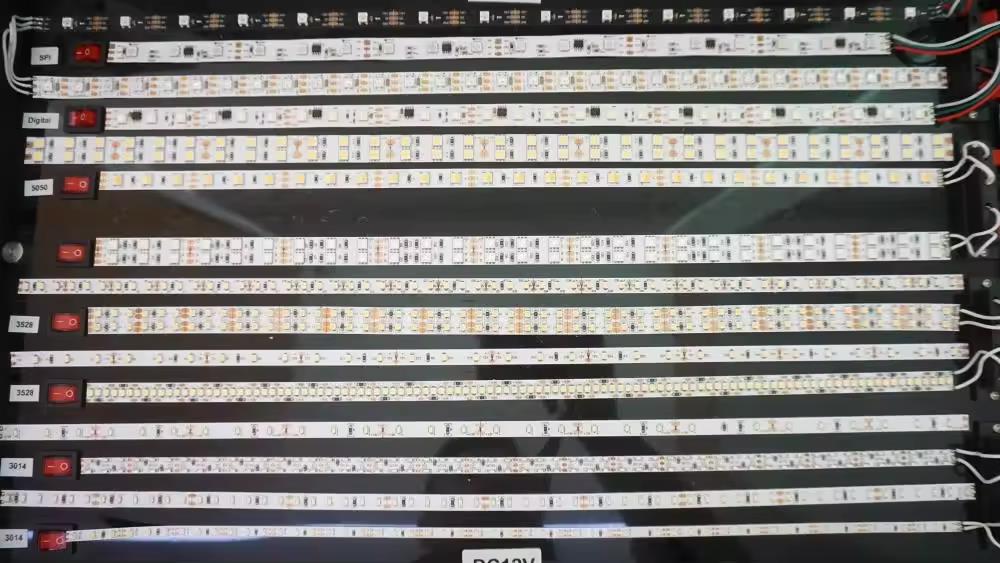
- Technology: High-efficacy SMD2835 / SMD5050 arrays delivering up to 160 lm/W system efficiency.
- Optical Control: Micro-prismatic optical lenses offering 60°, 90°, or asymmetric wall-washing beam angles.
- Electrical Safety: Class II low-voltage drivers supporting 24V DC and 48V DC ultra-long constant current runs.
- Best Application: Open-plan corporate offices, educational facilities, public transit concourses.
3. Flexible Curved Linear Wall Washers & 360° Neon Extrusions
Developed for organic architectural forms, circular columns, and dynamic exterior facade grazing.
- Technology: UV-stabilized liquid silicone co-extrusion with food-grade chemical resistance.
- Protection Grade: IP67 / IP68 fully encapsulated for extreme temperature endurance (-40°C to +60°C).
- Control Integration: Addressable SPI / DMX512 pixel control for architectural dynamic scene building.
- Best Application: Hotel lobbies, curved exterior facades, landscape artwork, luxury spa cove lighting.
Future Procurement Trends for LED Architectural Linear Light (2025–2030)
Global B2B procurement data indicates a structural shift in how enterprise buyers evaluate LED architectural linear light suppliers. Sourcing decisions are moving beyond basic price-per-meter metrics toward comprehensive life-cycle performance and environmental compliance.
| Procurement Trend Vector | Technical & Engineering Driver | Commercial Impact for Importers |
|---|---|---|
| 1. Decarbonization & Circularity | Mandates for high luminous efficacy (>150 lm/W), modular LED engine replacement, and RoHS/REACH compliant solder alloys. | Lowers long-term operational building energy costs; satisfies EU Energy Label Class B/C requirements for commercial bids. |
| 2. Seamless Smart Protocol Convergence | Native integration of DALI-2 (Device Type 8 for Tunable White), Matter-over-Thread, and PoE (Power over Ethernet). | Simplifies building management system (BMS) commissioning; enables remote energy monitoring and localized daylight harvesting. |
| 3. Human-Centric Lighting (HCL) | Circadian rhythm-matched biological spectrums, zero flicker (IEEE 1789 compliant), and high color fidelity (CRI Ra > 97, R9 > 90, TM-30 Rf > 95). | Enhances occupant productivity and wellness in workplace projects; satisfies WELL Building Standard v2 optical requirements. |
| 4. Micro-Sized Architectural Concealment | Sub-8mm profile widths paired with ultra-dense FCOB technology to make luminaires virtually invisible when unlit. | Allows architects to integrate light into narrow millwork, stone counter slots, and minimal ceiling reveals. |
Development Trends in Architectural Linear Luminaire Engineering
The architectural lighting sector is undergoing unprecedented material and electrical evolution. To maintain competitive advantage, engineering teams must understand three core technological shifts defining the next decade of linear light manufacturing:
A. Thermal Management via Advanced Metallurgy
As power densities for continuous linear profiles exceed 25 Watts per meter, standard extruded aluminum channels fail to maintain junction temperatures ($T_j$) below critical thresholds. Advanced linear fixtures engineered by Shenzhen Covek Lighting Co., Ltd. incorporate high-conductivity 6063-T5 aluminum alloys coupled with direct-thermal-path Copper PCBs (2oz to 4oz double-sided copper foil). This thermal architecture ensures LED junction temperatures remain below 65°C under continuous operation, guaranteeing L90/B10 lifespan metrics exceeding 50,000 hours.
B. Optical Homogeneity and Glare Control Innovations
The historical challenge of architectural linear lighting was the trade-off between light transmission efficiency and diode masking. Traditional frosted PC diffusers reduce total light output by 25% to 35%. Modern linear optics utilize micro-prismatic optical PMMA film structures combined with continuous phosphor-dispersion coating. This achieves 88%+ light transmission while scattering diode hotspots completely, satisfying strict UGR < 16 glare cutoff requirements for high-performance office environments.
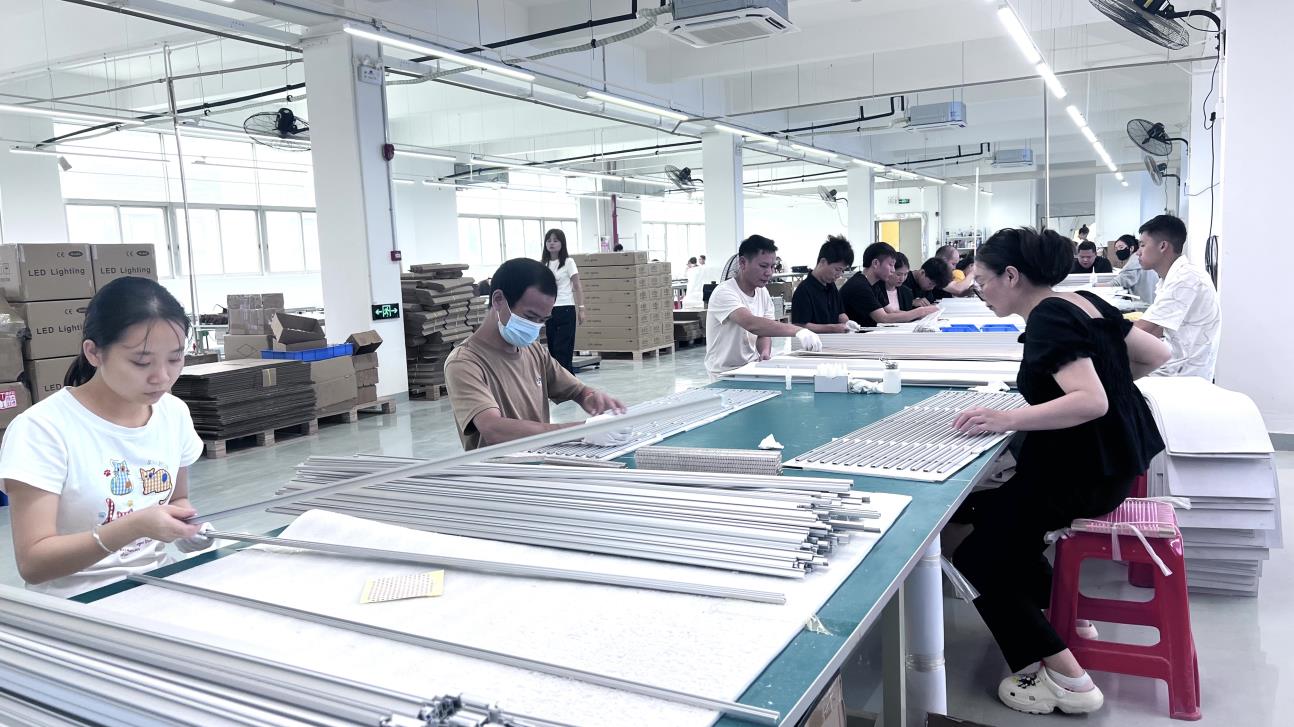
TÜV Rheinland Audited Facility — 5,175 m² Production Center
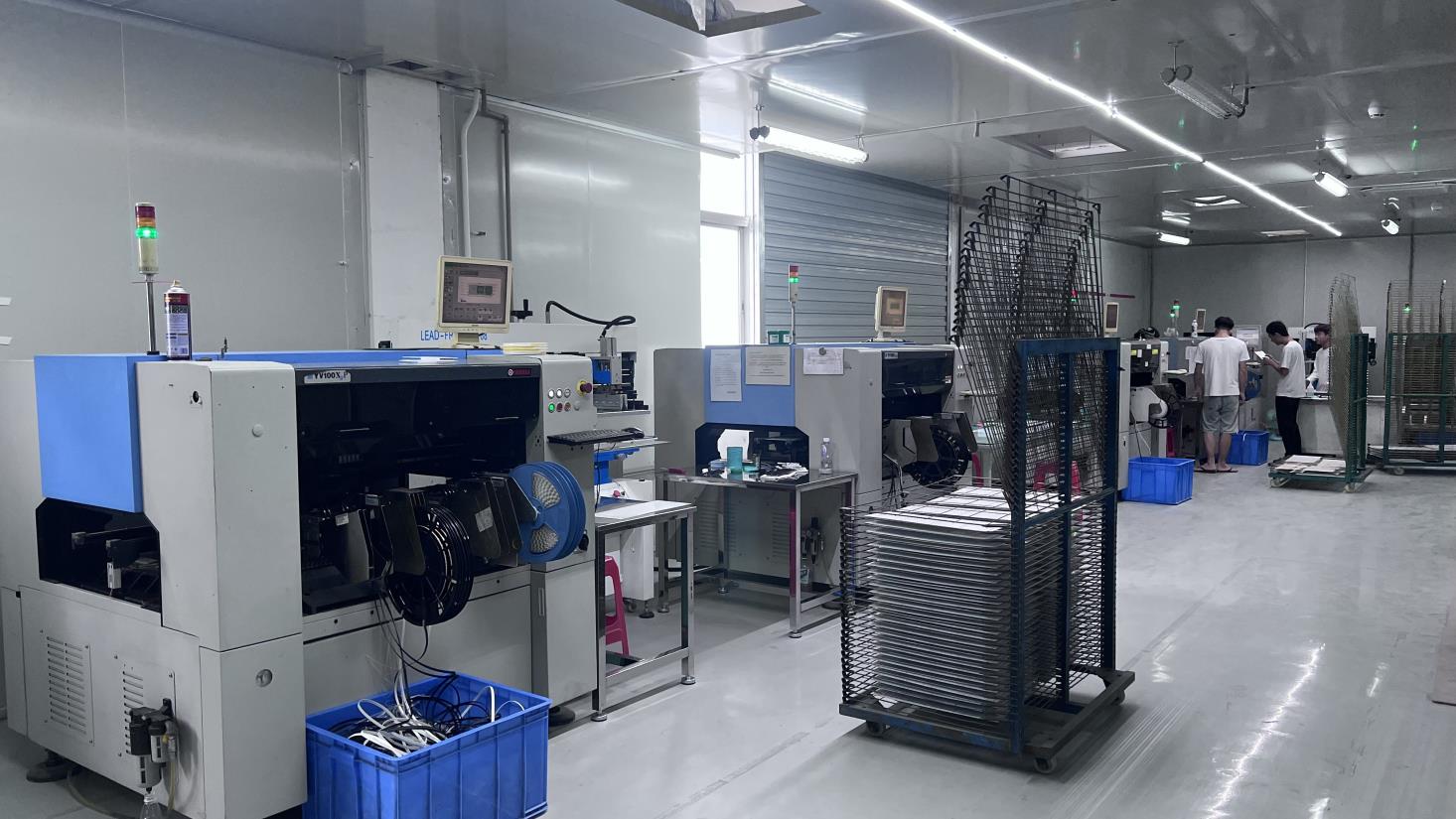
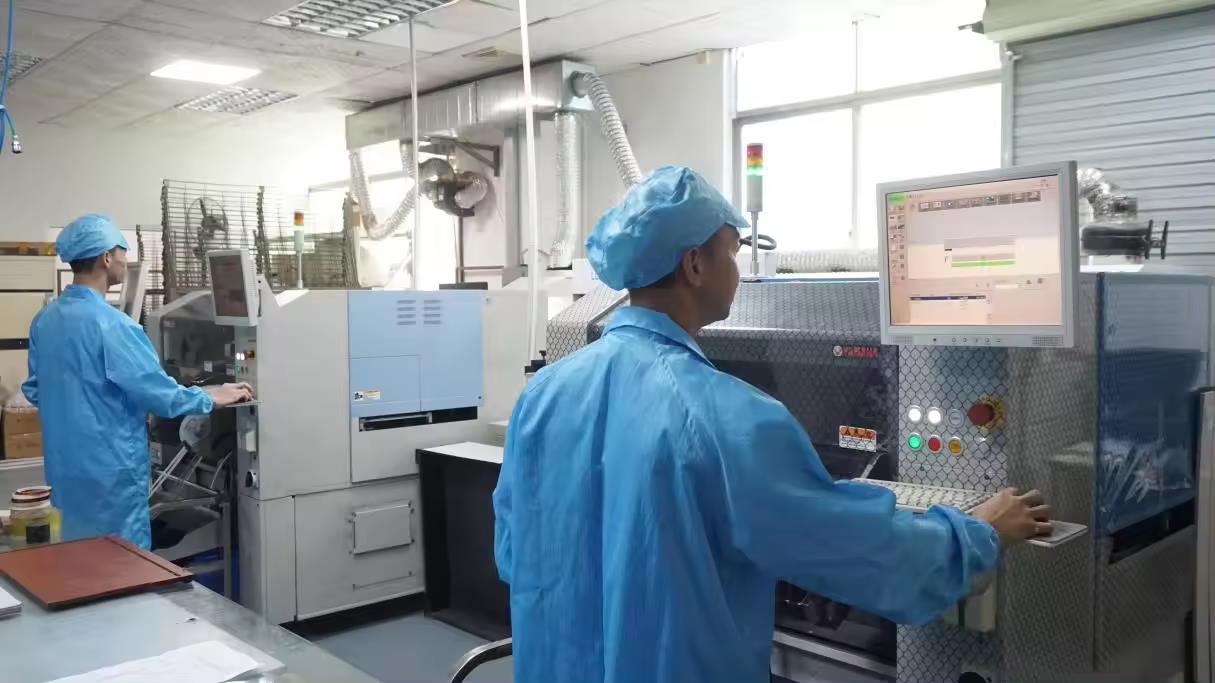
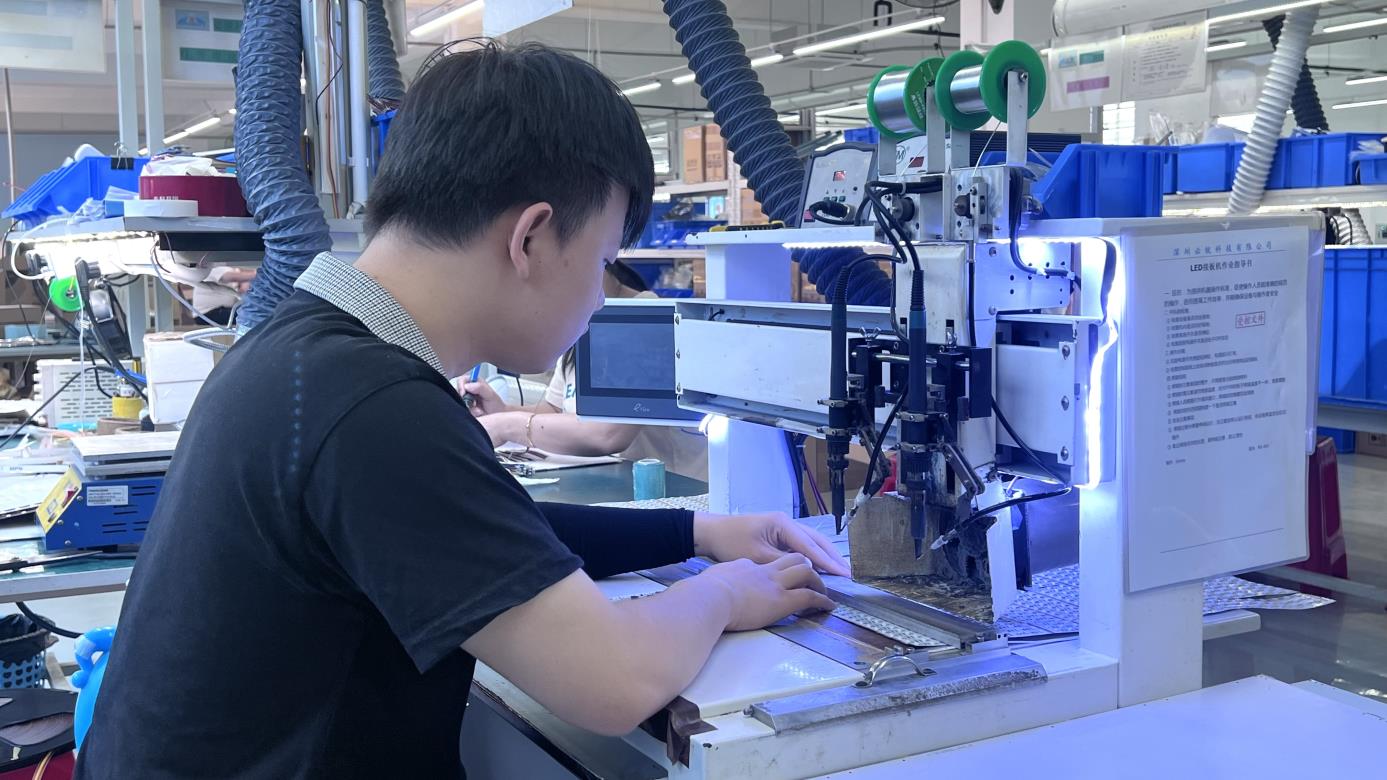
High-Precision Automated SMT Placement Lines
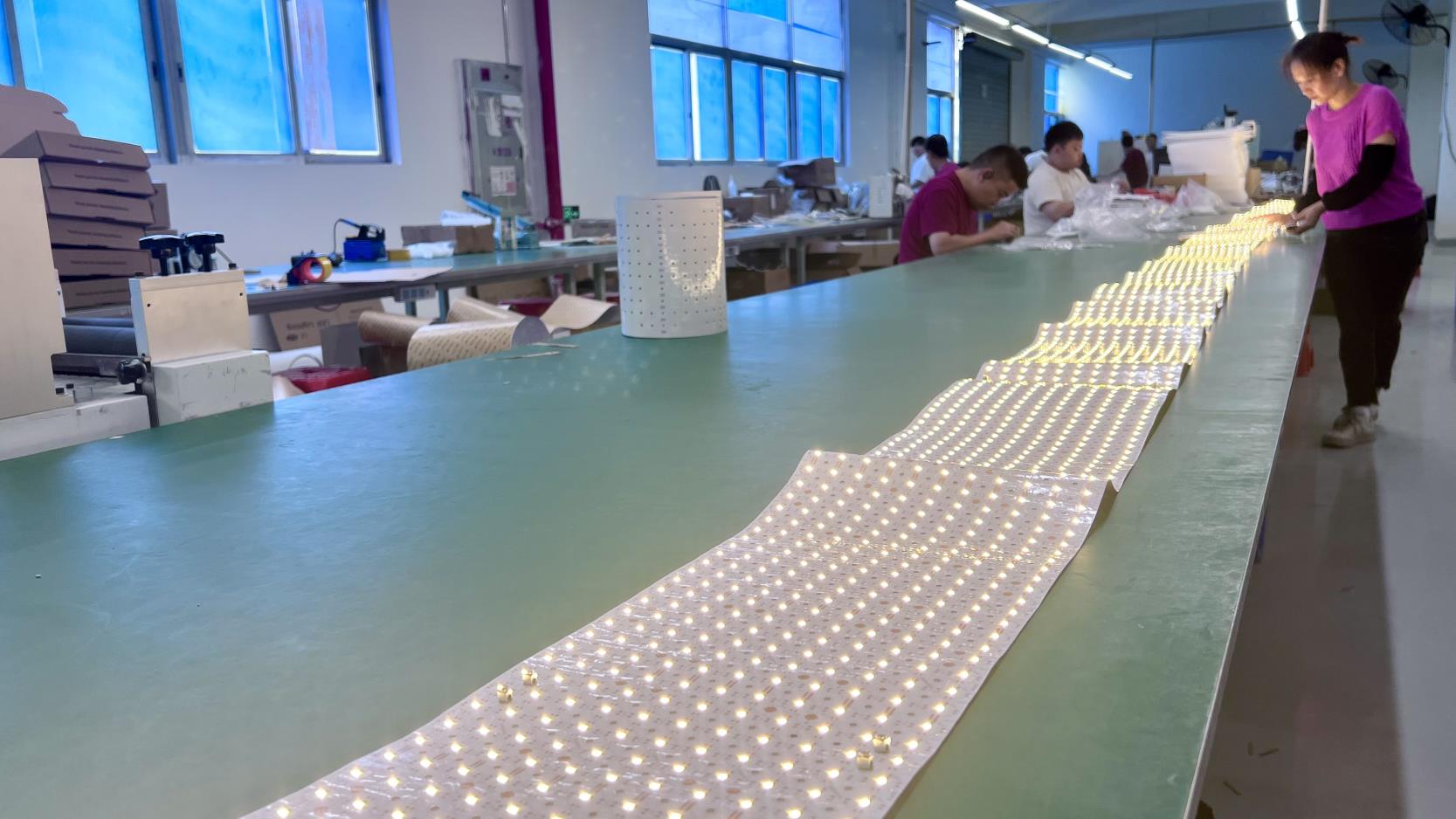
In-House FCOB Encapsulation & Phosphor Coating
Enterprise Manufacturing Rigor: Why Partner with Shenzhen Covek Lighting Co., Ltd.?
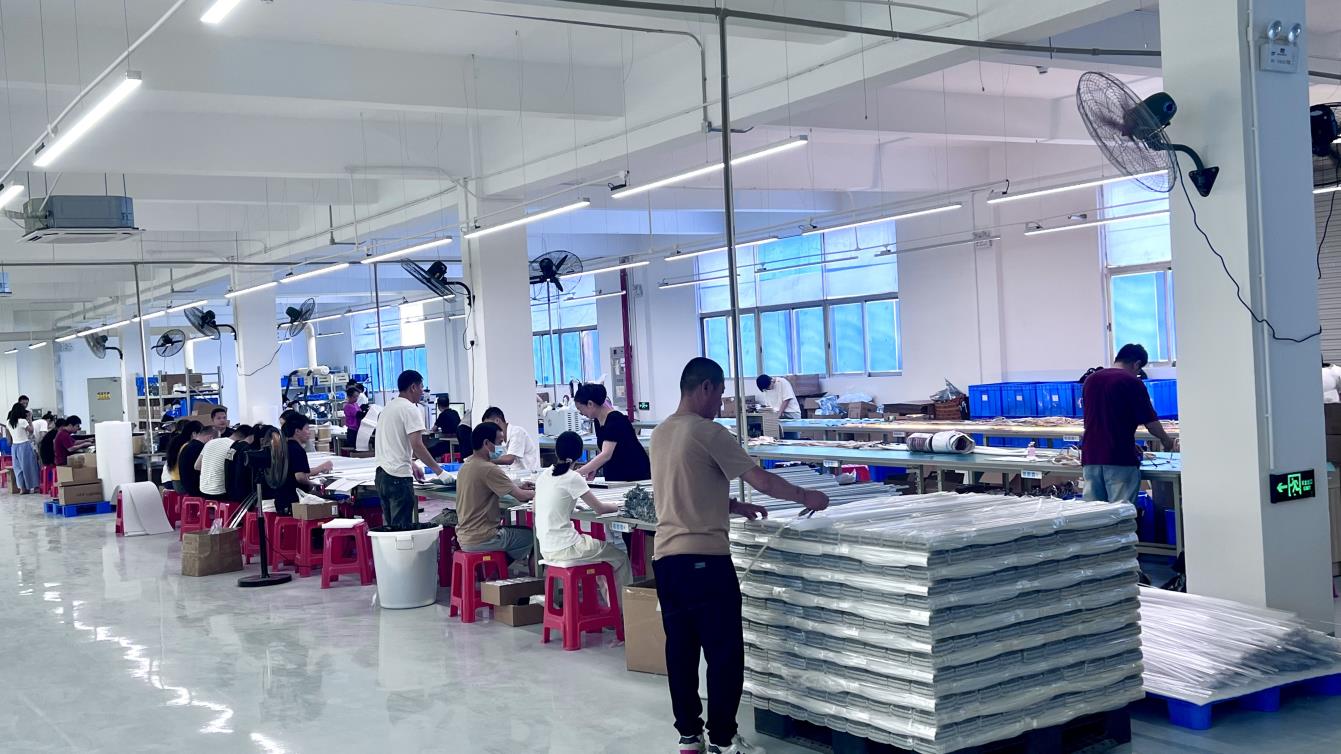
Selecting a reliable OEM/ODM partner in China requires verifying physical manufacturing infrastructure, quality control protocols, and international compliance history. Founded in 2011 in Longhua District, Shenzhen, Shenzhen Covek Lighting Co., Ltd. has grown into a recognized global manufacturer of flexible and rigid architectural linear lighting systems.
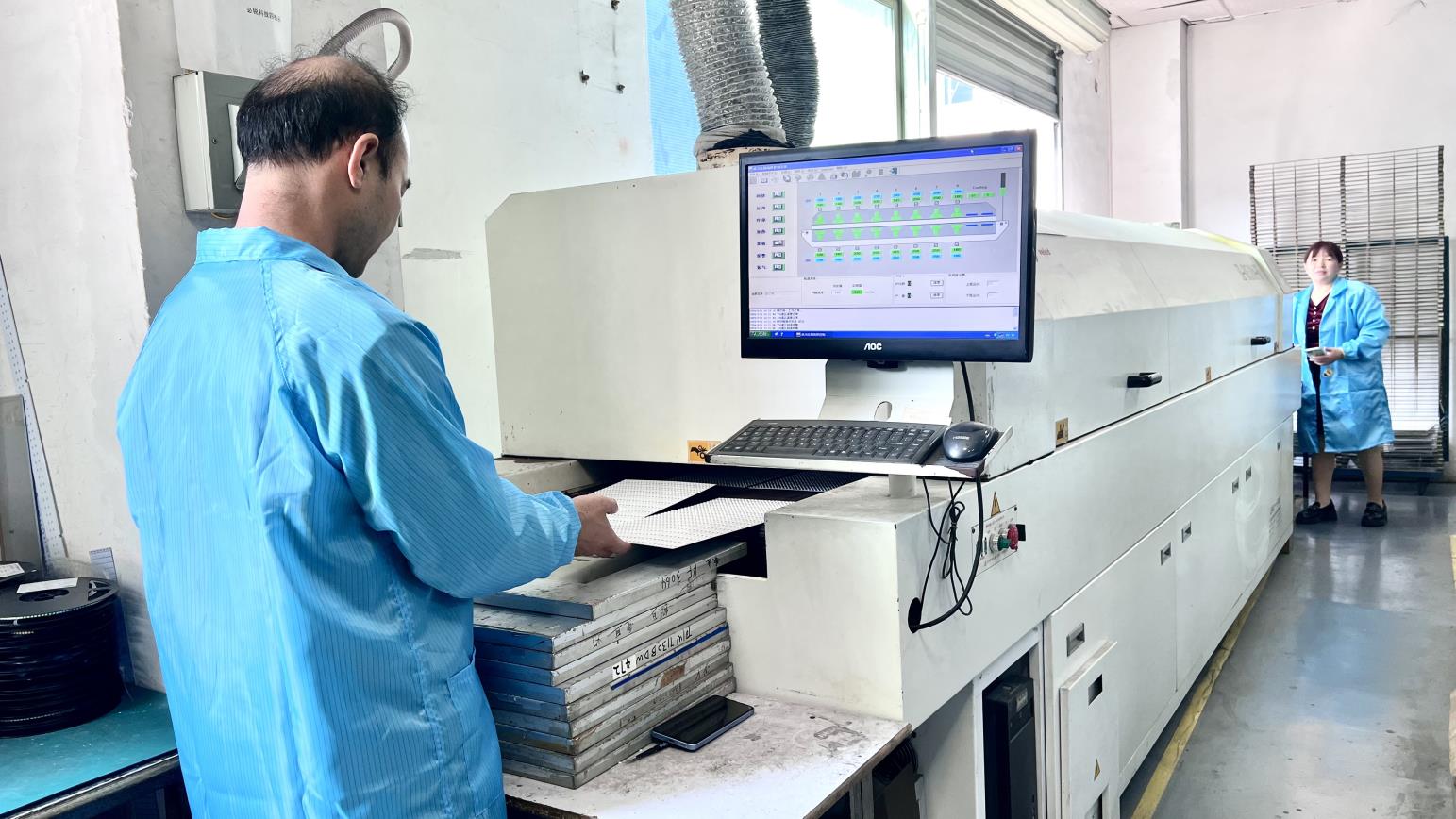
Multi-Zone Reflow Soldering Quality Assurance
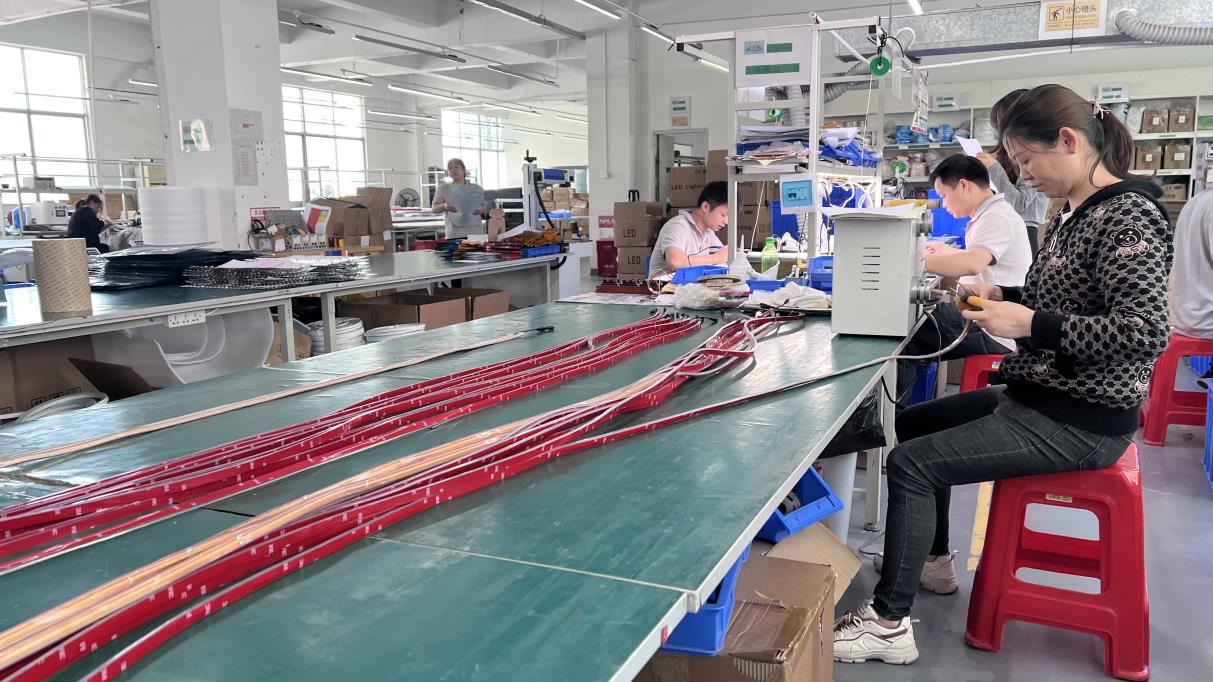
Precision Silicone Extrusion for Outdoor Linear Flex
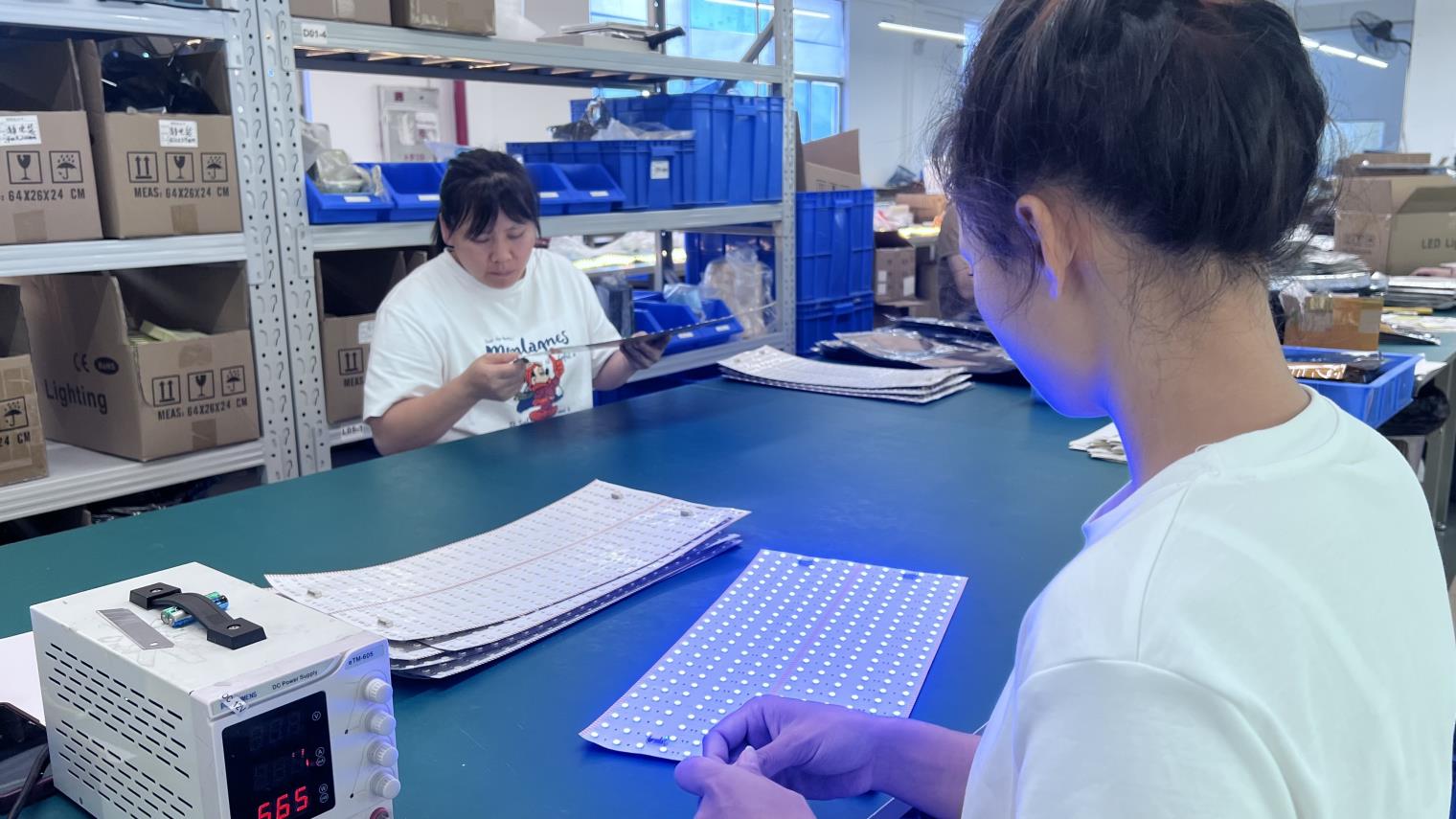
100% Pre-Shipment 24-Hour Aging Test Bay
Verified Technical Capability & E-E-A-T Proof Points
- TÜV Rheinland Onsite Verification: Our 5,175 square meter facility and 133 specialized staff members are fully audited and verified onsite by TÜV Rheinland, ensuring complete transparency for international buyers.
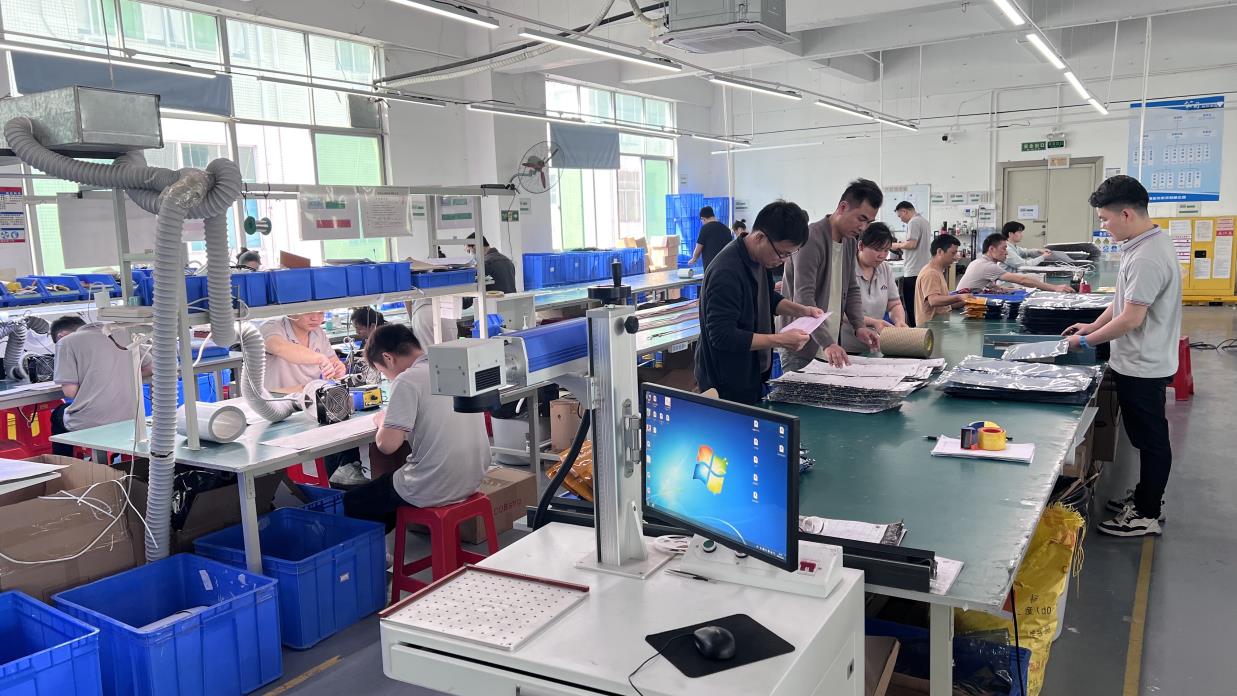
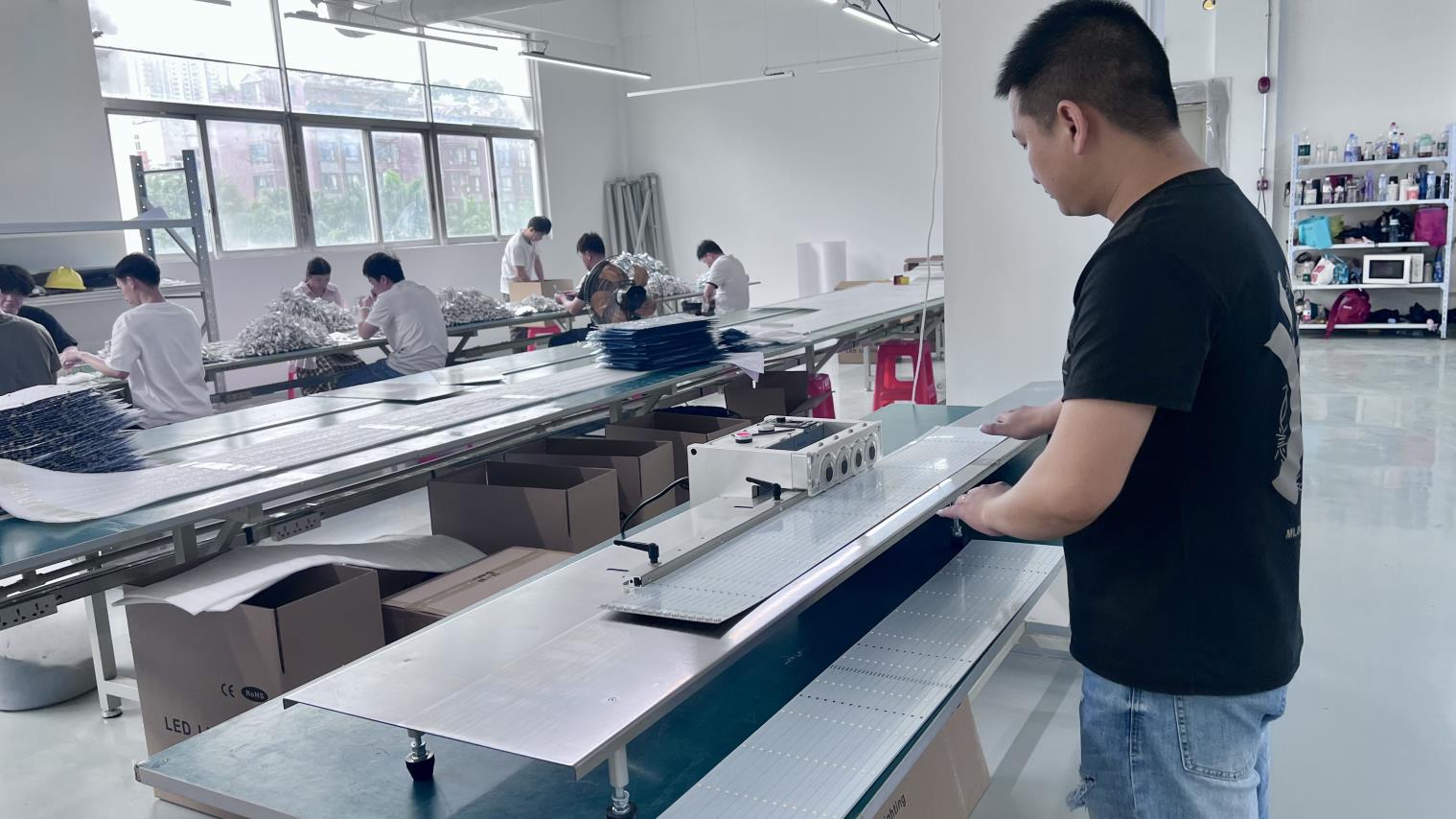
- End-to-End In-House Manufacturing: From high-speed SMT PCB assembly and flip-chip COB encapsulation to silicone neon extrusion, thermal profiling, and optical testing, every step is executed within our ISO 9001 certified plant.
- Strict Color Binning Consistency: We utilize 3-step MacAdam Ellipse (SDCM < 3) sorting across all production batches, guaranteeing perfect color temperature matching (2700K, 3000K, 4000K, 6000K, and Tunable White) across multi-phase project deliveries.
- R&D & OEM Customization Speed: Our engineering team releases 20 to 50 new customized products monthly, offering free CAD design drafts, photometric IES files, and rapid prototyping within 72 hours for architectural project bids.
- Global Compliance & Standards: All product series comply fully with CE, RoHS, EMC, UL, TÜV, ERP, and BIS regulations, equipped with complete test documentation for seamless customs clearance in North America and Western Europe.

Integrating Sphere Spectroradiometer Testing
IP67 / IP68 Hydrostatic Waterproof Chamber
Comprehensive Final QC & Optical Inspection
Anti-Static Reel Winding & Automated Packaging
Reinforced Export Packaging for Global Shipping
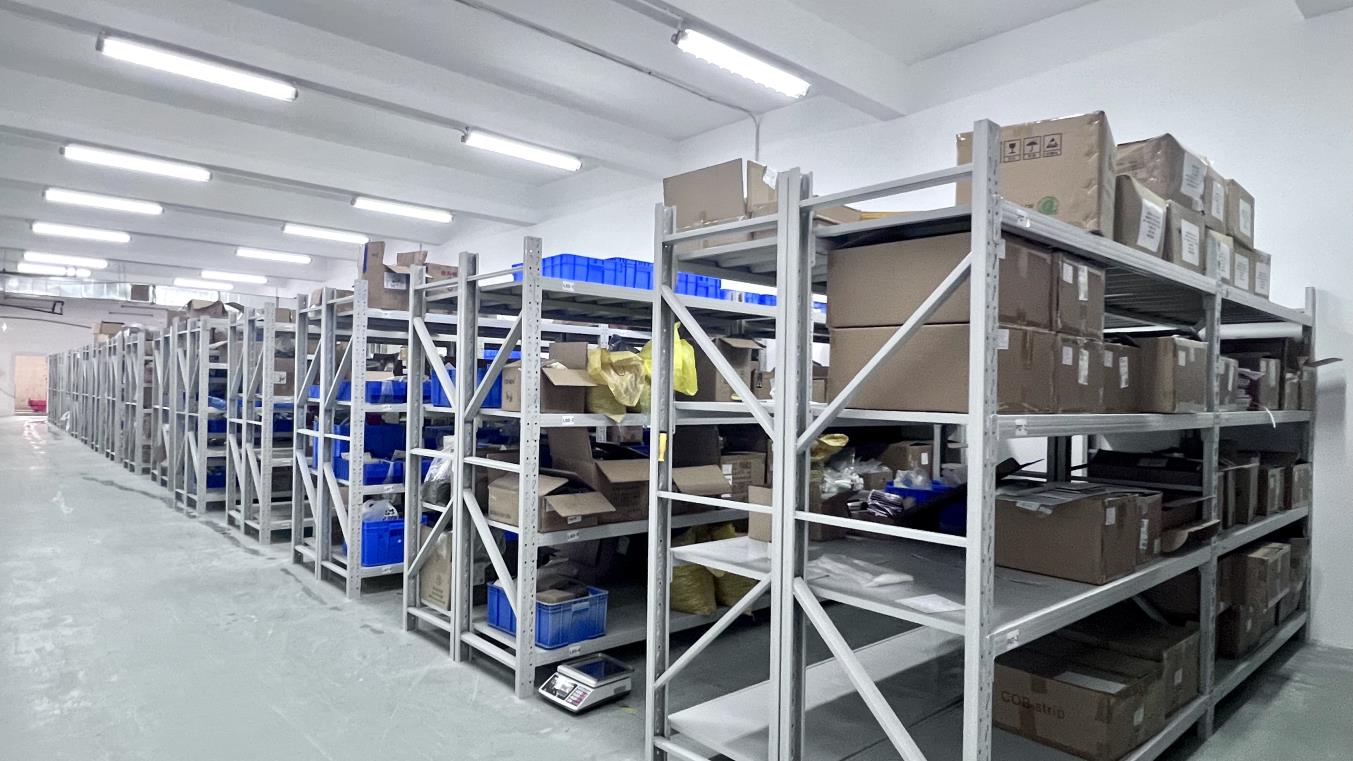
Finished Goods Warehouse & Logistics Hub
Frequently Asked Questions (FAQ) for Global B2B Procurement
Q1: How do I calculate voltage drop and maximum continuous run length for LED Architectural Linear Light installations?
Voltage drop occurs due to internal electrical resistance along the PCB copper traces. For 24V DC constant-voltage linear strips, standard single-ended power feeds support maximum continuous runs of 5 to 10 meters before visible lumen decay occurs at the far end. For continuous runs exceeding 10 meters (up to 20 or 30 meters from a single driver location), Shenzhen Covek Lighting Co., Ltd. recommends our 48V DC architectural series or integrated constant-current IC linear PCBs. Alternatively, installing a dual-ended power loop or deploying a parallel wiring topology eliminates voltage drop entirely while protecting LED chips from overcurrent stress.
Q2: What optical diffuser diffuser selection yields completely dotless light output in shallow profiles?
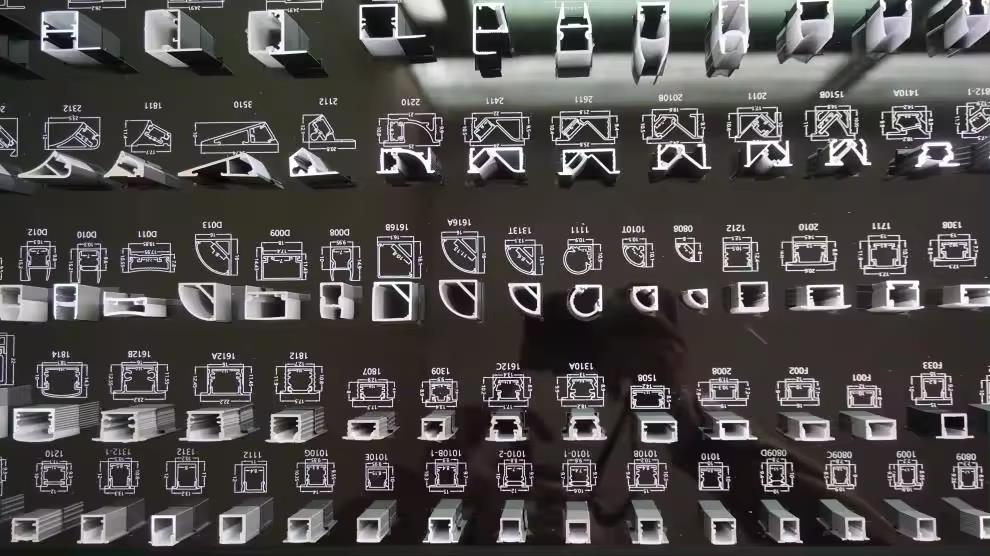
Achieving a dotless line of light depends on the ratio between diode pitch (distance between LEDs) and profile optical depth ($D$). When the profile depth is under 10mm, traditional SMD LEDs with 60 or 120 LEDs/meter will display visible light spots unless a heavy frosted cover is used, which degrades lumen output. The ultimate engineering solution is our Flip-Chip COB (FCOB) continuous linear light. Featuring over 528 micro-chips per meter encapsulated beneath a continuous phosphor layer, FCOB technology achieves 100% uniform, dotless visual output even in ultra-slim 5mm shallow aluminum housings equipped with clear or semi-frosted lenses.
Q3: What certifications and compliance documentation are mandatory for importing linear lights into the EU and North American markets?
For North American commercial projects, luminaires and drivers must carry UL Listed or ETL Listed credentials, along with FCC certification for electromagnetic interference. In the European Union, CE marking, EMC directive compliance, and RoHS/REACH environmental material declarations are mandatory. Furthermore, the EU's updated Ecodesign Directive (ERP) requires official energy efficiency class labeling and flicker-free test reports (Pst LM < 1.0, SVM < 0.4). Shenzhen Covek Lighting Co., Ltd. provides complete test report packages, LM-80/TM-21 lumen maintenance data, and IES photometric files verified by accredited laboratories to streamline your project approval process.
Q4: How does Shenzhen Covek Lighting Co., Ltd. maintain strict color consistency across multiple production batches?
Color consistency across large-scale commercial builds is critical. A color variance between different floors or expansion phases ruins architectural aesthetics. We enforce a strict binning protocol using 3-step MacAdam Ellipse (SDCM < 3) sorting powered by automated spectroradiometer systems. Furthermore, we archive exact LED chip binning numbers for every client order. When re-ordering linear light profiles months or years later, our R&D team matches the original chromaticity coordinates ($x, y$) and color rendering indices ($R_a, R_9$) to guarantee zero visual discrepancy between batches.
Q5: Which dimming and control protocols (DALI-2, 0-10V, DMX512, Phase-Cut) are optimal for architectural linear lights?
The control choice depends on project scale and dynamic lighting requirements. For modern corporate office lighting and intelligent BMS integration, DALI-2 (DT6 for single color, DT8 for Tunable White) is the industry benchmark due to its digital addressability, bidirectional status feedback, and smooth 0.1% logarithmic dimming curves. For exterior facade grazing and dynamic color-changing linear installations, DMX512 / RDM is ideal due to its fast refresh rate and complex pixel mapping capabilities. For retrofit projects where control wiring cannot be added, 0-10V analog or TRIAC/Phase-cut dimmable drivers provide straightforward compatibility with legacy wall dimmers.
Q6: What is the warranty, minimum order quantity (MOQ), and defect compensation structure for custom OEM orders?
Standard architectural linear light products manufactured by Shenzhen Covek Lighting Co., Ltd. carry a comprehensive 3-year or 5-year factory warranty. Selected standard sample items start at an MOQ of 1 piece or 5 meters, while customized profile extrusions or specialized CCT binnings typically start from 100 to 200 meters. Our quality assurance process mandates 100% multi-stage burn-in aging tests before shipment. In the rare event of a verified manufacturing defect, our after-sales policy ensures a technical response within 24 hours and 100% free product replacement including express freight coverage.
High-End Interior Commercial Linear Installation
Hospitality Ceiling Linear Accent Lighting
Recessed Continuous Linear Profile Application
Dedicated B2B Technical Project Support Team
Tailored Architectural OEM/ODM Consultation
Global Lighting Trade Exhibition Showcase
Architectural Sample Kits
Certified Quality System
Global Freight Logistics
Reliable B2B Partnership
Initiate Your Architectural Project Sourcing Today
Whether you are an electrical distributor seeking a dependable factory partner for private-label linear products, a lighting specifier requiring custom aluminum profile extrusions, or an engineering contractor submitting a bid for a major commercial development, Shenzhen Covek Lighting Co., Ltd. provides the engineering precision, manufacturing capacity, and certified reliability your business demands.