Featured LED Strip Kits & Architectural Light Engines
Engineered for commercial, residential, and custom slab backlighting applications with minimal voltage drop and superior color rendering consistency.
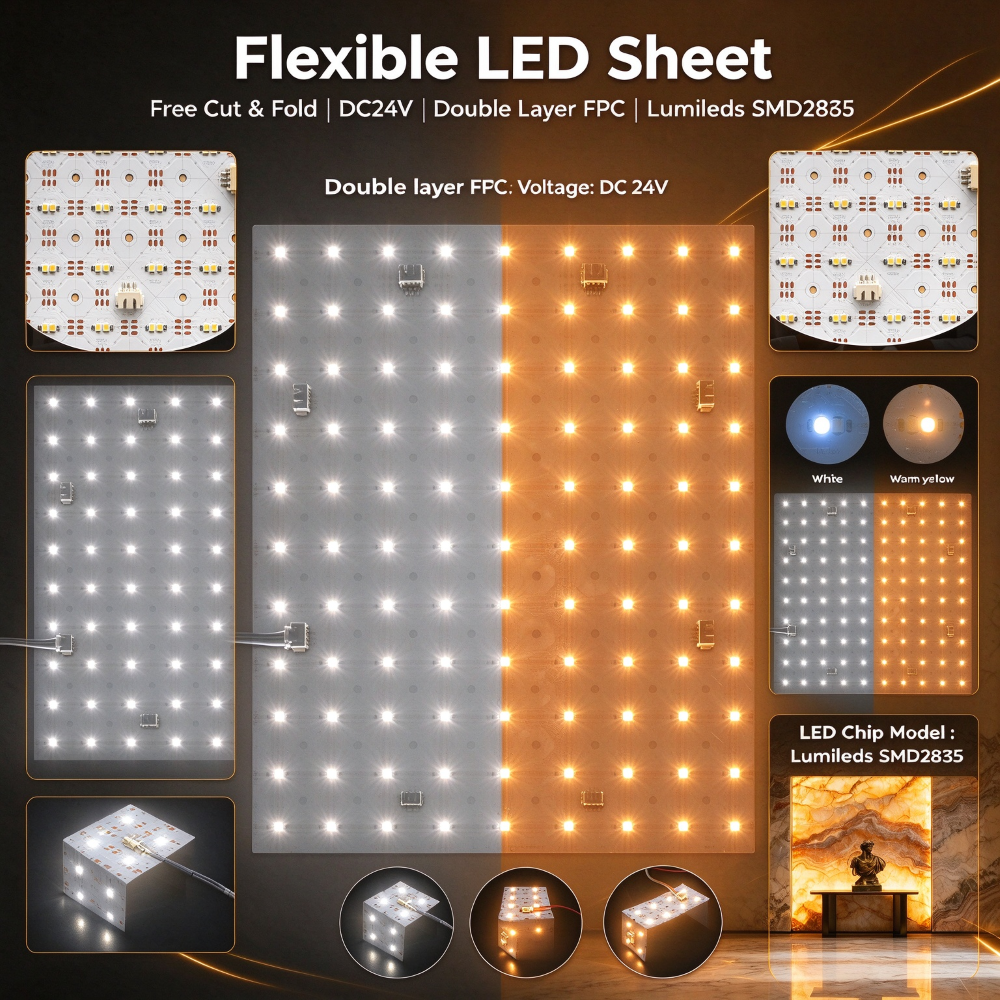
Flexible 250*250mm Cuttable LED Sheet Light DC24V 16W SMD2835 Dual Color 2700K+6500K IP20 IP54 Box Lighting or Slab Lighting
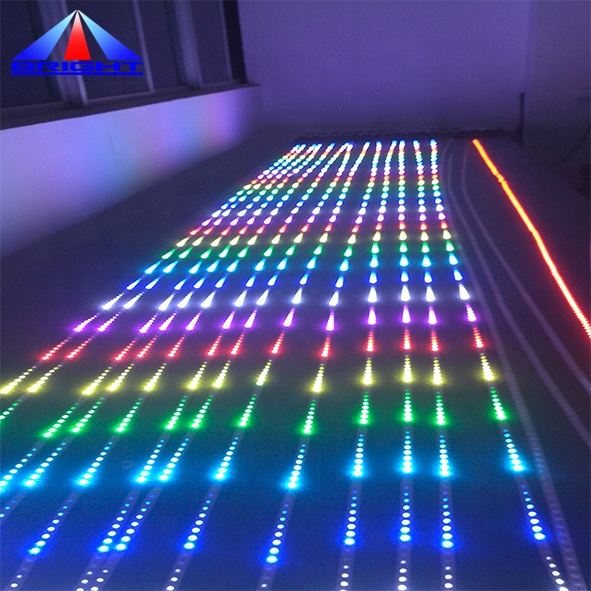
DC12V Addressable Led Strip with WS2815 60 Led/M One Led One Pixels for Decoration Signal Break-Point Continuous Transmission

DC48V Warm White and Cold White CCT LED Strip Long USE Design High Brightness and Smart Control by Wifi/remote/zigbee/blueteeth
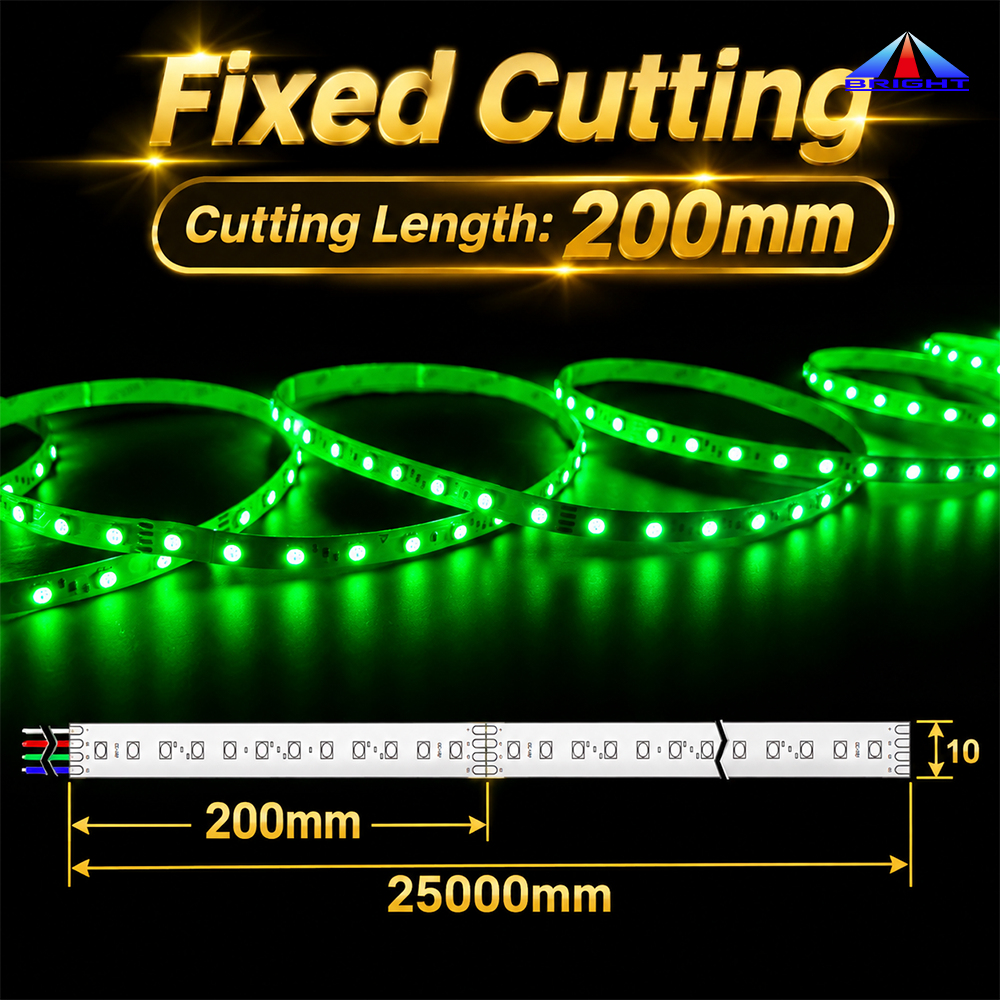
5050 RGB/RGBW LED Strip DC48V 10mm 60LEDs/m IP20 IP68 Waterproof 200mm Cut Flexible Tape for Room Ambience Cabinet Bar Lighting
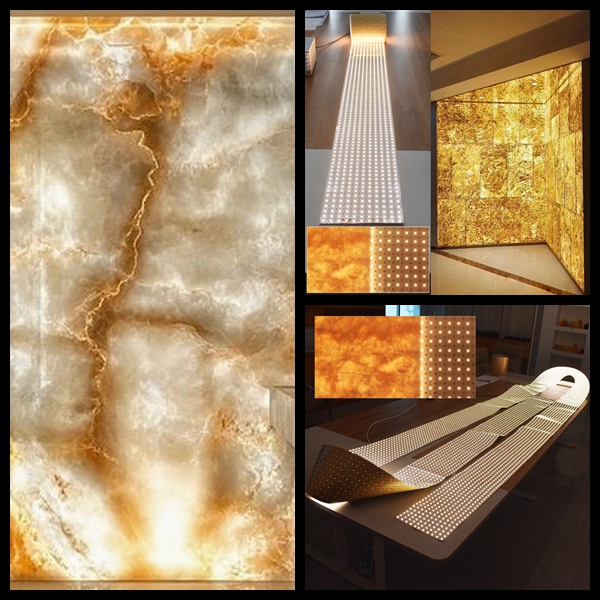
DC24V 10M Ultra Long Flexible SMD2835 LED Sheet Panel 528 LEDs High Lumen Backlight No Voltage Drop CRI 90 IP20 Kitchen Use
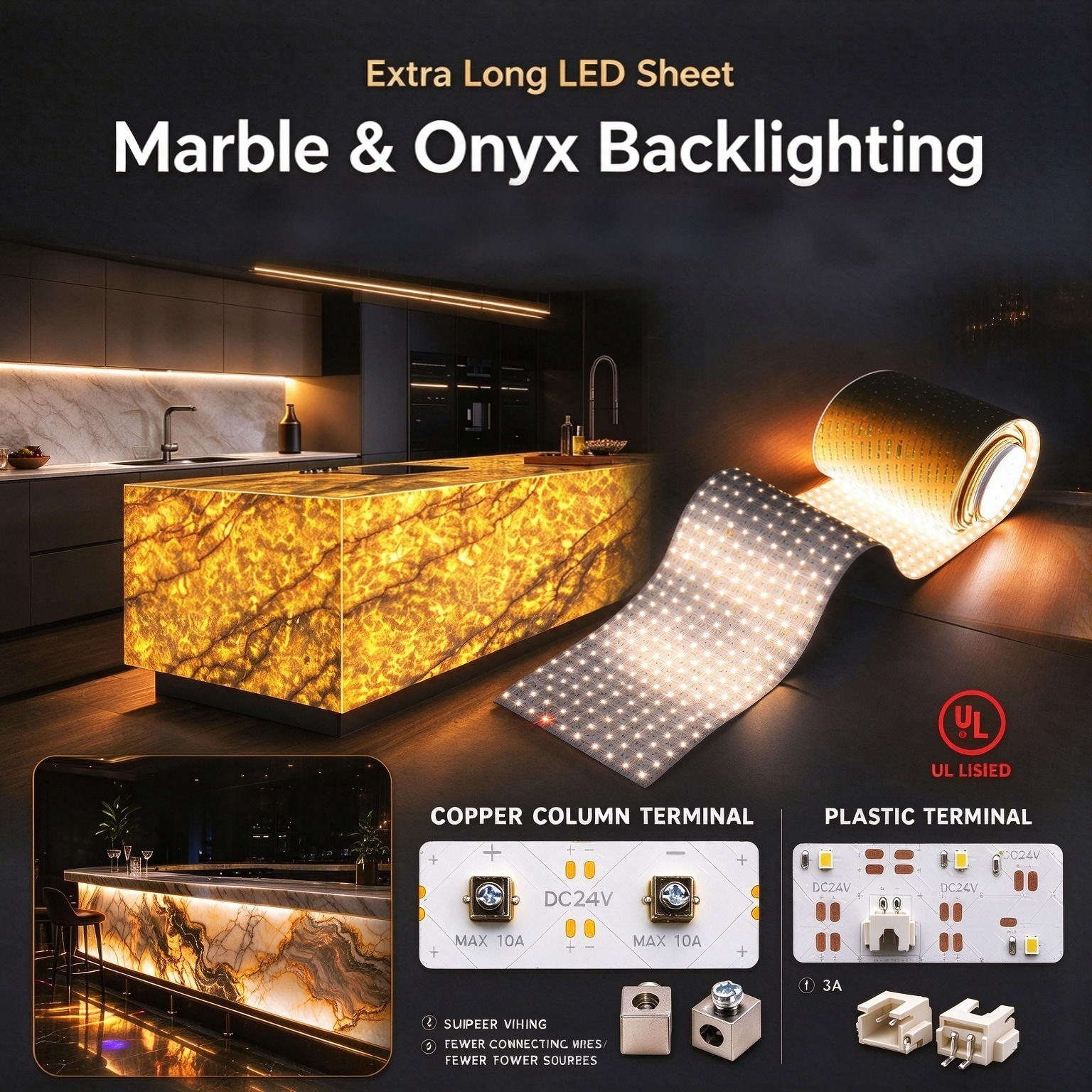
Flexible Extra Long LED Sheet LED Backlighting DC24V 528leds 3000K 6000K LED Panel Light for Marble Lighting Table Top Lighting
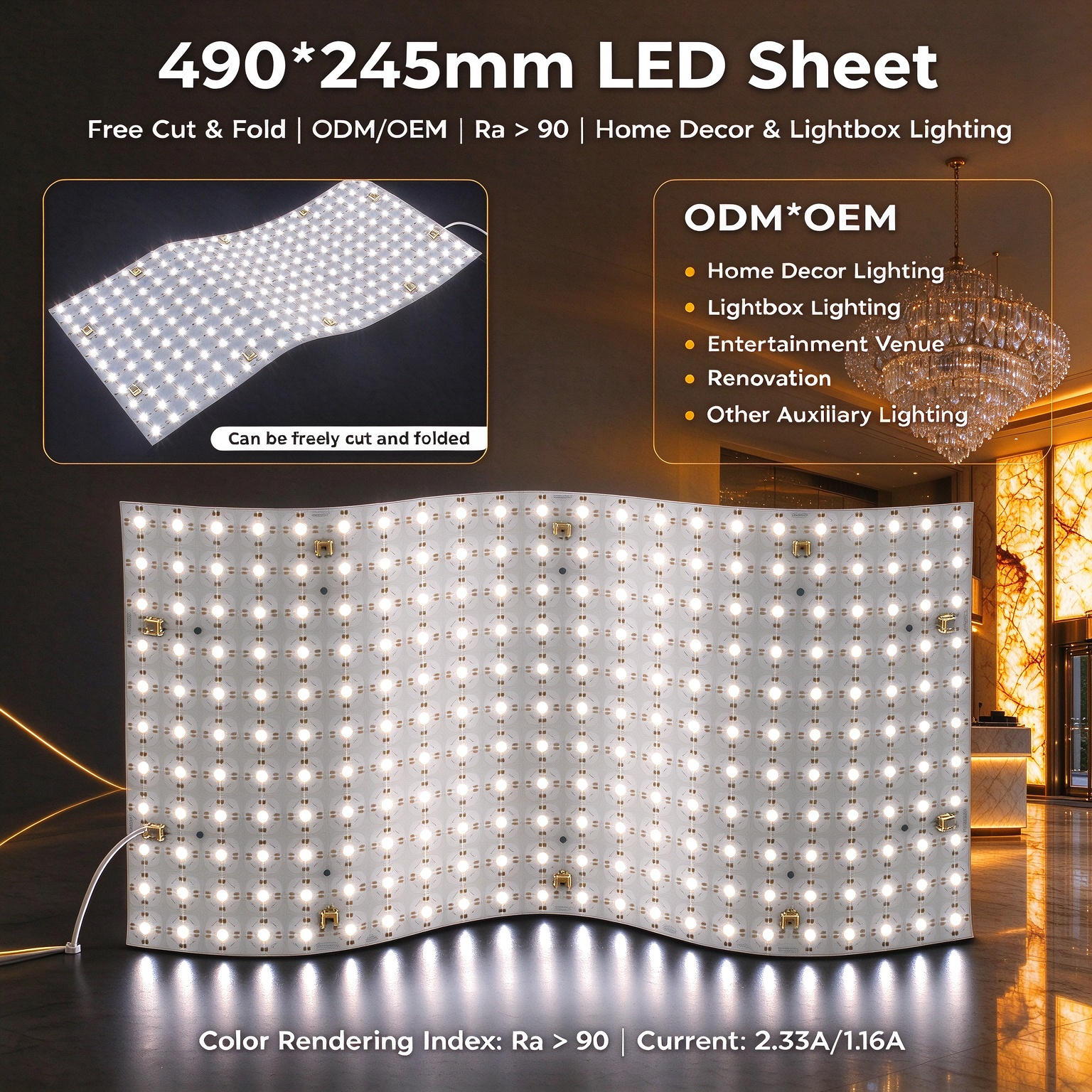
242 LEDs Flexible Sheet Panel Light DC24V 28W Cuttable Backlight 490 X 245mm for Marble Table
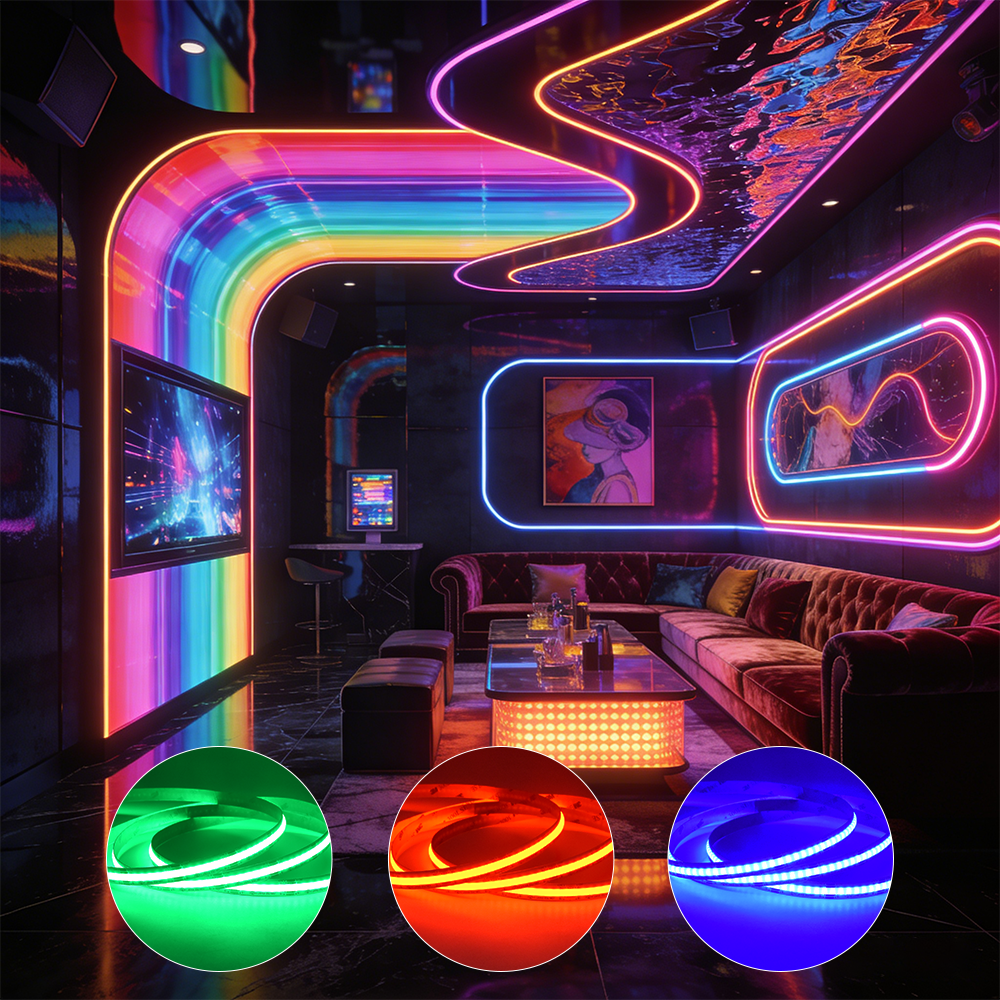
DC 24V RGB COB LED Strip 10mm 672 Chips Per Meter Flexible Cuttable IP67 Waterproof FPC Copper Bar KTV Lighting
Factory Authority & Manufacturing Capabilities
Verified on-site by TÜV Rheinland. Operating from Shenzhen, China, delivering project-grade linear light engines to over 50 countries.
TÜV Rheinland Audited Quality
Our 5,175 m² manufacturing facility in Longhua District, Shenzhen operates under ISO 9001 quality management guidelines, maintaining rigorous incoming component checks and 100% full-load aging tests.
Precision Binning & High CRI
We implement 3-step MacAdam Ellipse color consistency standards across all white LED batches, providing CRI>90 and CRI>95 options for flawless architectural rendering and color matching.
Comprehensive Engineering Customization
From 3oz double-sided copper FPCs and custom cuttable matrix LED sheets to specialized IP68 silicone co-extrusion, our 133-person engineering team translates OEM/ODM specs into reliable products.
Whitepaper: Strategic Procurement & Technical Trends in China LED Strip Manufacturing
The global solid-state lighting (SSL) market is experiencing a structural migration from discrete point-source fixtures to integrated continuous linear illuminators. B2B importers, commercial lighting distributors, and engineering contractors face evolving technical demands regarding lumen efficiency, color fidelity, thermal management, and long-run voltage drop mitigation. As a primary global exporter, China's LED strip manufacturing sector has advanced beyond basic SMT assembly into material science, advanced optical encapsulation, and intelligent protocol integration.
Information Gain Insight: Selecting linear light engines solely on initial FOB cost per meter often leads to higher Total Cost of Ownership (TCO) due to early lumen degradation, voltage drop color shifting, and field installation failures. High-tier industrial manufacturing relies on 3oz copper FPC substrates, continuous FCOB phosphor coating, and integrated constant-current IC drivers.
Future Procurement Trends in the B2B LED Strip Industry
As global energy efficiency standards (such as European ERP Directive regulations and Title 24 in California) tighten, international buyers must adapt their sourcing strategies to match three core macro-trends shaping Chinese manufacturing output:
1. Transition to High-Voltage 48V Constant-Current Architecture
Traditional 12V and 24V direct-current systems suffer from resistive voltage loss across runs exceeding 5 to 10 meters, resulting in visible brightness attenuation and thermal stress near power feed points. The industry is moving rapidly toward DC48V architecture. Operating at 48V reduces system current by 50% compared to 24V systems for identical wattage, allowing single-feed continuous runs of up to 20 to 30 meters without lumen degradation. This significantly reduces driver deployment costs and installation labor in large hospitality and commercial projects.
2. Dominance of Flip-Chip On Board (FCOB) Seamless Illumination
While surface-mount device (SMD) packages like SMD2835 and SMD5050 remain workhorses for indirect cove backlighting, FCOB (Flip-Chip COB) technology is capturing premium architectural market share. By wire-bonding flip-chips directly to the flexible copper PCB and encapsulating them under a continuous linear phosphor layer (achieving chip densities up to 840 LEDs/m), FCOB eliminates dark spots even when installed inside ultra-shallow aluminum profiles (under 8mm depth) without heavy diffusion covers.
3. Matrix LED Sheets replacing Traditional LGP Backlighting
In translucent stone, onyx, quartz, and stretch-ceiling fabric backlighting, acrylic Light Guide Plates (LGPs) present transport damage risks and size limitations. Cuttable, flexible LED sheet panels (such as 250x250mm modular sheets or 10-meter continuous matrix rolls) allow installers to trim light engines into intricate geometric patterns directly at the construction site, delivering uniform planar luminance with zero dead zones.
Technical Comparison Matrix for B2B Sourcing Decisions
To assist procurement managers in matching light engine topologies with project parameters, the following data table compares key performance vectors across major flexible LED technologies:
| Technology Type | Typical Density | Max Single Feed Run | Optical Uniformity | Primary B2B Application |
|---|---|---|---|---|
| Standard SMD Strip (24V) | 60 - 120 LEDs/m | 5 - 10 Meters | Discrete points (Requires Diffuser) | Cove lighting, cabinet accenting, retail display cases |
| High-Voltage SMD Strip (48V) | 60 - 120 LEDs/m | 20 - 30 Meters | Discrete points (Requires Diffuser) | Hotel corridors, perimeter perimeter linear lighting, long runs |
| Flip-Chip COB (FCOB) (24V) | 320 - 840 Chips/m | 5 - 10 Meters | 100% Dotless linear beam | Shallow profiles, direct-view interior lines, high-end millwork |
| Modular Cuttable LED Sheet | 242 - 1296 LEDs/m² | Up to 10m Continuous Roll | Homogeneous surface backlight | Translucent marble tables, counter-tops, signage light boxes |
| WS2815 / Addressable RGBIC | 60 - 144 Pixels/m | 5 Meters | Programmable dynamic dynamic chase | Entertainment venues, theme parks, architectural accents |
Technical Development Trends & Engineering Innovations
For B2B buyers evaluating China-based OEM factories, technical competency is defined by manufacturing engineering rather than simple SMT placement speed. Leading exporters maintain rigorous standards in three critical engineering areas:
Advanced Thermal Dissipation & Copper Weight
The operational lifespan (L70B50 > 50,000 hours) of flexible LED tape relies on thermal dissipation from the chip junction to the mounting channel. Low-tier manufacturers utilize 1oz electrolytic copper FPCs that overheat quickly. Premium architectural-grade products mandate 3oz double-sided Rolled Annealed (RA) copper substrates. Rolled copper offers superior mechanical flexibility during bending and provides a thermal conduction pathway that maintains junction temperatures below 65°C under continuous nominal load.
Signal Break-Point Continuous Transmission (WS2815 Protocol)
In decorative and addressable architectural installations, single-pixel failures on traditional WS2812B or 5V addressable strips cause complete downstream signal loss. The deployment of WS2815 IC technology introduces dual-signal line architectures (Data and Backup Data). If an individual LED chip fails, the downstream signal seamlessly reroutes through the backup line, preventing catastrophic field outages in high-value installations.
Advanced Waterproofing: Silicone Co-Extrusion vs. PVC Injection
For outdoor facade and marine installations, traditional PVC tubing deteriorates, turns yellow under UV exposure, and cracks in cold climates. Modern manufacturing shifts exclusively to food-grade, high-optical-transmittance silicone co-extrusion (IP67 / IP68 rating). Integrated silicone extrusion provides UV stability, salt-spray resistance, chemical inertness, and thermal operating ranges from -40°C to +80°C.
Frequently Asked Sourcing & Engineering Questions
Technical and logistics guidance for commercial buyers, importers, and original equipment manufacturers.
Request a Factory-Direct Technical Quotation
Partner with a verified China manufacturer. Send us your project bill of materials, engineering drawings, or OEM custom specifications for an instant quotation and sample evaluation package.