Engineering Grade LED Strip & Panel Showcase
Explore our TÜV-verified flexible LED solutions engineered for commercial, hospitality, architectural stone backlighting, and heavy-duty outdoor environments.
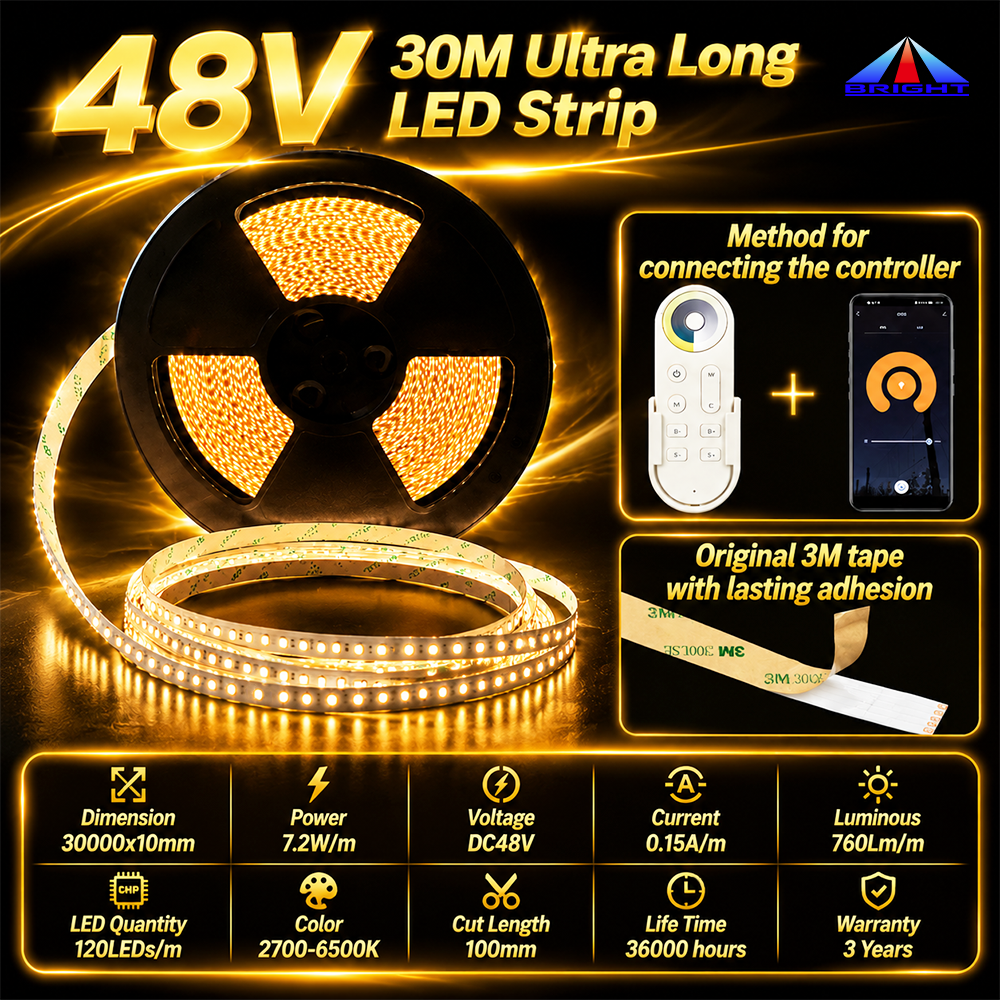
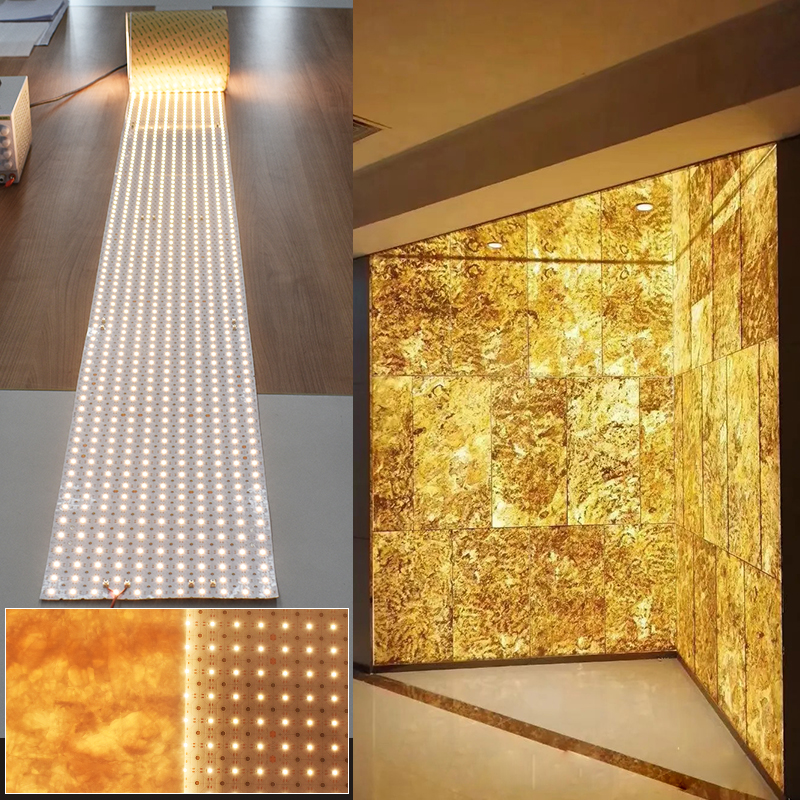
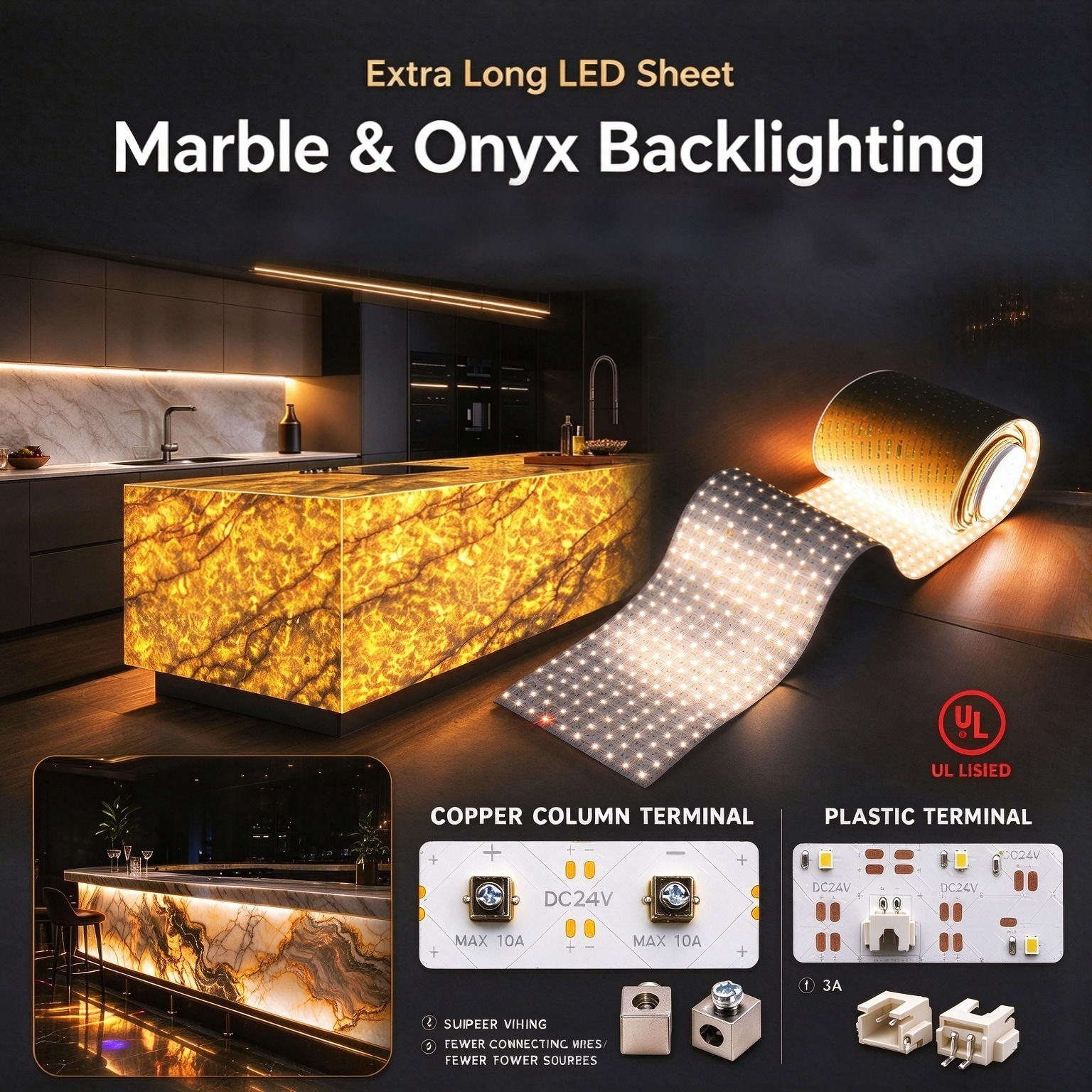

Industrial Manufacturing Capability & Verification
Shenzhen Covek Lighting Co., Ltd. operates a fully integrated 5,175 m² manufacturing facility in Longhua District, Shenzhen, dedicated to engineering-grade linear LED systems.
Technical Whitepaper: Engineering Standards for Silicone Flexible Lighting
An in-depth analysis of material physics, optical performance, and thermal management for professional B2B buyers and lighting designers.
1. Optical-Grade Silicone Co-Extrusion vs. Legacy PVC/PU Packaging
In modern architectural lighting design, flexible linear luminaires are increasingly subjected to extreme outdoor environments, aggressive chemical exposure, high ultraviolet (UV) radiation, and thermal stress. Legacy encapsulation materials such as Polyvinyl Chloride (PVC) and Polyurethane (PU) suffer from chemical instability under continuous solar exposure, leading to yellowing, micro-cracking, stiffening, and thermal degradation within 12 to 18 months of installation.
As a specialized OEM/ODM silicone LED strip manufacturer, Covek utilizes 100% liquid optical-grade silicone rubber (LSR) co-extrusion technology. Liquid silicone features a siloxane (Si-O-Si) back-bone chain with a high bond dissociation energy of 452 kJ/mol, compared to the carbon-carbon (C-C) bond energy of 346 kJ/mol in PVC polymers. This fundamental molecular difference delivers superior technical advantages:
Thermal Endurance (-40°C to +200°C)
Silicone retains its mechanical flexibility and elastic memory without embrittlement at sub-zero temperatures or thermal softening at high ambient heat, eliminating field failures in outdoor facades.
Anti-Yellowing & UV Stability
Under ASTM G154 accelerated weathering tests (5,000 hours UV exposure), optical silicone maintains a Yellowing Index (ΔYI) < 1.5, ensuring color consistency across architectural lifespans.
Saline & Chemical Inertness
Resistant to chlorine, salt spray, marine fog, motor oils, and atmospheric pollutants. Perfect for coastal resort lighting, swimming pool perimeter runs, and industrial coves.
Engineering Gain Note: Covek's multi-layer integrated silicone co-extrusion process bonds the inner flexible printed circuit board (FPCB) directly with high-transmittance diffuser silicone (92%+ light transmission) and high-reflectivity base silicone, achieving seamless IP67/IP68 ingress protection without air voids or delamination risk.
2. Flip-Chip COB (FCOB) Architecture vs. Discrete SMD Packages
The transition from discrete Surface Mount Devices (SMD2835, SMD5050) to Flip-Chip Chip-on-Board (FCOB) technology represents a paradigm shift in linear illumination quality. Traditional SMD LED strips rely on wire-bonding (gold wire interconnects) and lead-frame packaging, which creates concentrated point-source bright spots (pixelation) unless paired with deep aluminum channels and thick frosted diffusers.
In contrast, Covek FCOB LED strips mount flip-chip LED dies directly onto the FPCB substrate at ultra-high densities (ranging from 480 chips/m to 840 chips/m), covered by a continuous linear phosphor matrix. This continuous phosphor layer eliminates the physical gap between light sources, producing a completely homogeneous, dot-free line of light even when installed in ultra-shallow aluminum channels (depth < 5mm) or direct surface mount applications.
| Engineering Metric | Traditional SMD LED Strip | Covek Flip-Chip COB (FCOB) Strip | Optical Silicone Neon Flex |
|---|---|---|---|
| Light Homogeneity | Visible light spots (Requires deep diffusers) | 100% Dotless continuous light line | Smooth diffused neon effect (360° or Top/Side) |
| Chip Density | 60 to 120 LEDs / meter | 480 to 840 Chips / meter | 240 to 528 LEDs / meter |
| Color Consistency (SDCM) | 3-Step or 5-Step MacAdam Ellipse | Strict 3-Step MacAdam Ellipse (< 3 SDCM) | 3-Step MacAdam Ellipse (< 3 SDCM) |
| Color Rendering Index | CRI 80+ (Standard) | CRI 90+ / CRI 95+ (R9 > 80) | CRI 90+ High Fidelity |
| Mechanical Bending Radius | R > 30mm (Risk of solder fatigue) | R > 10mm Ultra-flexible micro-radius | R > 20mm (3D omni-directional bending) |
| Ingress Protection Grade | IP20 / IP65 (PVC tube encapsulation) | IP20 / IP65 / IP67 Potted Silicone | IP67 / IP68 Solid Silicone Co-extrusion |
3. High-Voltage Circuit Engineering & Constant Current 48V Long-Run Systems
One of the primary engineering challenges in large-scale commercial linear lighting is electrical voltage drop. In standard 12V or 24V DC LED strips, trace resistance in the copper FPCB causes a gradual reduction in voltage along the circuit length. This manifests as a noticeable gradient loss in lumen output and shift in color temperature (CCT drift) from the power feed entry point to the tail end of the strip, typically restricting single-ended power runs to 5 meters (16.4 ft).
To overcome this limitation in hotel corridors, high-rise building facades, and expansive retail environments, Covek has engineered DC48V Ultra-Long Constant Current LED Strips and LED Sheets:
- Current Halving Principle: According to Joule's Law ($P = V \times I$ and $P_{loss} = I^2 \times R$), operating at 48V DC cuts the circuit current ($I$) in half compared to 24V DC for the same wattage output, reducing line power losses by 75%.
- Extended Single-Feed Runs (Up to 30 Meters): Designers can power up to 20 to 30 continuous meters of Covek 48V LED tape from a single power supply point without luminance drop, dramatically reducing driver power supply counts, wiring labor, and installation complexity.
- Integrated IC Constant Current Drivers: Precision surface-mount Integrated Circuits (ICs) on the FPCB regulate current to every LED group, absorbing line voltage fluctuations and guaranteeing uniform lux levels across the entire installation length.
- Heavy-Duty Copper PCB Substrates: Built with 3oz double-sided electrolytic rolled copper FPCB traces, facilitating optimal thermal dissipation from the LED die junctions to the outer heatsink.
4. Color Science, Spectrum Control & MacAdam Binning Precision
In high-end interior architecture, luxury retail display, and stone backlighting (such as translucent onyx, marble, and quartzite), color fidelity is paramount. Standard commercial LEDs often suffer from inconsistent chromaticity, resulting in mismatched color tones when multiple LED reels are installed adjacently.
Covek implements rigorous spectral management protocols using advanced spectroradiometers and integrating spheres. Every batch of LEDs undergoes automated sorting into MacAdam 3-Step Ellipses (SDCM < 3). Furthermore, our high CRI products achieve Ra > 95, with saturated red index ($R_9$) > 80 and color fidelity ($R_f$) > 93 under TM-30-18 standards. This ensures that illuminated natural stone surfaces retain their authentic grain contrast, rich warm hues, and natural translucency without green or magenta color casting.
Global B2B Procurement Trends & Market Analysis (2025-2030)
Strategic insights for electrical wholesalers, OEM brand managers, and lighting distributors preparing for next-generation architectural compliance.
1. Transition to High Efficacy & ERP Compliance
Global regulations (such as EU ERP regulations and Title 24 JA8 in California) demand systemic luminous efficacy exceeding 140-160 lm/W. Procurement strategies are shifting away from low-cost, high-power consumption SMDs toward high-efficiency COB packages with optimized driver topologies.
2. Modular Cuttable LED Sheets for Backlighting
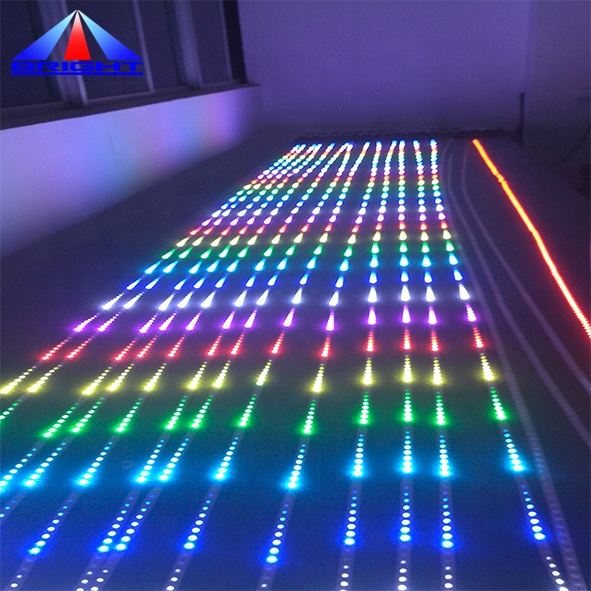
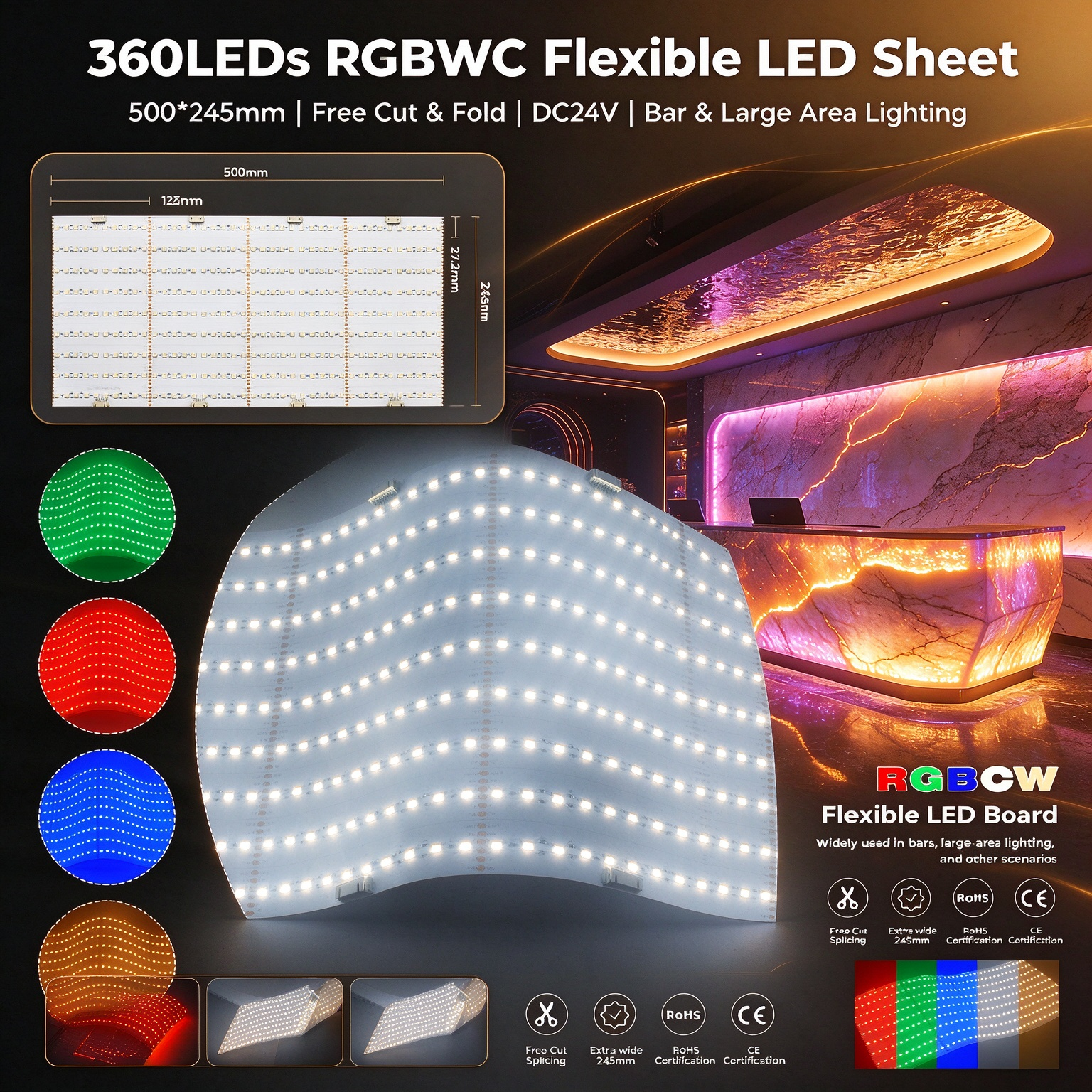
Rigid backlit LED panels are rapidly being replaced by flexible, paper-thin, cuttable LED sheets. These modular matrix panels allow stone fabricators and joinery contractors to trim lighting arrays on-site with standard shears, fitting custom curved counters and complex wall niches with zero light shadow gaps.
3. Smart Protocol Convergence (DMX, SPI, Matter)
B2B buyers are requiring seamlessly integrated smart control protocols. Modern commercial projects mandate dynamic multi-pixel addressable capability (WS2815, DMX512, SPI) combined with wireless mesh integration (Zigbee 3.0, BLE Mesh, and Matter protocol readiness) for human-centric circadian lighting control.
End-to-End OEM/ODM Customization Workflow
From initial CAD concept and optical simulation to custom silicone die tooling and private-label packaging.
Requirement Analysis
Consultation on optical targets (CCT, CRI, Lux), voltage requirements, mechanical bending axes (Top-bend, Side-bend, 360°), and IP ratings.
PCB Layout & Mold Tooling
Custom FPCB circuit design, thermal copper routing, optical extrusion die fabrication, and initial physical prototyping within 5-7 business days.
SMT & Co-Extrusion Production
Automated high-speed SMT chip mounting, continuous liquid silicone extrusion encapsulation, and laser mark printing for brand customization.
Quality Testing & Packing
100% 8-hour high-temperature power aging, integrating sphere spectral testing, IPX7/IPX8 submersion testing, and custom retail reel packaging.
Why Partner with Covek Lighting?
We solve the common pain points of overseas importers: inconsistent color bins, unexpected voltage drops, slow engineering response times, and field water ingress failures.
- TÜV Rheinland verified on-site audited production facility.
- In-house extrusion tooling department supporting custom profile shapes.
- Direct factory wholesale pricing with zero middleman markups.
- Fast production turnaround: 3-5 days for samples, 12-15 days for bulk orders.
- Comprehensive international certification portfolio: CE, RoHS, EMC, UL, ERP.
Frequently Asked Procurement & Engineering Questions (FAQ)
Technical clarity for lighting specifiers, procurement officers, and engineering contractors.
Request Your Custom OEM/ODM Quote & Engineering Sample Kit
Need custom PCB design, specific CCT binning, or a bulk quotation for your architectural lighting tender? Contact our engineering team today.
Inquire Now