Engineered for seamless integration with TRIAC, 0-10V, DALI-2, and Wireless PWM Dimmers across Canadian commercial & residential builds.
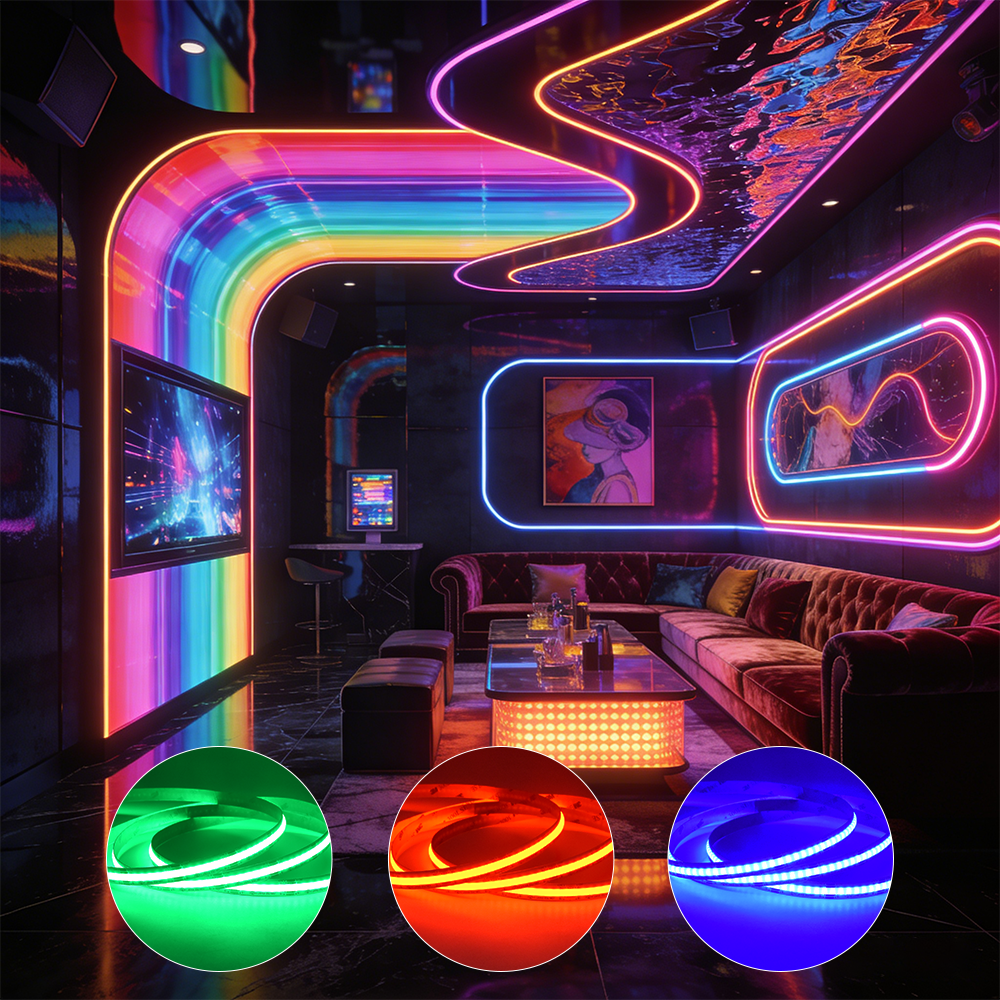

Executive Whitepaper: The Canadian Architectural LED Dimming Ecosystem
The Canadian commercial and high-end residential lighting market is undergoing a structural transition toward deep-dimming, energy-efficient solid-state lighting (SSL) architectures. Driven by strict regional energy efficiency guidelines—such as the Ontario Building Code (OBC) SB-10, the BC Energy Step Code, and Quebec's Hydro-Québec Commercial Efficiency Programs—lighting specifiers, electrical engineering firms, and electrical wholesalers across Canada require advanced LED strip dimmers and dimmable power supplies that deliver smooth, flicker-free low-end response down to 0.1% light output.
Selecting a certified LED strip dimmer manufacturer for Canadian procurement requires evaluating key technical factors: compliance with CSA C22.2 No. 250.0-08 / CSA C22.2 No. 184-M1989 standards, cULus safety listing, extreme sub-zero thermal operational resilience (-40°C to +50°C), and cross-protocol interoperability (TRIAC/Phase-Cut, 0-10V, DALI-2, DMX512, Zigbee 3.0, and Matter). Low-frequency Pulse Width Modulation (PWM) chatter or audible coil noise from inferior dimming drivers remains a critical point of failure in luxury hospitality projects in Toronto, high-rise architectural facades in Vancouver, and sub-zero exterior neon accent installations in Calgary and Edmonton.
Information Gain Insight for Canadian Engineers: Standard off-the-shelf LED dimmers frequently experience "dead-travel" (where adjusting the slider produces no visible brightness change) and pop-on artifacts due to impedance mismatch between forward-phase dimmers and constant-voltage DC strip loads. Premium OEM exporters resolve this by incorporating high-frequency active digital PWM controllers (>4,000Hz) combined with Continuous Current Reduction (CCR) hybrid dimming curves.
Top 10 LED Strip Dimmer Manufacturers & Exporters Serving Canada
Below is a comparative technical analysis of the top ten manufacturers and international OEM/ODM manufacturing exporters supplying the Canadian commercial, industrial, and architectural lighting sectors with low-voltage DC dimming controllers, drivers, and integrated smart control modules.
1. Shenzhen Covek Lighting Co., Ltd.
Primary Specialization: High-Density FCOB Strips, Smart PWM Dimmers, DMX512/DALI-2 Receivers & Cuttable LED Sheets.
Canadian Market Footprint: Major supplier of OEM componentry to Canadian distributors and lighting fixture brands across Ontario, Quebec, and British Columbia. Operates a TÜV Rheinland-audited 5,175 m² facility with 133 specialized engineers and SMT lines.
Key Competitive Advantage: Direct factory customization (OEM/ODM), 3-year replacement warranty, strict 3-step MacAdam ellipse color binning, and custom sub-zero silicone encapsulation for outdoor neon flex and dimmer assemblies rated to -40°C.
2. Lutron Electronics Canada Inc.
Primary Specialization: Hi-lume 1% Ecosystem, HomeWorks, RadioRA 3, and Phase-Cut LED Dimmers.
Canadian Market Footprint: Extensive distribution network with strong presence in Canadian architectural specs, residential custom builds, and automated building management systems.
Key Competitive Advantage: Patented Soft-on, Fade-to-Black continuous dimming curve technology; seamless integration with proprietary Lutron control processors.
3. Leviton Canada
Primary Specialization: Decora Smart Dimmer Switches, 0-10V Commercial Wall Controllers, and IP-rated Line-Voltage Controllers.
Canadian Market Footprint: Widespread availability across major Canadian electrical supply houses (Nedco, Gescan, Westburne, Anixter).
Key Competitive Advantage: Robust cULus compliance, direct neutral-wire and no-neutral smart wall dimmers designed specifically for Canadian electrical gang boxes.
4. Acuity Brands Canada (nLight)
Primary Specialization: Commercial DALI-2, 0-10V Dimming Packs, and Smart Building Sensor Integration.
Canadian Market Footprint: Dominates large-scale Canadian commercial office buildings, institutional healthcare, and educational facilities.
Key Competitive Advantage: Distributed intelligent lighting control platform; high reliability in enterprise-grade energy management networks.
5. eldoLED (Acuity Brands Division)
Primary Specialization: SOLOdrive, DUALdrive, and LINEARdrive Constant Voltage LED Dimming Drivers.
Canadian Market Footprint: High-end specification choice among Canadian lighting designers for luxury retail and museum lighting.
Key Competitive Advantage: True 0.1% Natural Dimming curve with zero optical flicker (compliant with IEEE 1789 standards).
6. Control4 Canada (Snap One)
Primary Specialization: Centralized & Wireless DMX/Zigbee Multi-Channel LED Strip Controllers.
Canadian Market Footprint: Preferred control solution for luxury custom home integrators in Toronto (GTA), Calgary, and Vancouver.
Key Competitive Advantage: Rich native multi-zone RGBCCT color wheel UI and programmable scene scheduling.
7. Mean Well Canada / Inc. Exporters
Primary Specialization: HLG, LRS, and PWM-Series Dimmable Power Supplies (TRIAC / 0-10V / DALI).
Canadian Market Footprint: Universal benchmark power supply specified across Canadian industrial sign-making and architectural LED strip channels.
Key Competitive Advantage: Metal IP67 enclosures with built-in active PFC and 7-year factory warranty options.
8. Casambi Technologies
Primary Specialization: Bluetooth Low Energy (BLE) Mesh LED Strip Dimmer Modules and Wireless Gateways.
Canadian Market Footprint: Rapidly growing adoption in Canadian commercial retrofits where running physical 0-10V control wire is cost-prohibitive.
Key Competitive Advantage: Decentralized mesh architecture allowing up to 250 nodes per network without a central controller hub.
9. Principal Sloan Canada
Primary Specialization: Heavy-Duty Outdoor Signage Dimmers and Architectural Channel Letter Power Accessories.
Canadian Market Footprint: Strong market share in Canadian commercial retail signage, petroleum station canopies, and exterior displays.
Key Competitive Advantage: Weatherproof potting technology built to withstand freeze-thaw cycles across Canadian prairies.
10. Hatch Lighting
Primary Specialization: Phase-Cut & 0-10V Miniaturized Constant Voltage Dimmable LED Drivers.
Canadian Market Footprint: Key OEM component provider integrated inside shallow cove profiles and under-cabinet LED light bars.
Key Competitive Advantage: Compact form factor suitable for restricted millwork and drywall recessed channels.
Technical Dimming Protocol Matrix for Canadian Specifiers
Selecting the correct dimming topology is essential to prevent low-end flicker, stroboscopic effect, and acoustic buzz in Canadian lighting installations. The table below details protocol mechanics, operating parameters, and ideal Canadian application environments.
| Dimming Protocol | Control Signal Voltage | Dimming Range | PWM Frequency | Primary Canadian Use Case | Compliance Note |
|---|---|---|---|---|---|
| TRIAC / Phase-Cut | 120V / 277V AC Line | 1% - 100% | 120Hz Line / >2kHz PWM Output | Residential retrofits, hospitality dining, heritage building upgrades | Requires Forward/Reverse phase auto-detection |
| 0-10V / 1-10V DC | 0-10V Low Voltage DC Wire | 0.1% - 100% | 2,000Hz - 8,000Hz | Commercial office spaces, schools, institutional corridors | Class 2 control wiring separated from AC mains |
| DALI-2 / D4i | Digital Bus (16V DC nominal) | 0.1% - 100% (Logarithmic) | >4,000Hz High-Resolution | Smart skyscrapers in Toronto/Vancouver, international airports | IEC 62386 standardized bidirectional data feedback |
| DMX512 / RDM | EIA-485 Differential Digital | 0% - 100% (8-bit / 16-bit) | Up to 10,000Hz PWM | Architectural facade RGBW dynamic lighting, KTV, performance venues | Requires 120-ohm bus termination resistors |
| Zigbee 3.0 / Matter | 2.4GHz Wireless Mesh | 1% - 100% Digital Curve | >3,000Hz PWM output | Multi-tenant residential developments, smart home integration | Interoperable with Alexa, Apple Home, Google Home |
Localized Canadian Application Scenarios & Thermal Engineering
Canada presents unique climate and construction challenges that directly influence low-voltage dimming reliability. LED strip dimmers and drivers exported to Canada must account for the following environmental and structural demands:
1. Extreme Sub-Zero Exterior Facade Accents (Calgary, Edmonton, Winnipeg)
In interior environments, thermal dissipation is straightforward; however, exterior architectural neon lighting and cold-storage facilities require dimming drivers that maintain steady voltage output at ambient temperatures reaching -40°C. Inferior dimming controllers suffer component drift, capacitor cracking, and startup failure under winter conditions. Direct-factory OEM suppliers like Covek Lighting utilize industrial potting silicone, solid polymer capacitors, and low-temperature cold-start circuitry to ensure instant-on performance at sub-zero temperatures.
2. Timber Frame & High-End Residential Backlighting (Whistler, Banff, Muskoka)
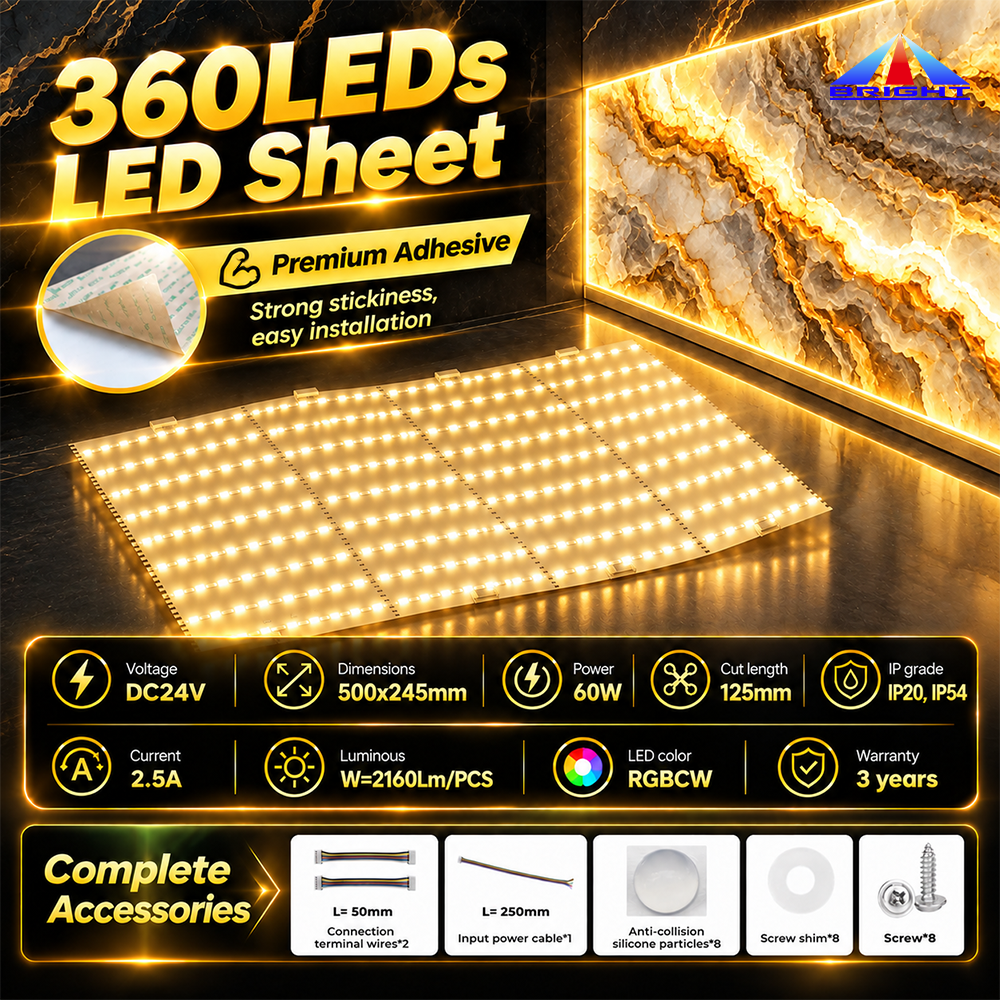
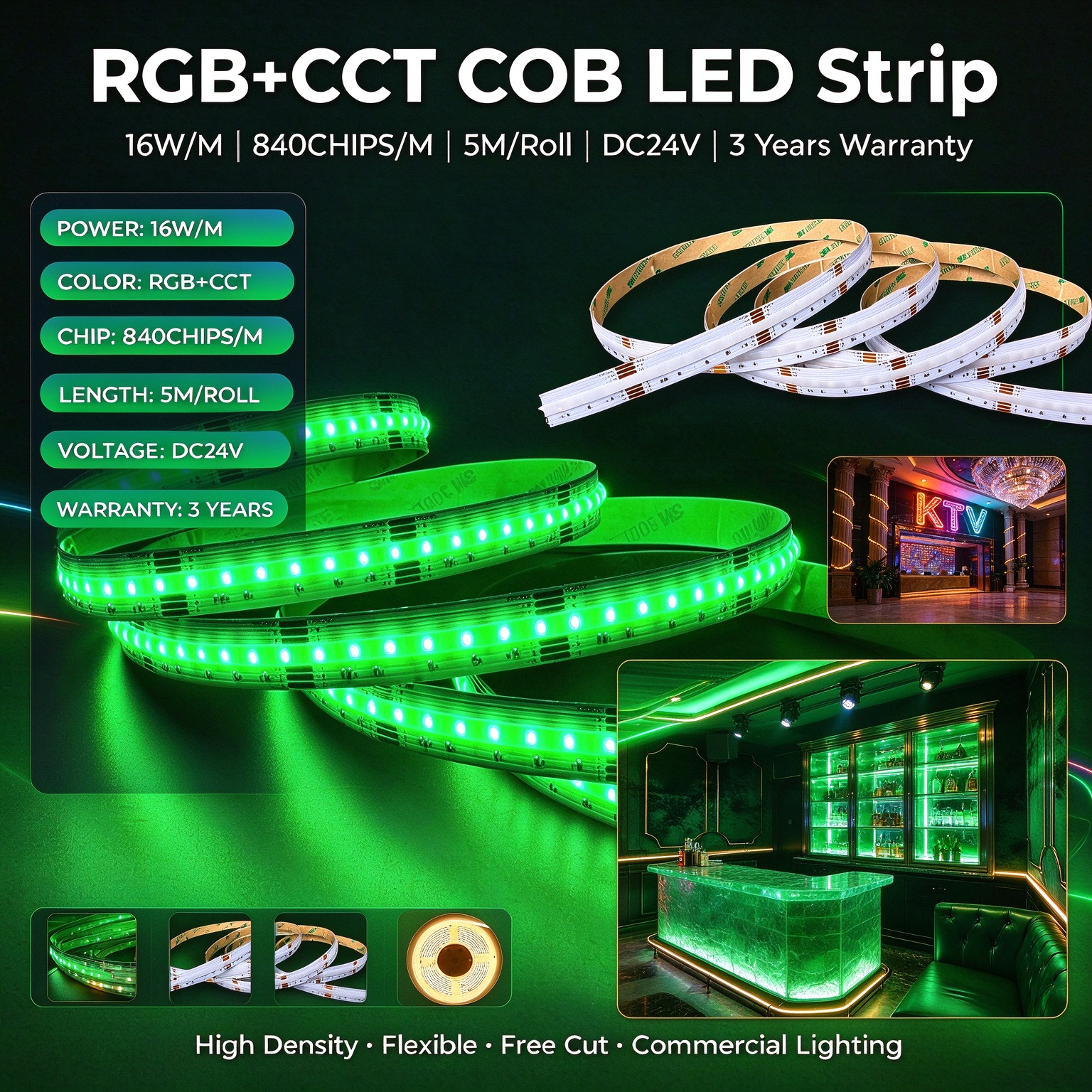
Luxury chalet and residential builds across British Columbia and Ontario demand high CRI (>95 Ra) linear lighting hidden within stone countertops, translucent marble sheets, and timber beams. Dimming drivers must provide silent operation (0 dBA acoustic noise) and ultra-smooth low-end dimming down to 0.1% without visible stepping or shadow bands. Utilizing high-density cuttable LED sheets paired with multi-channel RGBCCT receivers enables localized tuning of warm white (2200K) to cool daylight (6500K) to complement natural wood tones.
3. High-Density Commercial Towers & Mixed-Use Developments (Toronto GTA, Vancouver, Montreal)
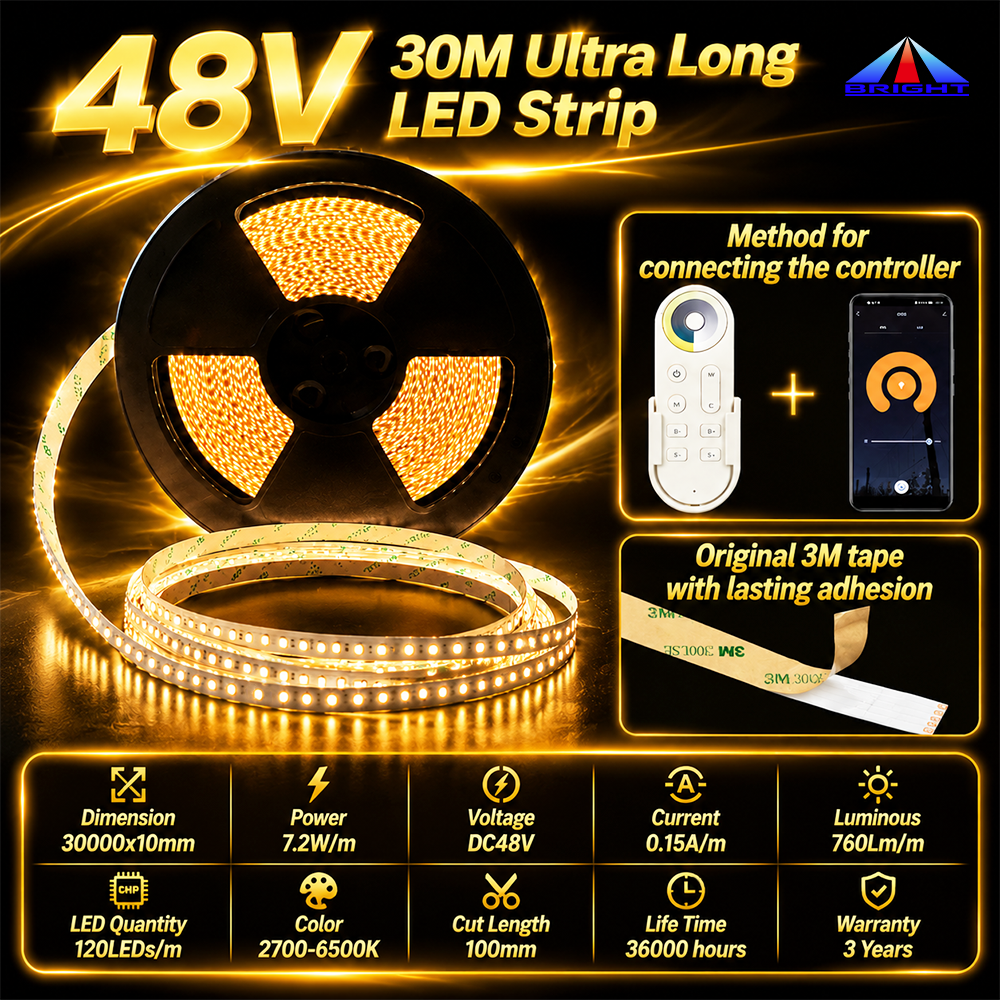
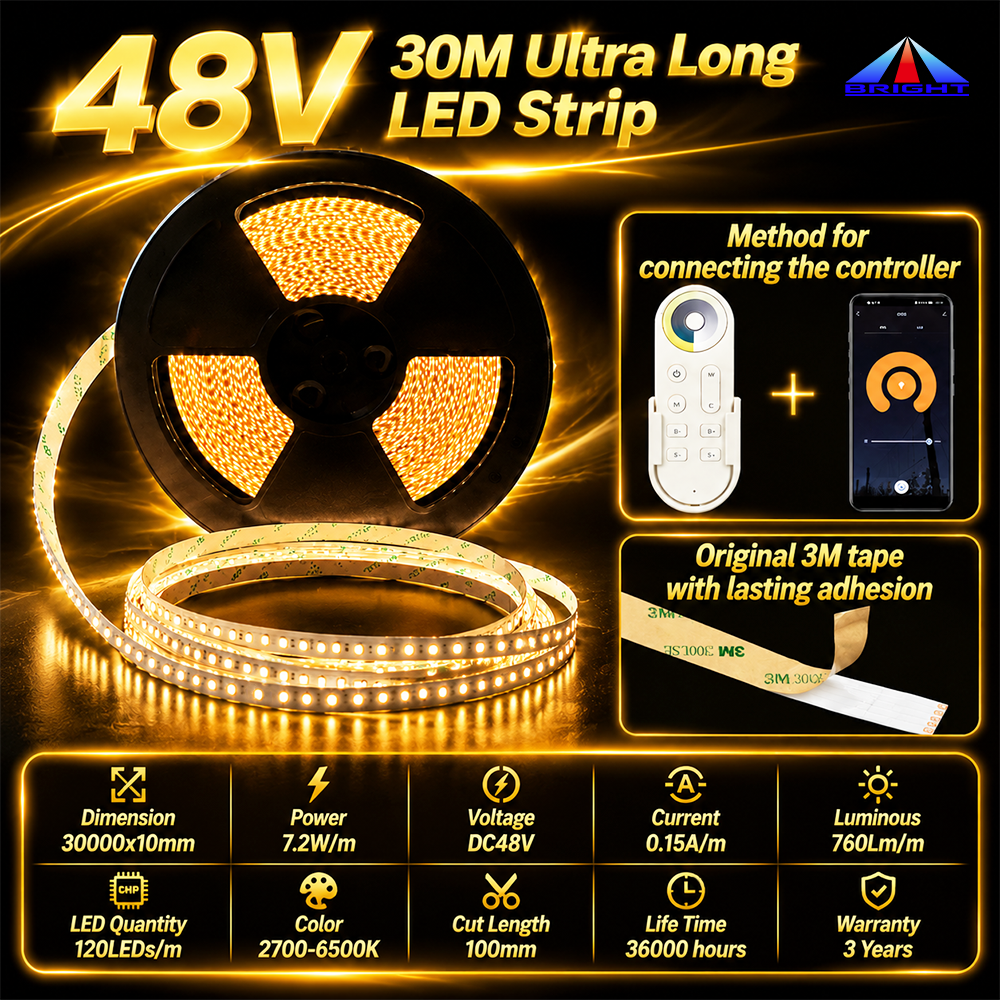
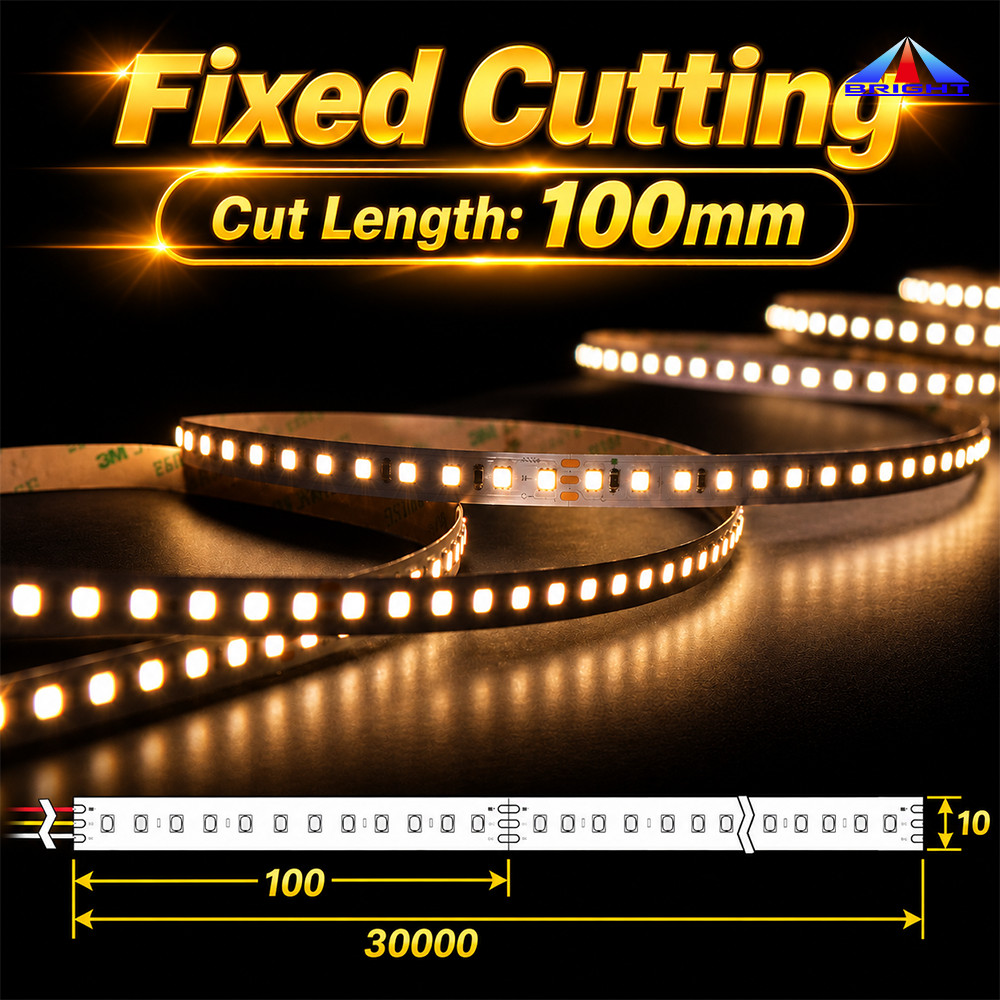
Commercial construction projects in Canada’s metro centers mandate compliance with ASHRAE 90.1 energy standards and LEED certification goals. Dimming systems must feature ultra-low standby power consumption (<0.5W) and interface with centralized DALI-2 building management networks. Utilizing 48V DC ultra-long strip runs paired with centralized 48V dimming controllers reduces copper wire gauge requirements by 75%, mitigating line voltage drop over continuous 20-meter corridor runs.
Canadian Lighting Control Industry Trends (2025–2030)
A. Rapid Adoption of the Matter Protocol & Unified Smart Ecosystems
With major tech conglomerates standardizing around the Matter wireless protocol over Thread and WiFi, Canadian residential integrators are moving away from proprietary single-brand ecosystems. B2B exporters supplying Canadian brands are updating smart strip dimmers to feature native Matter certification, enabling cross-platform control across Apple HomeKit, Samsung SmartThings, and Google Assistant without secondary bridges.
B. IEEE 1789 Flicker-Free Safety Standards
Occupational health research regarding LED stroboscopic flicker has led Canadian architectural specifiers to require compliance with IEEE 1789-2015 recommendations. Low-frequency PWM dimming (below 500Hz) causes eye strain, headaches, and visible artifacts in video recording. Modern exported LED dimmers now feature ultra-high PWM frequencies ranging from 4,000Hz up to 10,000Hz or adopt Continuous Current Reduction (CCR) analog dimming above 20% light level.
C. Expansion of Human-Centric Lighting (HCL) & Tunable White
In response to northern winter light cycles in Canada, commercial workplaces and healthcare facilities are implementing Tunable White (CCT) lighting paired with automated circadian rhythm dimmers. Dimming receivers automatically transition light output from 6500K (high-energy blue-enriched daylight) at noon down to a warm, low-intensity 2700K in late afternoon to support occupant melatonin cycles.
Enterprise Manufacturing & OEM Sourcing Strengths
Shenzhen Covek Lighting Co., Ltd. (founded 2011) operates as a TÜV Rheinland-verified OEM/ODM manufacturer specializing in flexible LED strips, FCOB continuous tape, cuttable LED sheets, and smart dimming control accessories for global B2B buyers.
Verified Factory Audit Data (TÜV Rheinland Inspected):
- Production Area: 5,175 square meters of cleanroom SMT, encapsulation, and assembly space.
- Workforce: 133 full-time employees, including a 15-engineer dedicated R&D team.
- Quality Control: 100% product aging tests (minimum 8-hour continuous burn-in), optical integrating sphere testing, and IP68 waterproof submersion testing.
- Monthly R&D Output: 20 to 50 new customized products released per month; free OEM design support for Canadian importers.
- Compliance Documentation: Complete CE, RoHS, EMC, UL, TÜV, and ISO 9001 quality system certifications.
By controlling the manufacturing pipeline from FCOB chip packaging to digital PWM dimmer circuit assembly, Covek Lighting eliminates middleman markups, ensuring competitive factory-direct pricing (FOB/EXW) with fast turnaround times for custom specs, specialized cable lengths, and custom packaging for Canadian distributors.
Canadian Procurement & Technical FAQ
Partner with a Verified LED & Dimmer OEM Manufacturer
Need custom cULus-compliant LED strips, high-frequency dimming drivers, or specialized cuttable LED sheets for your Canadian lighting projects?