Curated B2B LED Product Benchmark Showcase
High-efficiency, high-CRI flexible LED sheets, continuous FCOB tapes, and ultra-long 48V smart strip architectures engineered for commercial, hospitality, and residential projects.
Future Procurement Trends in Smart LED Lighting (2025–2030)
The global solid-state lighting market is undergoing a seismic paradigm shift. What once centered on basic lumen-per-watt efficiency has now evolved into a multidimensional mandate focused on spatial dynamic controllability, human-centric light fidelity (Spectral Power Distribution), and extreme electrical topology optimization. For commercial project specifiers, electrical distributors, and OEM lighting brand importers, understanding these macro market dynamics is essential to establishing a future-proof supply chain.
1. Shift from High-Voltage AC Retrofits to 48V Low-Voltage Continuous Architectures
Historically, long-distance linear runs in commercial interiors (such as hotel corridors, retail perimeter coves, and airport lounges) suffered from standard 12V or 24V direct-current voltage drop. This manifested as noticeable chromaticity shift and luminance decay along the tail end of the strip. To circumvent this, installers were forced to implement frequent power feed points, multiplying electrical wiring complexity and labor overhead.
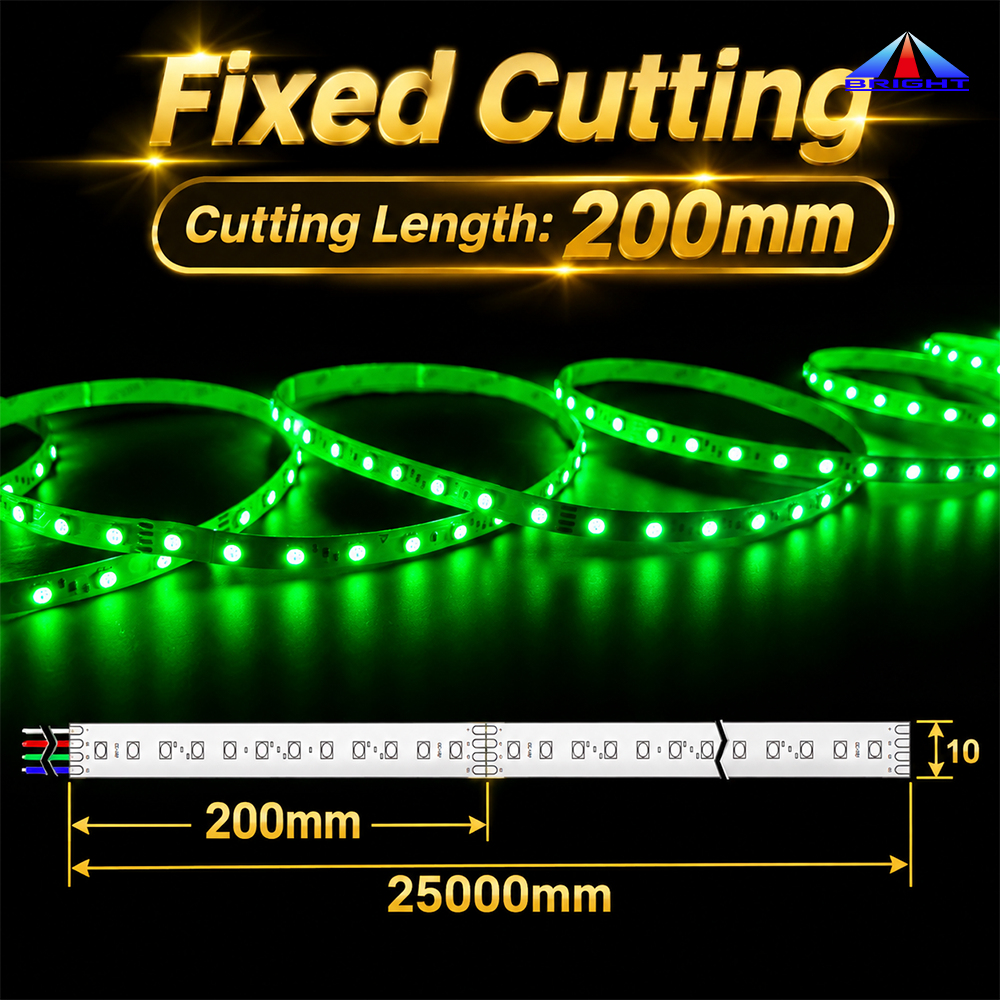
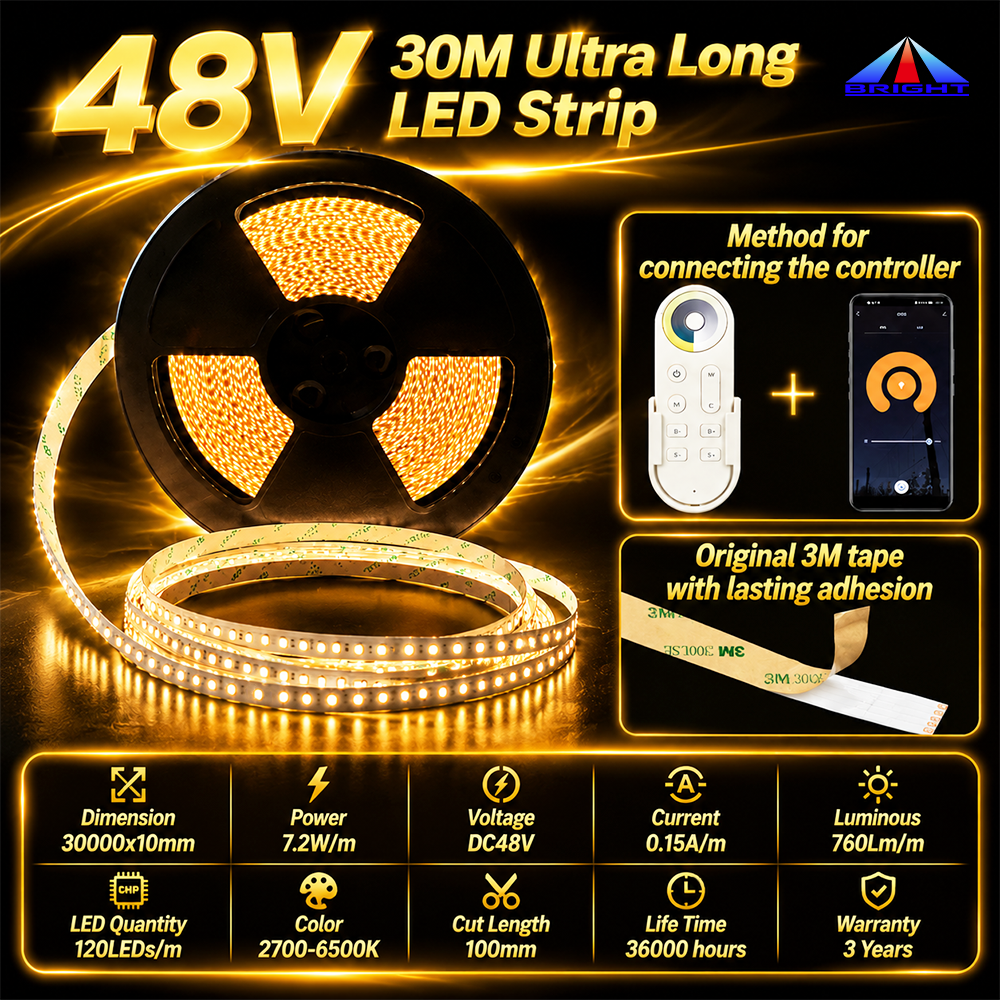
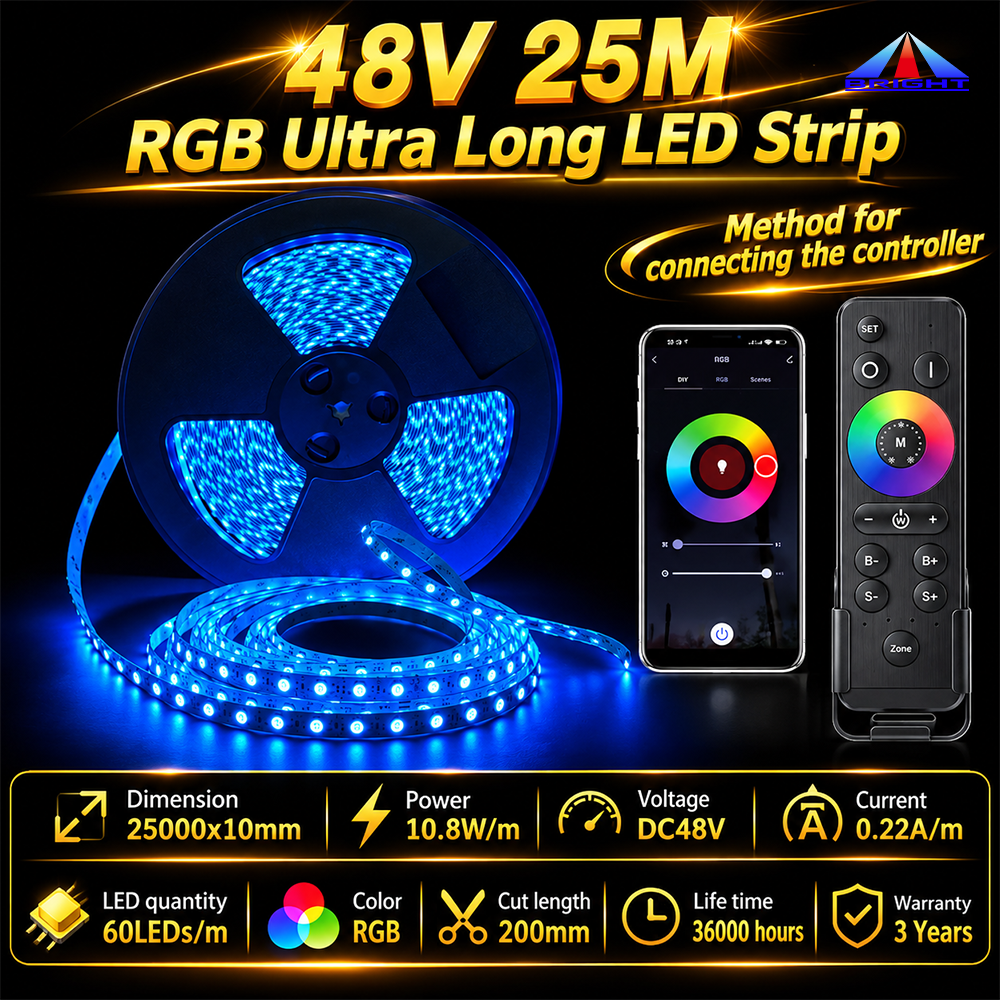
The emerging benchmark across top-tier architectural specifiers is the adoption of DC48V Constant-Current IC topologies. By doubling the input operating voltage, current flow is effectively halved ($I = P/V$). This exponentially mitigates resistive line power loss ($P_{loss} = I^2R$), enabling continuous single-feed runs of up to 10 to 20 meters without measurable lumen depreciation. Modern 48V systems integrate onboard micro-linear driver ICs on every cuttable segment, protecting LEDs against over-voltage transients and maintaining thermal equilibrium.
2. Dominance of Flip-Chip COB (FCOB) over Traditional SMD Packages
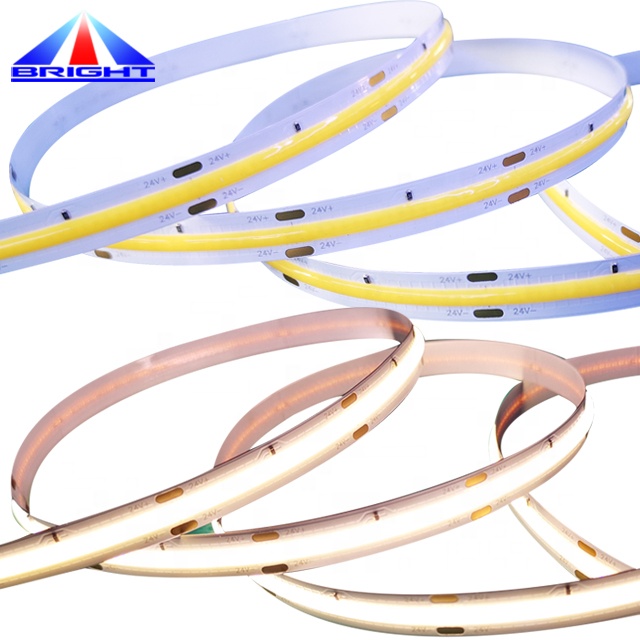
While Surface Mounted Device (SMD 2835, 5050) LEDs retain their dominance in high-lumen area flood lighting, continuous linear backlighting is rapidly transitioning to Flip-Chip Chip-on-Board (FCOB) packaging. FCOB eliminates the internal bonding wire connection—the leading single point of failure in traditional LEDs. Flip-chips are directly bonded to the dual-layer flexible copper circuit board, encapsulated under a continuous, uniformly distributed phosphor layer.
This technical shift offers three decisive procurement advantages:
• Dotless Uniformity: Achieves complete spatial diffusion even inside shallow aluminum channels (depth < 8mm) without requiring frosted, light-absorbing diffusers.
• Enhanced Thermal Dissipation: Direct die-to-copper substrate bonding lowers thermal junction resistance ($\theta_{jc}$), significantly delaying lumen decay and extending operational L70 lifetime beyond 50,000 hours.
• Flexural Resilience: Eliminates wire-bond shearing during tight structural bending, drastically lowering site installation RMA return rates.
3. Integration of Multi-Protocol Smart Connectivity (Matter, DMX512/RDM, Zigbee 3.0)
B2B importers are increasingly shunning isolated proprietary wireless controllers in favor of unified smart ecosystems. Modern smart LED strips must seamlessly interface with architectural lighting control backbones. In commercial spaces, DMX512/RDM and DALI-2 (IEC 62386) remain the gold standard for pixel-addressable dynamic scene creation. Concurrently, high-end residential and hospitality developments demand native compatibility with the Matter over Thread protocol, enabling cross-platform interoperability across Apple HomeKit, Google Home, and Amazon Alexa without secondary cloud bridges.
| Technology Paradigm | Legacy Standard (2018-2022) | Next-Gen Benchmark (2025-2030) | B2B Sourcing Advantage |
|---|---|---|---|
| Operating Voltage | DC 12V / 24V Constant Voltage | DC 48V Integrated Constant Current IC | Halves power feed locations; lowers cabling labor by 40%. |
| Chip Architecture | SMD Wire-Bonded Packages (2835/5050) | Direct-Die Encapsulated Flip-Chip COB | Zero pixelation; superior mechanical thermal durability. |
| Color Quality | CRI 80 / MacAdam 5-Step | CRI 95+ (R9 > 90, R12 > 85) / MacAdam 3-Step | Full spectrum natural rendering; essential for luxury retail & hospitality. |
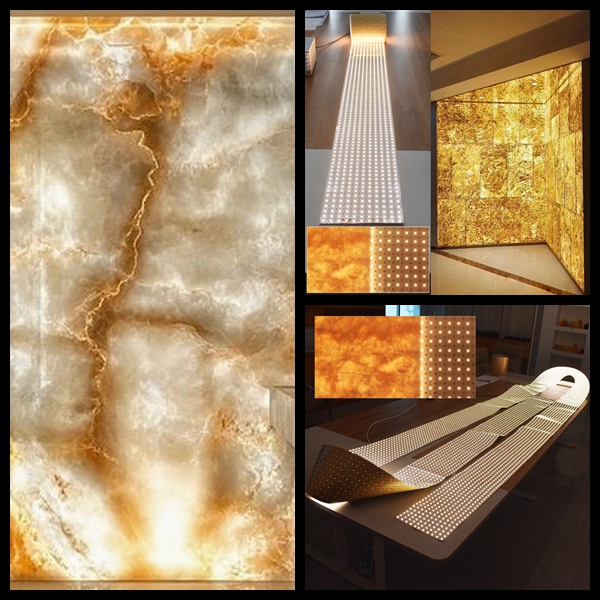
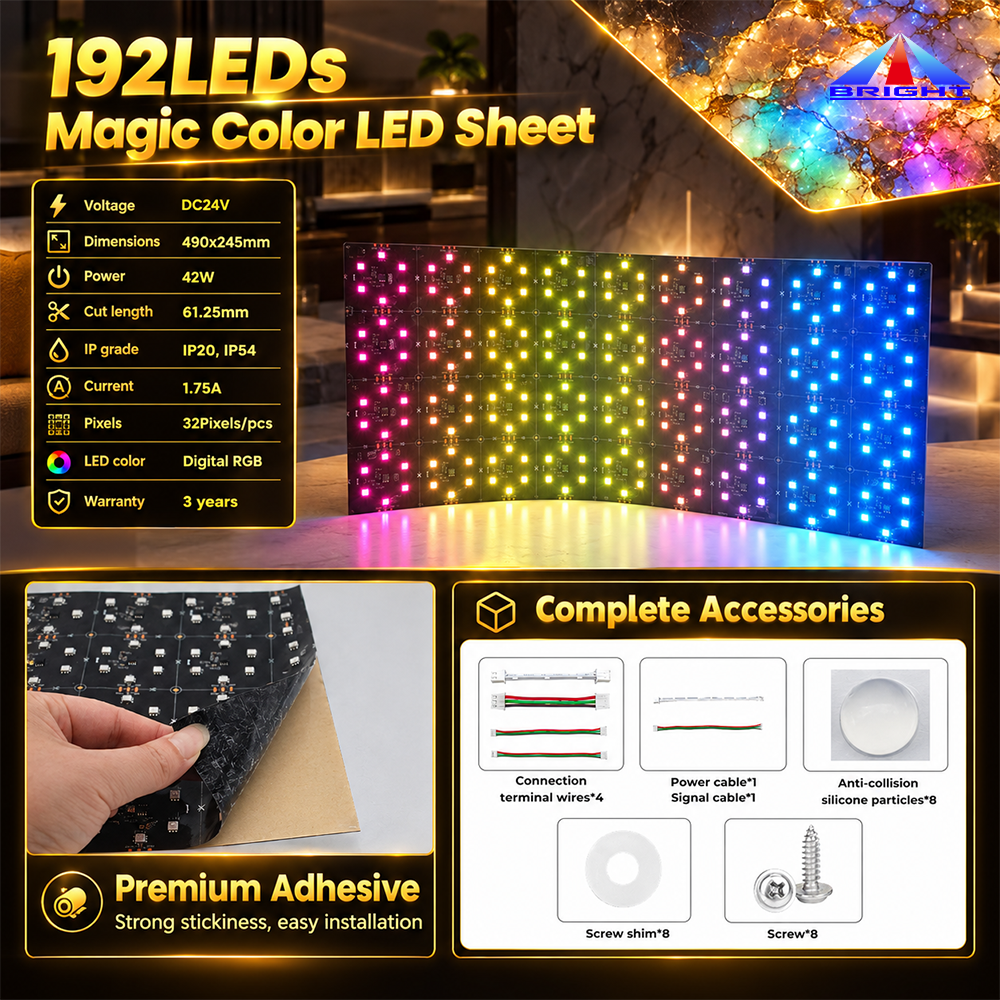
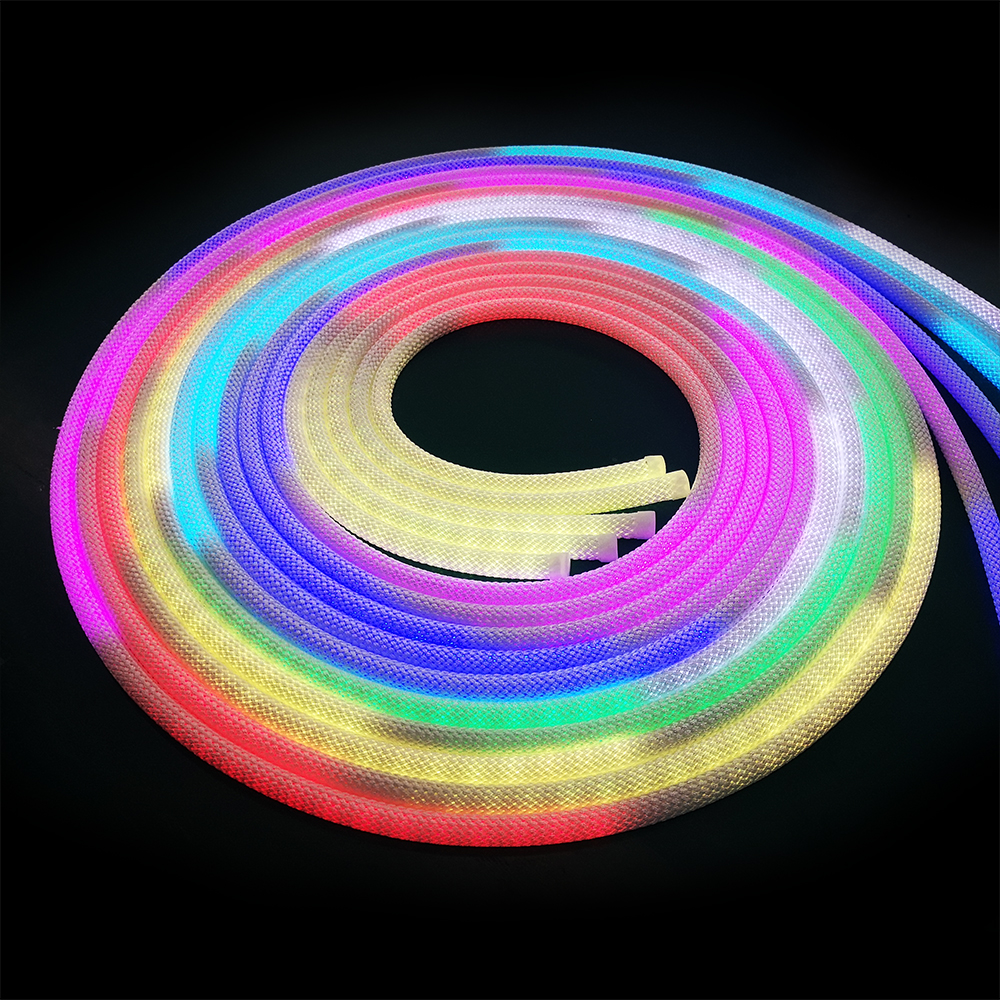
| Form Factor | Rigid PCB or Standard 8mm Tape | Cuttable Flexible LED Sheets & 360° Silicone Tubes | Enables 3D stone backlighting and organic architectural geometries. |
Technological Evolution & Hardware Engineering Standards
To evaluate a smart LED strip supplier's true capability, commercial buyers must look beyond glossy sales collateral and scrutinize raw material specifications, printed circuit board (PCB) thermal dynamics, and binning methodologies.
1. PCB Substrate Copper Weight & Thermal Management
Thermal management is the fundamental pillar of solid-state lighting reliability. When high-density LEDs operate, junction temperature ($T_j$) rises rapidly. If thermal heat is trapped due to thin, sub-standard copper foil, semiconductor degradation accelerates, triggering color shifting (CCT drift) and permanent lumen degradation.
Engineering-grade smart LED strips manufactured by top-tier suppliers utilize double-sided rolled-annealed (RA) copper PCBs with a minimum thickness of 3oz/sq.ft (105μm). High-purity RA copper provides lower electrical resistance and superior mechanical flexibility compared to cheap electro-deposited (ED) copper. Furthermore, application of a high-emissivity white thermal solder mask assists in radiating thermal energy away from the active chip matrix.
2. Color Consistency: MacAdam Ellipse Binning & Color Rendering (TM-30-18)
For lighting designers and hotel developers, visual consistency across production lots is non-negotiable. Standard commercial LEDs often span 5-step or 7-step MacAdam Ellipses, resulting in jarring variations in white light tone when installed side-by-side. Premium manufacturing demands strict adherence to SDCM < 3 (Standard Deviation of Color Matching) binning protocols, ensured via automated optical integrating sphere sorters.
Moreover, modern lighting specification moves past legacy CRI (Ra) metrics. While CRI measures only eight pastel reference colors (R1 through R8), it completely ignores saturated red hues (R9) and deep blues (R12). Modern procurement mandates compliance with IES TM-30-18 guidelines, evaluating both Color Fidelity ($R_f \ge 93$) and Color Gamut ($R_g \ge 100$), ensuring true-to-life representation of architectural materials, natural wood grains, and human skin tones.
3. Co-Extrusion Silicone Waterproofing: IP65 to IP68 Structural Integrity
Traditional outdoor LED strips utilized low-cost PVC jacketing or epoxy glue filling. Over time, exposure to solar ultraviolet (UV) radiation, atmospheric ozone, and temperature cycling caused PVC to yellow, crack, and harden, while epoxy yellowed rapidly and absorbed moisture. Modern architectural standards require food-grade silicone co-extrusion technology. Silicone maintains mechanical elasticity from -40°C to +200°C, offers complete UV resistance, and achieves true IP67 / IP68 protection ratings capable of enduring prolonged submersion in swimming pools, water features, and harsh coastal environments.
Key Buyer Value Proposition Modules
Why leading global lighting brands, engineering contractors, and OEM buyers choose verified manufacturing partners in Shenzhen.
Full OEM / ODM Customization
From custom PCB trace width (3mm to 500mm sheets), tailored LED density (up to 1296 LEDs/m), tailored CCT curves, private label silkscreening, to custom-molded silicone optical profiles, complete design drafts are produced in-house within 24 hours.
Stringent ISO9001 Quality Control
Every single batch undergoes 100% multi-stage testing: incoming LED chip spectroradiometer testing, SMT optical visual inspection (AOI), 8-hour full-load high-temperature burn-in aging, and automated waterproof chamber testing.
Global Certification Submittals
Complete laboratory compliance test packages available including CE, RoHS, EMC, UL (UL2108 / UL8750), TÜV Rheinland verification reports, ERP energy efficiency documentation, and BIS approvals for streamlined customs clearance.
Manufacturer Profile & Production Strengths
Rooted in Longhua District, Shenzhen—the heart of the world's primary optoelectronic manufacturing cluster—Shenzhen Covek Lighting Co., Ltd. stands as a premier TÜV Rheinland-verified OEM/ODM manufacturer of state-of-the-art flexible LED lighting systems.
Advanced Manufacturing Infrastructure
Spanning 5,175 m² of ISO9001-certified cleanroom space, operating high-speed Yamaha SMT lines, automated phosphor dispensing machines, and custom silicone extrusion lines supporting over $20M in annual production capacity.
Pioneering LED Sheet & FCOB Technology
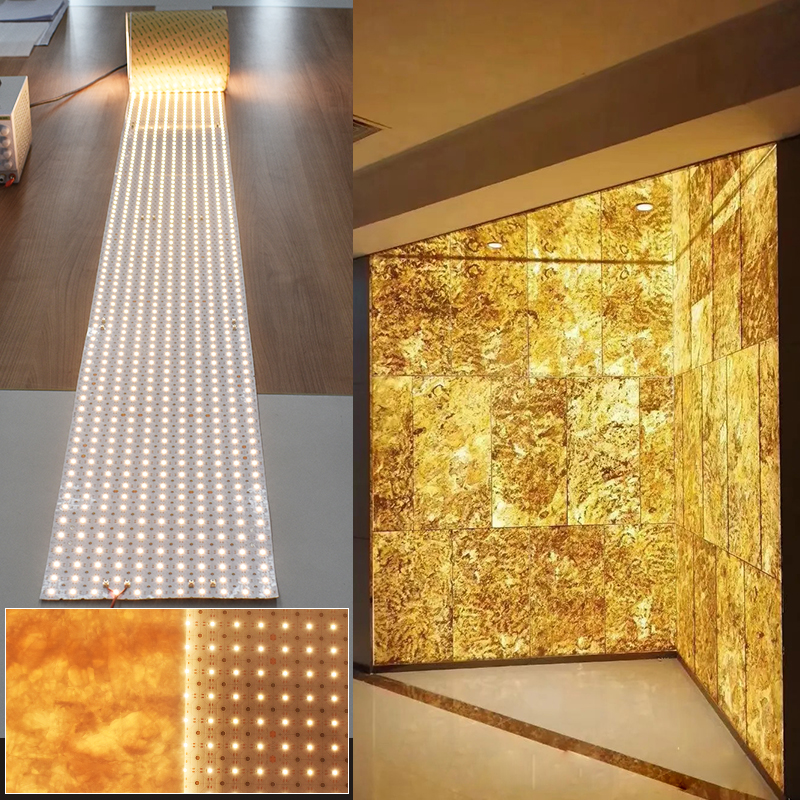
Recognized as an industry leader in cuttable ultra-thin LED backlight sheets (roll-to-roll up to 10m) for marble stone fabricators, alongside ultra-narrow 3mm/4mm FCOB strips for minimal space linear architectural applications.
Dedicated R&D & Rapid Prototyping
Engineers release 20 to 50 new SKU innovations monthly. Specialized project support includes fast-track custom PCB sampling delivered within 3 to 5 business days for time-critical project bids.
Uncompromising 3-Year Warranty & Service
Backed by full product liability coverage, 24-hour rapid complaint resolution response, and 100% defect compensation policy, maintaining a verified 99.8% buyer repurchase rate across North America and Europe.
Comprehensive B2B Procurement FAQ
Technical clarity on common engineering, sourcing, and logistical questions for global buyers.
What is the minimum order quantity (MOQ) for custom LED strips and sheets?
For standard inventory items or benchmark LED sheet samples, MOQs start from as low as 1 piece or 5 meters to facilitate engineering evaluation. For custom OEM projects (tailored PCB widths, specific color temperatures, special packaging, or custom cabling), standard MOQs typically range between 100 to 200 meters or pieces depending on the complexity of the extrusion die or copper tooling involved.
How do I calculate acceptable voltage drop for a 10m to 20m continuous LED run?
Voltage drop is governed by Ohm's Law ($V_{drop} = I \times R_{trace}$). To avoid color shift and dimming along long runs, you must ensure voltage drop at the tail end does not exceed 5% of nominal voltage. For runs over 10 meters with a single power input, we strongly recommend selecting our DC48V Constant Current LED Strips or using DC24V Ultra-Long LED Sheets with double-layer 3oz copper traces.
What is the core structural difference between FCOB and traditional SMD LED strips?
An FCOB (Flip-Chip COB) strip mounts hundreds of microscopic flip-chips directly onto the flexible PCB under a continuous resin-phosphor coating. This creates a completely seamless, dotless line of light with zero visible hotspots even without an aluminum channel diffuser. SMD strips utilize individual plastic-packaged LEDs spaced apart, which require deeper aluminum channels with frosted covers to blur light dots.
How does cuttable LED sheet backlighting solve stone and marble countertop fabrication issues?
Translucent marble, onyx, and quartz surfaces vary widely in thickness, transparency, and cabinet cutout shapes. Our ultra-thin flexible LED sheets feature a matrix grid of parallel circuit connections allowing contractors to cut the sheet with standard shears along both vertical and horizontal axes in 20mm to 30mm increments. This enables 100% uniform backlight coverage directly behind organic countertop shapes without dark shadows.
Which IP rating should be specified for exterior building facades and swimming pools?
For dry indoor cabinet or cove applications, IP20 is ideal. For indirect damp areas (bathrooms, under-eaves), IP54/IP65 spray-coated tape is sufficient. For exposed architectural building facades, signage, and outdoor landscape lighting, specify IP67 silicone co-extruded neon flex. For swimming pools, fountains, and continuous underwater immersion, specify IP68 solid silicone injected strips with factory-sealed IP68 injection-molded connectors.
What dimming protocols are compatible with your smart LED strips?
Our smart LED strips and drivers are fully compatible with all major global dimming protocols. For constant voltage strips, dimming is achieved via Pulse-Width Modulation (PWM) drivers operating at high frequencies (>4kHz to prevent flicker in video capture). We support 0/1-10V analog dimming, Triac/Phase-cut dimming, DALI-2 (DT6/DT8), DMX512/RDM controllers, as well as smart wireless controllers natively supporting Tuya WiFi, Zigbee 3.0, and Matter protocols.
How do you guarantee bin-to-bin color consistency across multi-phase purchase orders?
We maintain strict 3-step MacAdam Ellipse (SDCM < 3) binning control. For long-term contract clients and multi-phase hotel projects, we archive customer-specific bin records at the spectroradiometer stage. Subsequent production batches are matched directly to the original chromaticity coordinates ($x, y$ tolerance within $\pm 0.003$), ensuring total color uniformity across orders placed months apart.
What certifications are available for North American and European project submittals?
Our manufacturing facility operates under an audited ISO 9001 management framework. Individual product series hold comprehensive test reports and certificates including CE, RoHS, EMC, LVD, ERP, TÜV Rheinland verification, and UL compliance (UL2108 Low Voltage Lighting Systems & UL8750 Light Emitting Diode Equipment), enabling seamless submittals to municipal inspectors and general contractors.
Transform Your LED Supply Chain with a Verified Supplier
Whether you require fast-turnaround OEM custom sampling, full engineering submittals for architectural bids, or wholesale volume pricing for global distribution, our technical specialists are ready to assist you 24/7.