Engineered Flexible LED Ribbon & Backlight Catalog
Featured export-grade flexible LED ribbon lights, COB tapes, and modular backlight panels manufactured by Shenzhen Covek Lighting Co., Ltd.

1. Executive Industry Analysis: The Evolution of China’s LED Ribbon Manufacturing
The global commercial lighting and architectural illumination markets have undergone a fundamental paradigm shift. Traditional Surface-Mounted Device (SMD) flexible tape lights—while historically effective—are increasingly deemed insufficient for contemporary high-end architectural submittals, luxury hospitality projects, and intricate backlit stone fabrications. Sourcing directors and lighting consultants evaluating China LED ribbon lights manufacturers must navigate a rapidly evolving technological landscape dominated by Flip-Chip On Board (FCOB) encapsulation, ultra-thick 3oz/4oz copper flexible printed circuits (FPC), and modular cuttable backlight sheet systems.
China’s Pearl River Delta region, particularly Shenzhen's Longhua District, remains the global epicenter of solid-state linear lighting innovation. Premier manufacturing plants have transitioned from basic manual assembly lines to fully integrated SMT (Surface Mount Technology) high-speed placement lines, continuous inline phosphor dispensing equipment, and rigorous automated optical inspection (AOI) workflows. This technical revolution directly addresses the three historic pain points of B2B LED linear lighting procurement: optical pixelation (visible LED dots), color shift across long extended runs (voltage drop), and thermal degradation leading to premature lumen depreciation.
Technical Comparison: Flexible Linear Architectural Light Engine Formats
| Technology Format | Optical Characteristics | Standard Density | Thermal Performance | Primary B2B Application |
|---|---|---|---|---|
| Conventional SMD Tape (2835/5050) | Discrete LED hotspots; requires deep diffusion profile | 60 - 240 LEDs/m | Moderate; highly dependent on FPC copper weight | General cove lighting, under-cabinet retrofits |
| Flip-Chip COB (FCOB) | Continuous 180° dotless linear emission line | 320 - 840 Chips/m | Superior; direct chip-to-copper junction bonding | Shallow recessed linear channels, luxury retail displays |
| Flexible Modular LED Sheet | Uniform planar surface luminescence | 242 - 1296 LEDs/m² | Excellent; large surface area copper heat dissipation | Translucent marble, onyx, quartz, matrix backlighting |
| Silicone Extruded Neon Flex | Homogeneous 3D optical diffuse glow (IP67/IP68) | 120 - 480 LEDs/m | High thermal mass via UV-stabilized silicone jacket | Building facades, landscape outlines, custom signage |
Next-Generation Technological & Product Trends (2025–2030)
Strategic engineering shifts redefining linear solid-state lighting manufacturing and procurement standards.
1. 48V Constant-Current High-Voltage Architecture
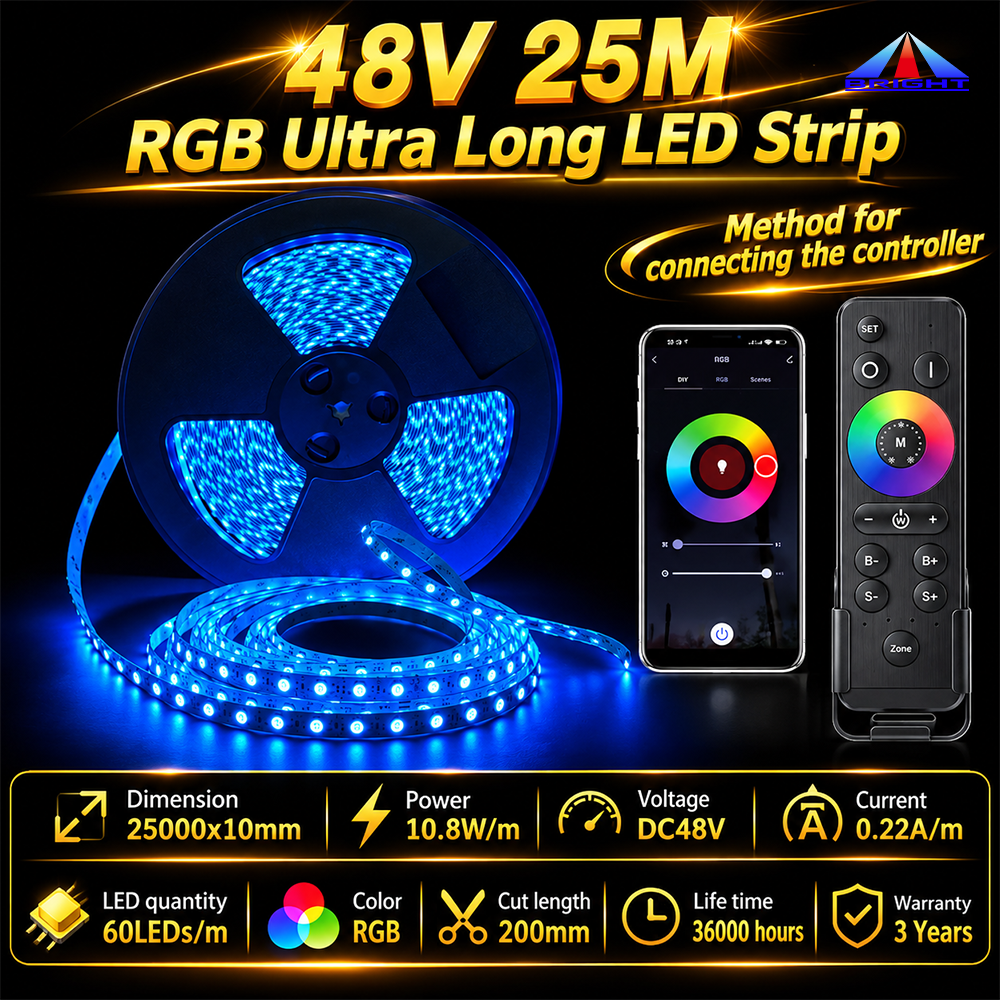
Traditional 12V and 24V DC LED strips suffer from severe voltage drop over extended runs, requiring multiple power drop points every 5 to 10 meters. The industry is rapidly adopting 48V DC constant-current driver IC designs. By doubling the input operating voltage, current amperage is reduced by half for the equivalent wattage, allowing continuous single-ended electrical runs up to 20–30 meters without perceptible lumen or CCT attenuation. This reduces electrical wiring labor by over 40% on commercial jobsites.
2. Full-Spectrum & Tunable Human-Centric Lighting (HCL)
Modern commercial specifications increasingly demand SunLike and full-spectrum LED light engines that mirror natural daylight curves. Advanced 5-in-1 RGBCCT (RGB + Dual White 2200K–6500K) FCOB ribbons allow dynamic circadian rhythm programming via DALI-2, DMX512, or Matter/Zigbee 3.0 protocols. High color fidelity specs (CRI Ra > 95, R9 > 80, Rf > 92, Rg > 100) ensure true-to-life color rendering in luxury retail, art galleries, and medical environments.
3. Modular Roll-to-Roll Cuttable Backlighting Sheets
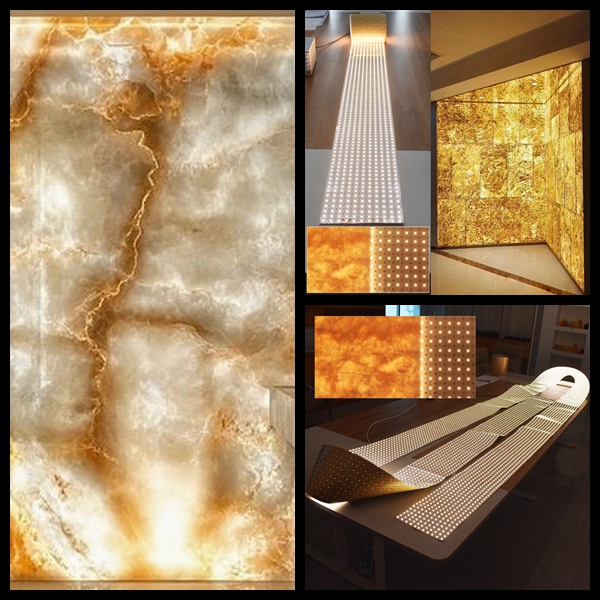
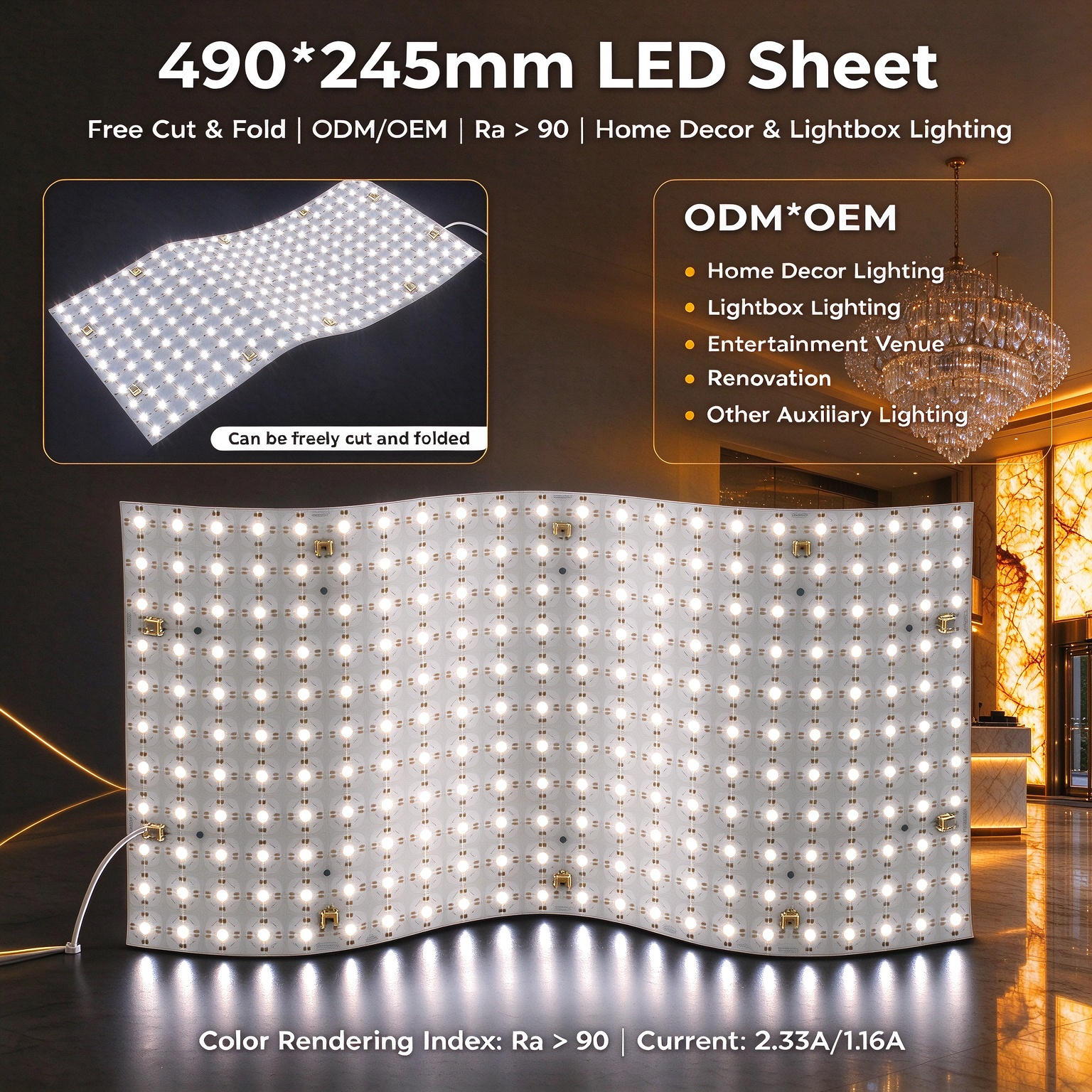
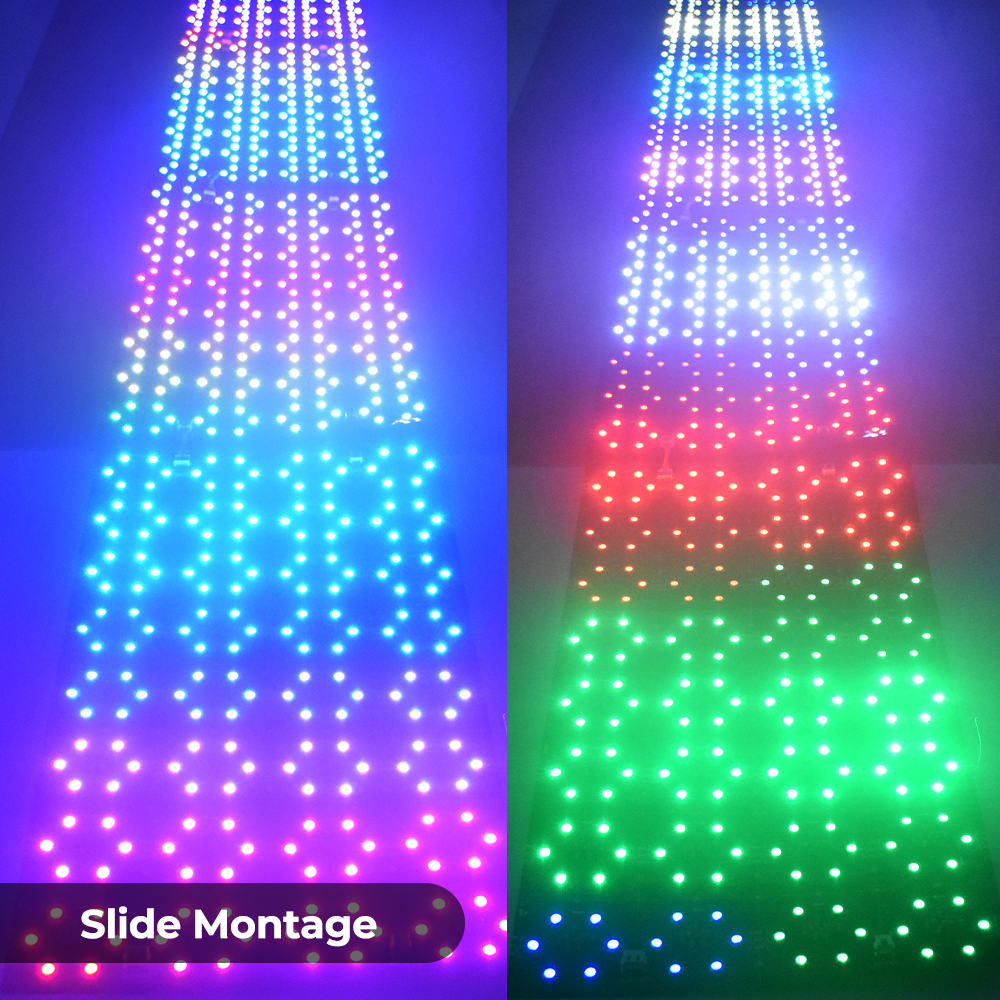
Planar backlighting for translucent stone surfaces (marble, quartz, quartzite) has evolved from heavy, custom-fabricated rigid acrylic light plates to paper-thin, highly flexible matrix LED sheet rolls. These innovative light engines can be field-cut with scissors along designated grid lines (in 1x1 cm or 2x2 cm increments) around irregular wall contours, electrical junction boxes, and plumbing fixtures, eliminating lead times associated with custom factory glass/acrylic fabrication.
4. High-Reliability Co-Extruded Silicone Waterproofing
Traditional PVC jacketing and polyurethane (PU) glue-filled waterproof sleeves tend to yellow, crack, and lose flexibility within 18–24 months when exposed to solar UV radiation and atmospheric ozone. Next-generation outdoor LED ribbon lights utilize dual-color food-grade silicone integrated co-extrusion technology. Achieving IP67/IP68 submersion protection ratings, these silicone neon flex light engines withstand temperature extremes (-40°C to +80°C) without physical degradation.
3. Strategic Sourcing Framework: Future B2B Procurement Trends
Global buyers, lighting distributors, and OEM contractors are recalibrating their vendor selection criteria when negotiating contracts with China LED ribbon light manufacturers. Sourcing strategies have evolved beyond basic FOB unit pricing; procurement executives now prioritize Total Cost of Ownership (TCO), supply chain transparency, international compliance documentation, and factory auditing verifications.
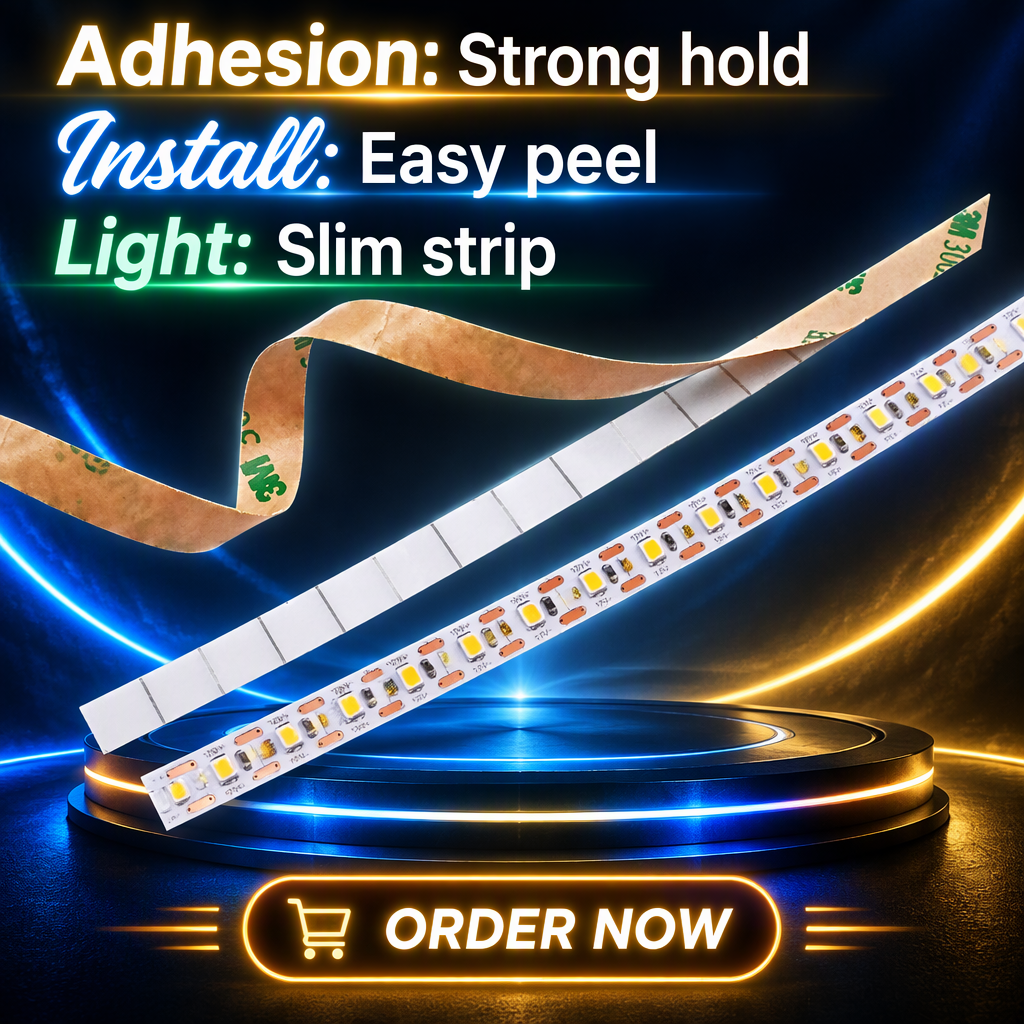
A. Supply Chain De-Risking & Third-Party Onsite Factory Audits: Sourcing managers are bypassing unverified trading companies in favor of TÜV Rheinland or SGS onsite-verified manufacturing facilities. Direct factory partnerships ensure direct control over key raw material inputs: Sanan or Epistar LED chips, 99.99% pure gold bonding wire, Dow Corning silicone encapsulants, and genuine 3M thermal conductive backing tapes (e.g., 3M 300LSE / 9495LE).
B. Strict Regulatory Compliance & Environmental Directives: Importers into European and North American territories face stringent regulatory enforcement. Compliance submittals now mandate comprehensive UL 2108 / UL 8750 certifications for North America, alongside CE, EMC, RoHS 3.0, and EU ERP Directive Energy Efficiency Class submittals for the EU market. Manufacturers capable of supplying full photobiological safety test reports (IEC/EN 62471) gain significant competitive advantage.
C. Agility in Custom OEM/ODM Prototyping: B2B buyers require flexible production lines capable of rapidly customizing PCB dimensions, thermal pad layouts, customized color temperatures (e.g., 2400K or 3500K warm architectural tones), custom wire harness assemblies, and private-label retail packaging with minimal minimum order quantities (MOQs).
Enterprise Advantage: Shenzhen Covek Lighting Co., Ltd.
Demonstrated manufacturing excellence, certified quality management, and verified production metrics.
ISO 9001 Quality System
Every production lot undergoes rigorous 100% inline electrical, optical, and thermal aging inspections before final export packaging, maintaining a verified 99.8% quality pass rate.
In-House Engineering R&D
Releasing 20 to 50 new innovative LED ribbon and sheet product designs monthly, offering complete ODM/OEM CAD drawing submittals within 24–48 hours for project engineers.
Global Export Compliance
Products carry comprehensive CE, RoHS, EMC, UL, TÜV, ERP, and BIS documentation, pre-tested and cleared for seamless customs clearance in European and North American markets.
Frequently Asked Questions (B2B Sourcing FAQ)
Essential technical and commercial guidance for purchasing directors, lighting engineers, and wholesale importers.