Engineered Ceiling LED Strip Solutions
Project-grade FCOB, high-CRI SMD, and flexible neon tape systems for architectural coves

Technical Whitepaper: OEM Sourcing for Architectural Ceiling LED Strips
In modern commercial and high-end residential architectural design, ceiling coves and drop ceilings are no longer secondary ambient elements—they are central to primary illuminance plans. Sourcing from experienced Custom OEM Ceiling LED Strip Manufacturers requires a rigorous evaluation of thermal dissipation dynamics, optical binning metrics, driver topology compatibility, and continuous run mechanics.
Standard off-the-shelf LED tape frequently suffers from early lumen depreciation, visible color shift across continuous cove runs, and noticeable diode spotting (shadowing) on gypsum ceiling returns. Professional OEM engineering solves these pitfalls through tailored PCB copper weighting, customized silicone encapsulation, precise MacAdam Ellipse binning, and integrated constant-current IC drivers.
1. Flip-Chip COB vs. SMD Diode Topologies for Cove Lighting
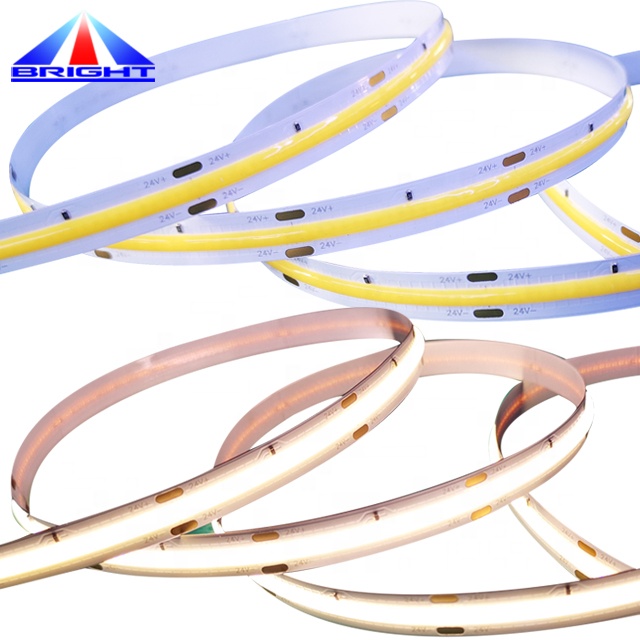
When specifying LED strips for shallow ceiling drop coves where the clearance between the reflector lip and ceiling return is under 50mm, traditional SMD (Surface Mounted Device) strips often cast distinct light hotspots. Flip-Chip COB (Chip-on-Board) technology solves this issue by placing hundreds of micro-chips under a seamless linear phosphor layer, achieving a continuous 180-degree dotless light beam directly out of the flexible substrate without requiring heavy diffuse aluminum channels.
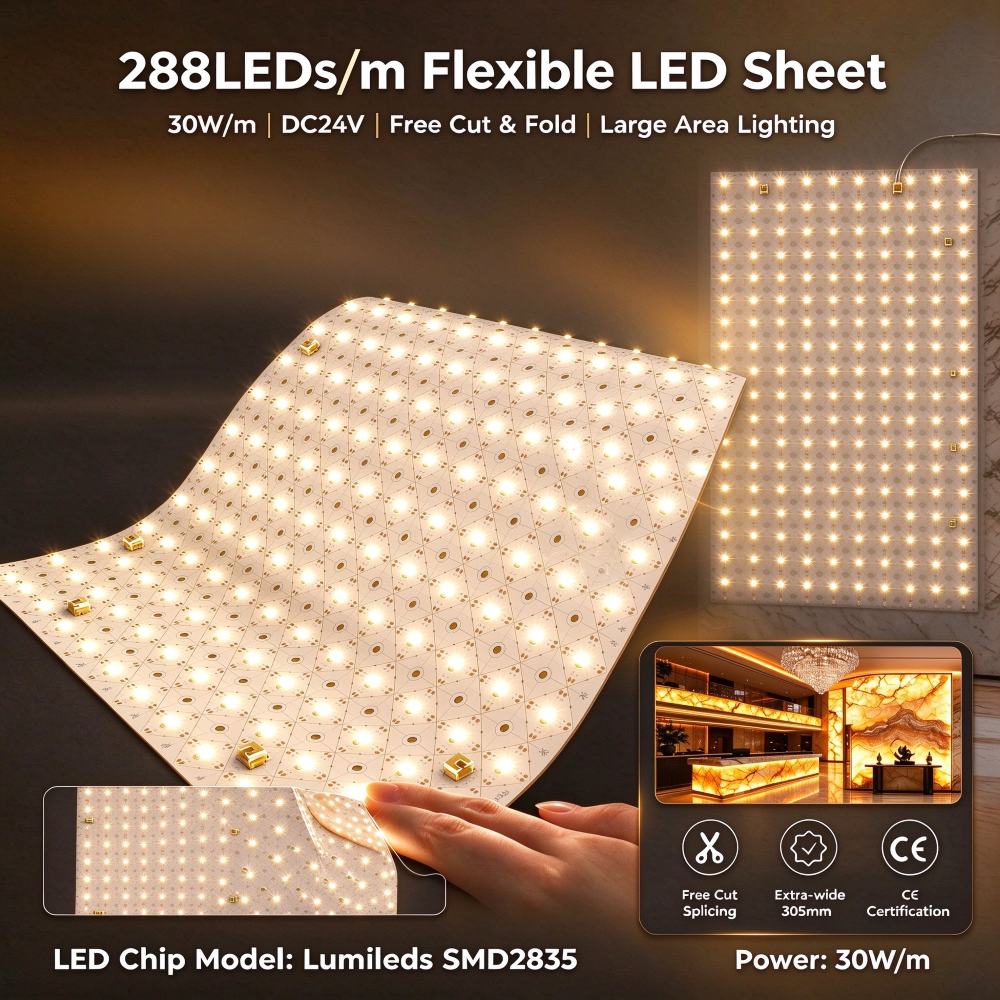
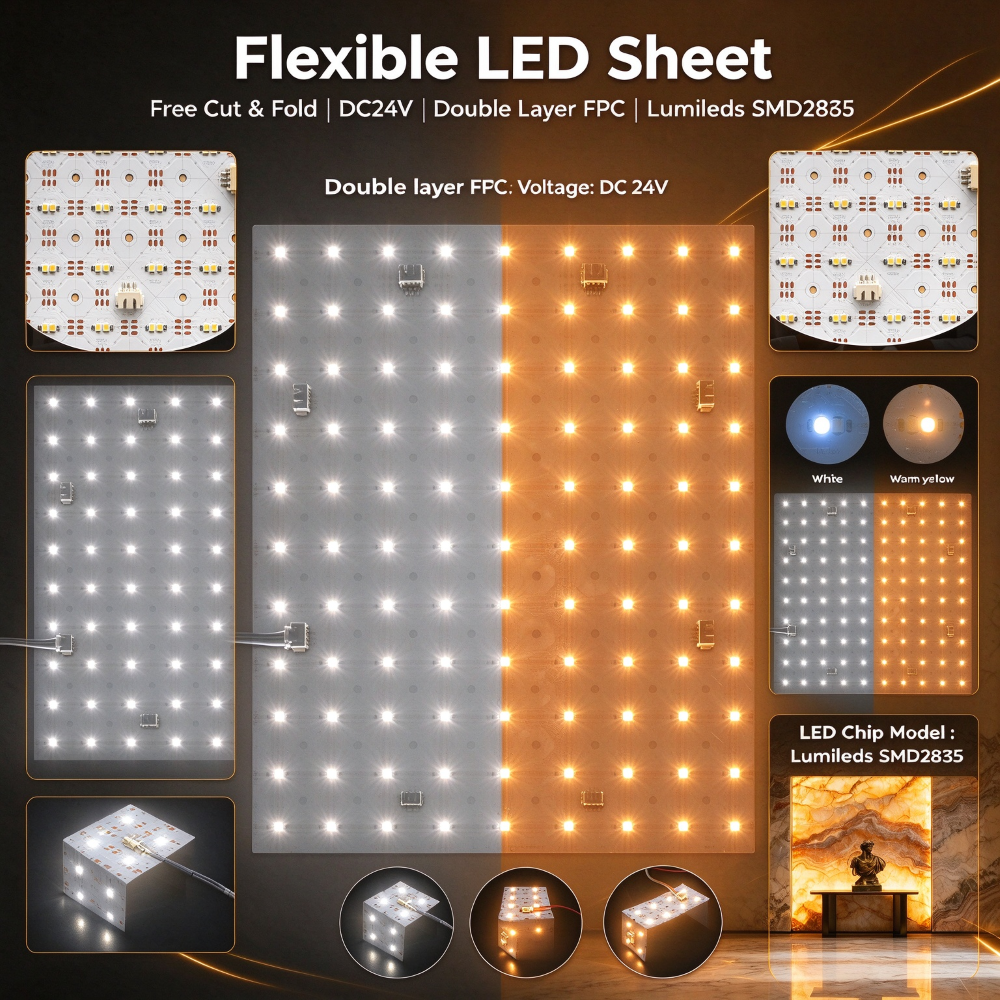
| Performance Specification | Standard SMD2835 Ceiling Strip | High-Density FCOB Ceiling Strip | Flexible LED Backlight Sheet |
|---|---|---|---|
| Diode Density (Chips/m) | 60 - 120 LEDs/m | 480 - 840 Chips/m | Up to 1,296 LEDs/m² |
| Min. Cove Clearance Needed | > 80mm for smooth beam | > 15mm (100% Dotless) | > 25mm (Slab/Translucent ceiling) |
| Optical Beam Angle | 120° Lambertian | 180° Continuous Line | 160° Wide Angle Lens |
| Max Single Power Feed Run | 5m - 10m (24V) | 10m - 15m (24V/48V) | Roll-to-roll up to 10m |
| Primary Application Area | Deep architectural coves, recessed profiles | Shallow coves, floating ceilings, plaster-in channels | Translucent stone ceilings, stretched ceiling fabric |
2. Thermal Dissipation & Voltage Drop Engineering in Closed Ceilings
Air circulation inside enclosed ceiling coves is often severely restricted. Without appropriate thermal management, LED junction temperatures ($T_j$) can rapidly exceed $85^\circ\text{C}$, triggering accelerated phosphor degradation and color shifting towards blue-green spectrums.
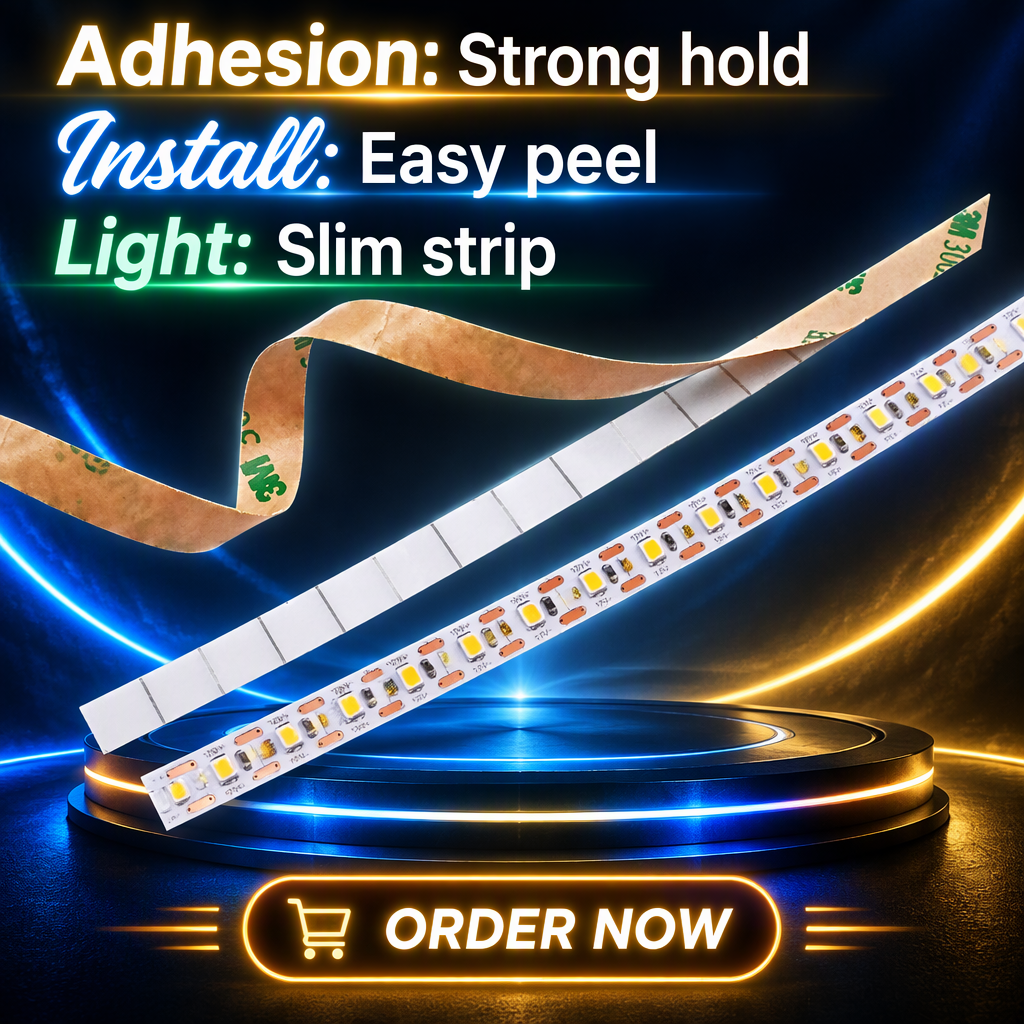
As a verified OEM manufacturer, our production process utilizes 3oz to 4oz double-sided pure copper flexible printed circuits (FPC) paired with high-transmittors thermal conductive 3M adhesive backings. For extended commercial corridor coves, we incorporate Constant Current (CC) IC chips directly onto the flexible PCB. This maintains identical current density across each LED die regardless of distance from the power supply unit, eliminating the tail-end dimming associated with standard Constant Voltage (CV) flexible strips.
Future Sourcing & Procurement Trends in Ceiling LED Lighting (2025–2030)
Procurement directors and architectural lighting buyers must align their supply chain strategies with incoming technological and regulatory shifts. Based on empirical engineering data and international trade demands across European and North American markets, the following four macro trends define the future of custom ceiling LED manufacturing:
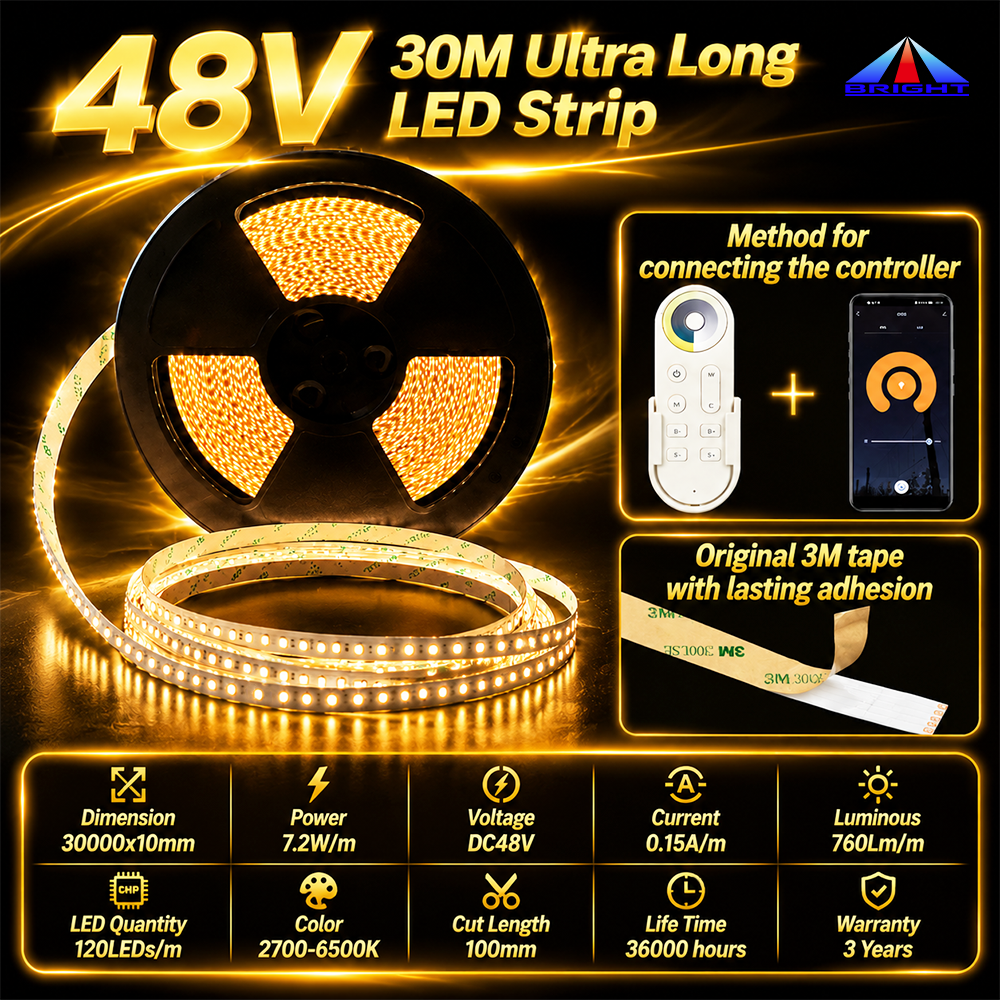
Transitioning from 12V/24V to 48V DC systems cuts operating current in half, reducing $I^2R$ resistive heating losses by up to 75%. This allows ultra-long 20m to 30m continuous ceiling cove feeds using smaller gauge supply wire, vastly lowering installation labor and copper raw material costs in large commercial projects.
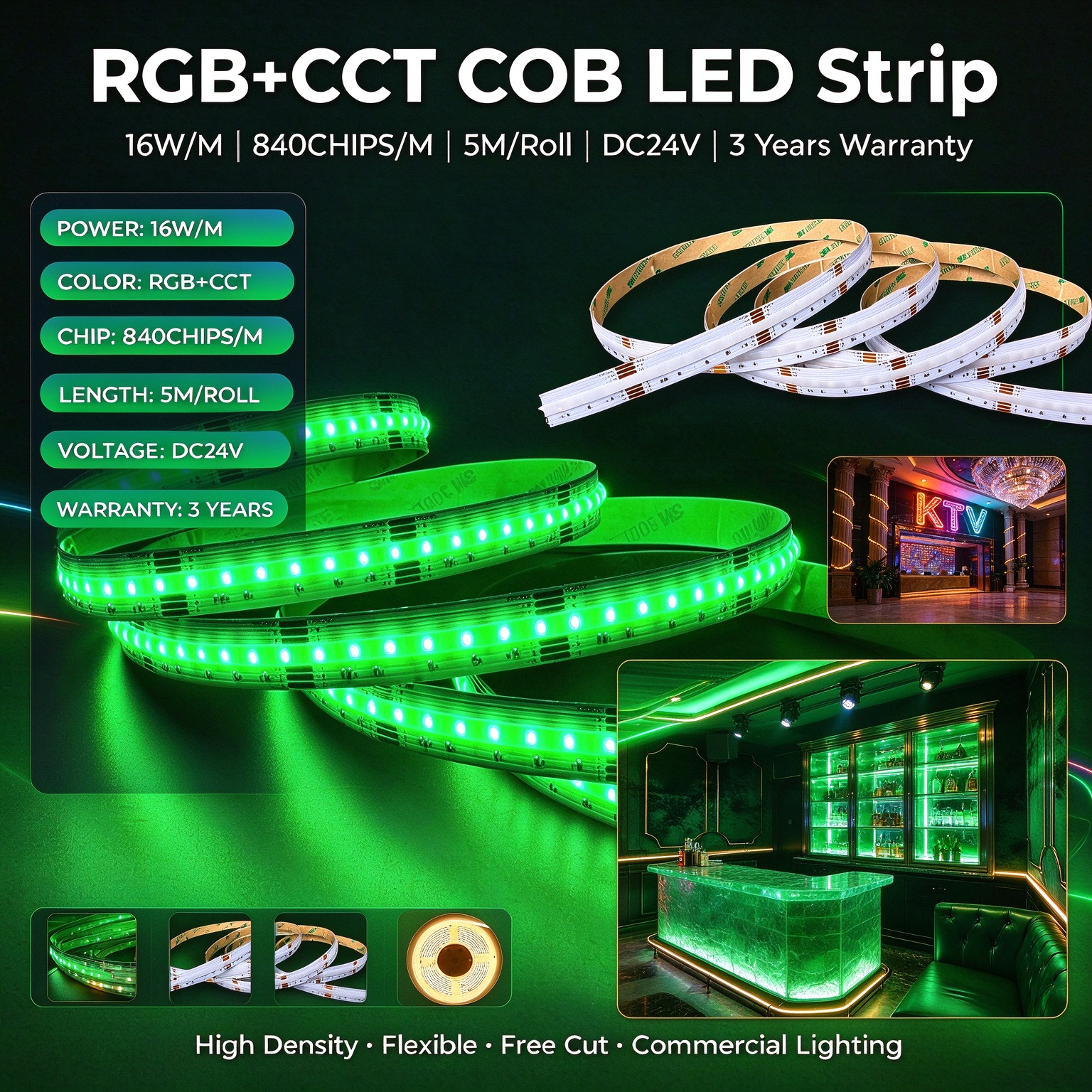
Human-Centric Lighting (HCL) is moving from niche specification to standard requirement. Dual-color chip sets offering smooth CCT tuning from 1800K (candlelight amber) to 6500K (cool daylight) with DALI-2 DT8, Zigbee 3.0, and Matter protocol compatibility allow seamless integration into smart building energy management systems.
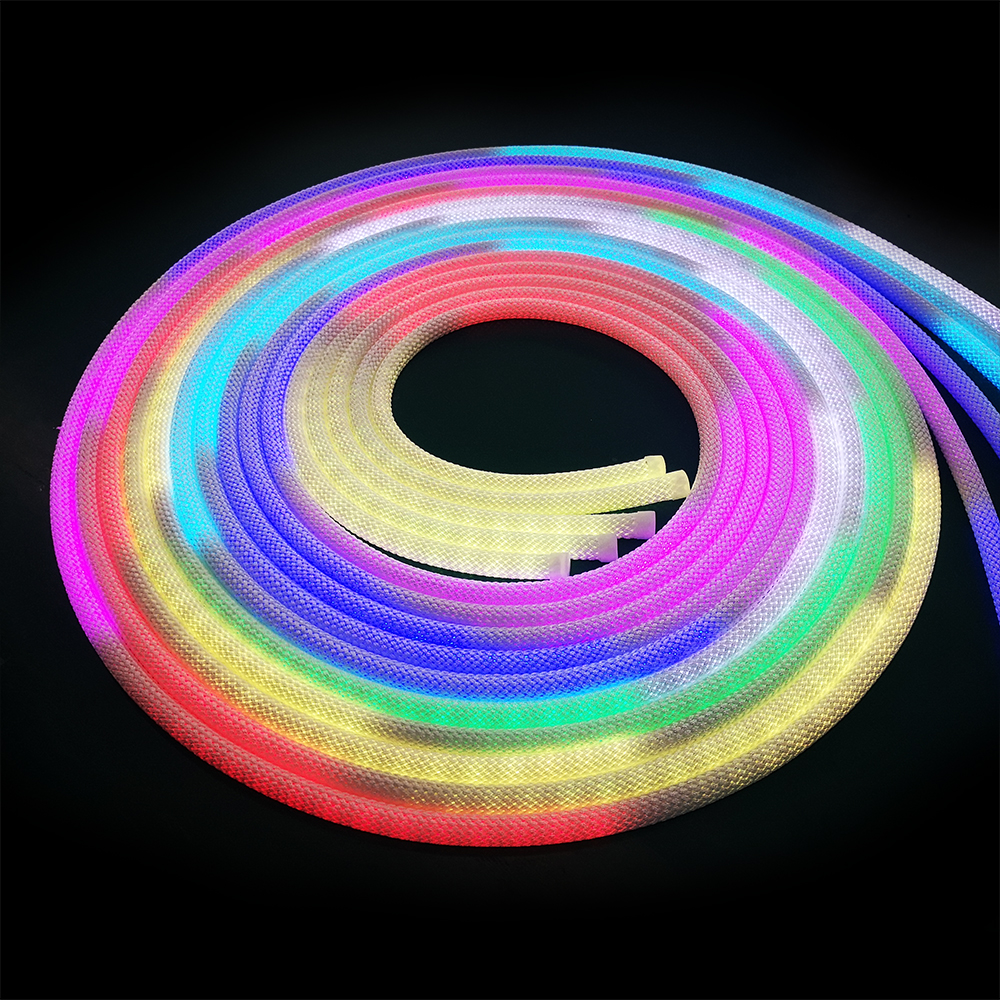
Traditional PVC and TPU neon flex sleeves yellow over time under ambient thermal stress. Future OEM manufacturing relies on optical-grade gas-phase silicone co-extrusion. Furthermore, combining flexible LED sheet technology with acoustic baffle drop ceilings provides unified sound absorption and glare-free overhead light.
Custom OEM Sourcing & Manufacturing Workflow
Executing a successful custom OEM order for ceiling LED strips requires structured cross-departmental coordination between project engineering, SMT assembly, and quality assurance testing:
Definition of exact PCB width, cut-increment intervals, CCT/CRI targets, lumen output/meter, voltage tier, and driver protocol integration.
Rapid SMT sample production within 3–5 days, evaluated via integrating spheres and goniophotometers for IES files and thermal equilibrium reports.
High-speed Yamaha SMT placement, 100% full-power burn-in aging for 8–12 hours, optional IP67 silicone extrusion, and custom packaging labeling.
Enterprise Manufacturing Capabilities & OEM Advantages
Based in Longhua District, Shenzhen—the world’s epicenter for solid-state lighting manufacturing—Shenzhen Covek Lighting Co., Ltd. operates as a TÜV Rheinland verified manufacturer specializing in FCOB LED strips, flexible LED sheet panel backlighting, LED neon flex, and customized smart linear light systems since 2011.
Fully equipped with automated high-speed SMT lines, continuous phosphor dispensing stations, and silicone extrusion machines managed by 133 specialized staff.
Onsite audited supplier capacity with full CE, RoHS, EMC, UL, and ISO 9001 quality system certifications for direct clearance into Western European and North American markets.
Our dedicated engineering team releases 20 to 50 new customized lighting products monthly, supporting free OEM drawing design and rapid sample lead times.
Every batch undergoes strict raw material inspection, line voltage testing, and continuous full-load aging tests before export packaging.
Low MOQs for trial projects, supporting EXW, FOB, DAP terms with payment acceptance in USD, EUR, and HKD via T/T, L/C, or PayPal.
Comprehensive project warranty policy. Technical inquiries and after-sales feedback are addressed within 24 hours with complete replacement support.
Frequently Asked Questions (FAQ) for B2B Sourcing
Direct technical and logistical answers for distributors, lighting specifiers, and procurement managers.
1. What is the Minimum Order Quantity (MOQ) for custom OEM ceiling LED strips?
2. How do FCOB LED strips differ from traditional SMD strips in ceiling coves?
3. Which voltage system (12V, 24V, or 48V) should be specified for ceiling cove installations?
4. What color consistency standards (Binning) do you guarantee across bulk orders?
5. How do you handle heat management inside tightly enclosed drop ceilings?
6. Are your ceiling LED strips compatible with commercial control protocols (DALI-2, 0-10V, TRIAC, PWM)?
7. What compliance documentation and test reports are provided for import clearance?
8. What is the standard lead time for custom OEM prototyping and mass production?
Request Custom OEM Samples & Engineering Quotation
Partner with Shenzhen Covek Lighting Co., Ltd. for project-grade ceiling LED strips, cuttable backlight sheets, and neon flex systems. Get direct factory pricing, photometrics, and customized engineering support.